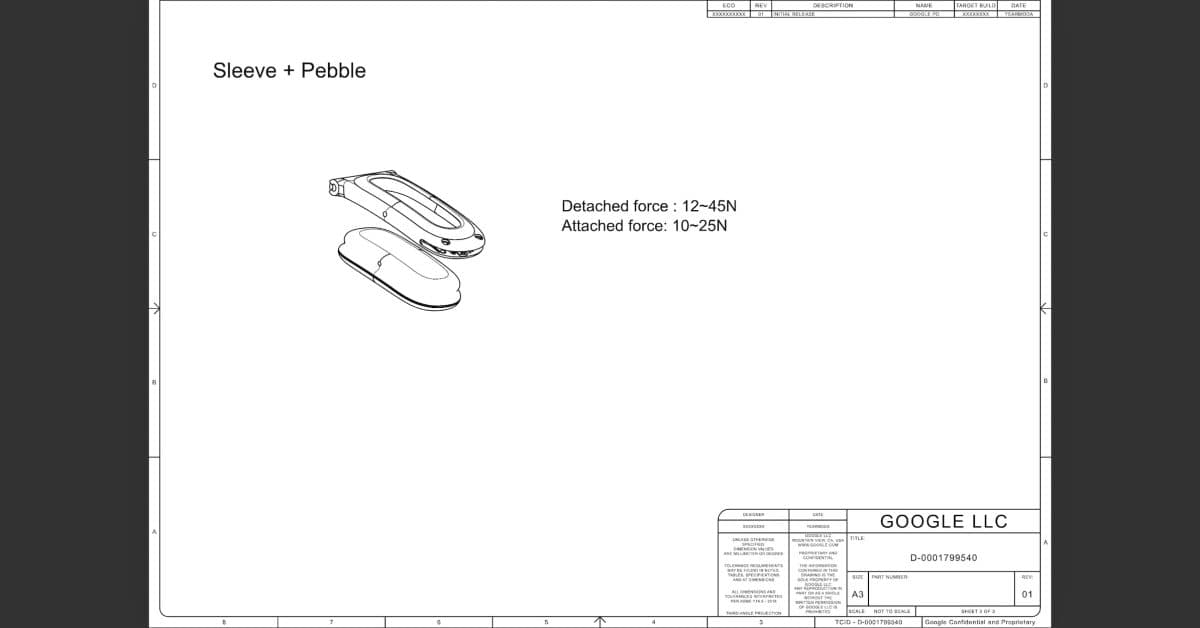
Google has released open blueprints for the Fitbit Air. This move allows anyone, from independent accessory creators to hobbyists with 3D printers, to design and make their own bands and accessories for the device.
What Google Actually Released
The Fitbit Air features a “pebble” design, which means the tracker module can detach from the band. Imagine it like a snap-on button: the sensor core easily pops out of one band and into another. This modular design makes it simple for third parties to create compatible accessories without needing to reverse-engineer anything.
By releasing official blueprints—technical design files that detail exact dimensions, connector placements, and tolerances—Google eliminates the guesswork for accessory makers. They now have the same measurements that Google’s hardware team used.
This approach resembles how some camera companies publish lens mount specifications. Once those specs are available, a whole range of compatible lenses from various manufacturers can appear. Google seems to expect the same outcome with Fitbit Air bands.
Why Google Is Doing This
Sharing a product’s design files is rare for a company that usually keeps hardware specs tightly guarded. The strategy seems clear: more band options create more reasons to buy the watch in the first place.
Apple has made massive profits from its own Watch bands, maintaining tight control over its accessory ecosystem. In contrast, Google appears to favor a broader ecosystem for Fitbit Air, valuing variety over accessory revenue. If independent sellers on Etsy or Amazon can provide countless band styles at various price points, the Fitbit Air will likely appeal to a wider audience.
There’s also a sustainability aspect. Users looking for a new style can swap just the band instead of purchasing an entirely new device, helping to extend the life of the tracker module.
What Third Parties Can Actually Build
With the blueprints available, makers can create:
- Replacement bands in various materials (silicone, leather, nylon, metal)
- Specialty bands for activities like swimming or climbing
- Unique or trendy designs that Google might not offer
- Possibly, accessory pucks that add extra hardware, though Google hasn’t confirmed this use case
The files are compatible with standard manufacturing processes. This means small businesses and individual creators with access to a 3D printer or basic fabrication tools can easily work with them.
| Detail | Info |
|---|---|
| Parent Company | Alphabet Inc. |
| Ticker | GOOGL |
| Stock Price | $372.19 (+3.68%) |
| CEO | Sundar Pichai |
| Headquarters | Mountain View, CA |
| Founded | 1998 |
| Sector | Big Tech |
What This Means
If you own or are thinking about getting a Fitbit Air, this is great news. You can expect a surge of third-party bands to hit the market much quicker than before. Look for lower prices on replacement bands compared to Google’s official options, plus a lot more variety in colors, materials, and styles.
The downside? Quality control is entirely up to the buyer. An officially licensed band from a trusted maker will fit perfectly. However, a poorly made clone from an unknown seller might not hold the pebble module securely. That’s crucial when you’re wearing a health tracker during workouts. Be sure to read reviews carefully before purchasing anything from less-established brands.
For those who hesitated to buy a Fitbit Air due to limited band options at launch, this announcement addresses a major concern.
Community Reactions
“This is the move. I’ve been waiting to see if the Fitbit Air got third-party band support before committing. Ordered one today.”
“Cool idea but Google will abandon this device in 2 years like everything else and all these accessory makers will be left holding the bag.”
The second comment reflects a genuine concern. Google has a history of discontinuing products, and accessory makers investing in tooling and inventory for a single product face real risks. The longevity of the Fitbit Air will heavily influence how many serious manufacturers decide to utilize these blueprints.
Sources
What To Watch
- Third-party band availability: Keep an eye out for the first wave of independent Fitbit Air bands appearing on Amazon and Etsy in the next few weeks now that the blueprints are public.
- Pixel Watch 5 certification: The Pixel Watch 5 was recently spotted in India’s certification database, hinting at a hardware announcement later in 2026. It’ll be interesting to see if Google adopts a similar open-accessory strategy for that device.
- Established accessory brands: Companies like Nomad and Casetify have thrived on Apple Watch bands. Whether they enter the Fitbit Air market will indicate how seriously the industry views this initiative.
- Long-term support signals: Any information from Google regarding a software support timeline for the Fitbit Air will significantly affect how many manufacturers commit to this blueprint program.

Daniel Park
Daniel Park covers AI, cloud infrastructure, and enterprise software for Explosion.com. A former software engineer who transitioned to technology journalism 5 years ago, Daniel brings technical depth to his reporting on artificial intelligence, startup funding rounds, and the companies building the future of computing. He breaks down complex AI developments and business strategies into clear, actionable insights for readers who want to understand how technology is reshaping industries.