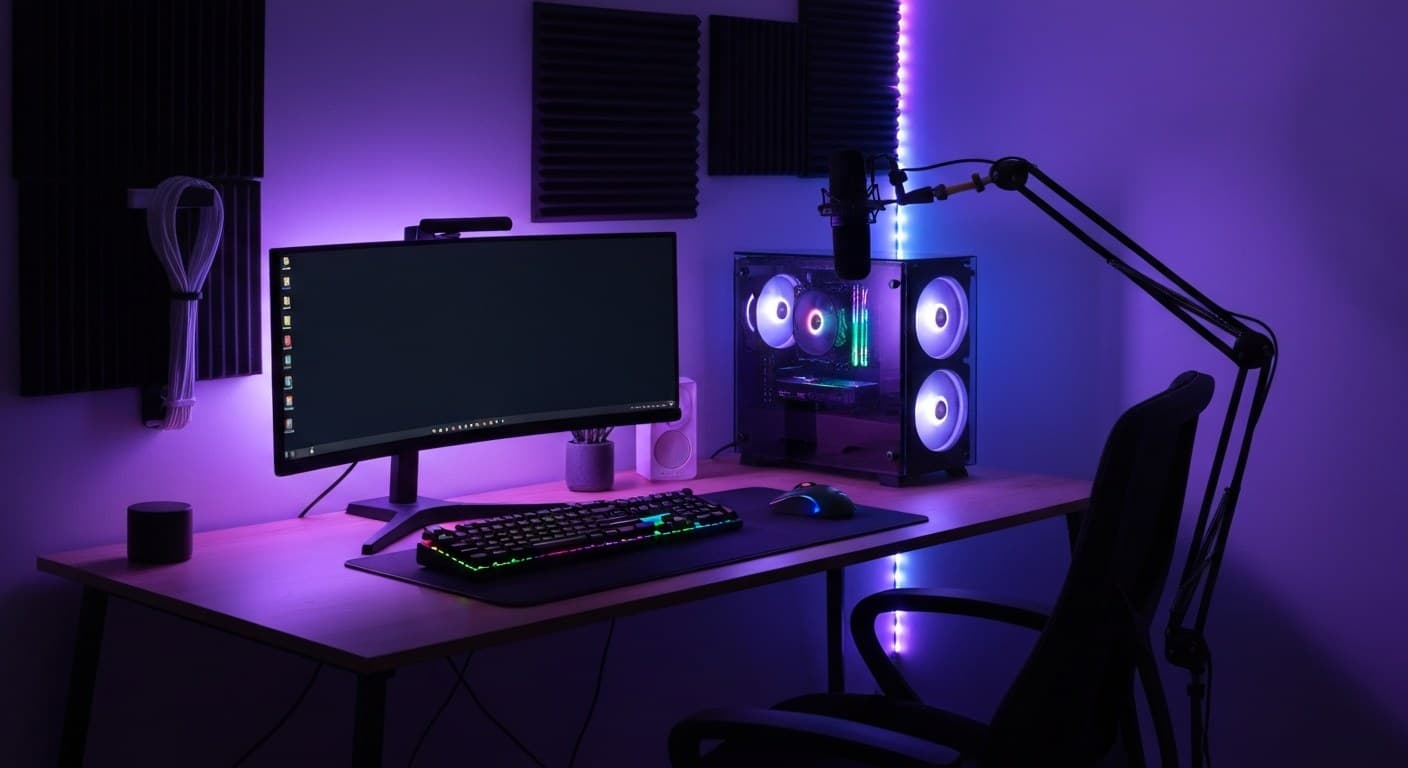
A surprising number of modern apartments are now designed around a desk, not a couch, and once you notice it, you cannot unsee it. The old version of interior design was built around hosting people in person. You had a dining table for guests, a living room centered around the television, and maybe a home office hidden somewhere in the corner if there was enough space left over. Gaming culture completely flipped that idea around, and over the last decade it pushed many homes toward something more digital, more personalized, and honestly a lot more performative. What started with RGB keyboards and gaming chairs slowly turned into an entirely different approach to decorating. Now people think about camera angles when arranging furniture, spend serious money on desk setups, and even care about how a room sounds during a Discord call or Zoom meeting. You can see the influence everywhere once you know what to look for.
Your Room Is Now Part of Your Online Identity
Gaming culture normalized the idea that your room is always visible to other people, even when they are not physically inside it. Streamers figured this out years ago, but now almost everyone thinks about what sits behind them on camera whether they are posting content, taking calls, gaming online, or working remotely. That shift changed interior design more than most people realize because rooms are no longer arranged only for real life interaction. They are arranged for screens. Instead of decorating every corner evenly, people focus heavily on the wall that appears on camera. Shelves are filled with collectibles, books, vinyl records, lighting accents, and tech accessories because they instantly communicate personality in a single frame. Even lighting placement changed because of this. A lot of people now place lamps, LED strips, and monitor lighting based on how the room looks through a webcam instead of how the room functions normally during the day. Desks also became much more important visually. They are no longer treated like temporary furniture you shove into a corner. In many homes the desk setup is now the main attraction because it doubles as a workspace, gaming station, entertainment center, and social hub all at once.
Gaming Made People Care About Acoustics Inside Their Homes
For a long time, acoustic treatment was something associated with recording studios, office buildings, or home theaters designed by professionals. Gaming culture pulled those ideas into everyday apartments. Once people started spending hours on voice chat, streaming, recording videos, and working from home, they became much more aware of echo, hollow sounding rooms, and background noise bouncing off hard surfaces. That changed the kinds of materials people started bringing into their spaces. You can see it in the rise of oversized rugs, thick curtains, upholstered furniture, wood slat panels, and decorative acoustic tiles that now appear all over social media setups. A lot of these products are marketed as design features first, but their real purpose often comes back to controlling sound inside a room packed with microphones, speakers, and constant digital interaction. The interesting part is that gaming setups accidentally pushed apartments toward a more layered and insulated design style where comfort is tied directly to audio quality, not just appearance.
The Desk Setup Became More Important Than the Living Room
Traditional interior design revolved around shared spaces. The couch faced the television, the dining table anchored the room, and the layout encouraged people to gather in one central area. Gaming culture changed the hierarchy completely. A lot of people spend more money on their desk setup than any other part of their home. Multi monitor displays, custom keyboards, mounted lighting systems, ergonomic chairs, speakers, microphone arms, and cable management accessories have become status symbols in the same way luxury furniture once was. That changes how rooms are arranged. Furniture now points toward screens instead of conversation areas. Lighting gets layered around desks instead of overhead fixtures. Wall art is positioned to appear inside camera frames instead of being viewed from across the room. The modern apartment increasingly revolves around individual digital spaces rather than shared physical ones, and gaming culture played a massive role in pushing interiors in that direction.
Exposed Wiring Went From Something to Hide to Something You Design Around
One of the strangest design shifts gaming culture introduced is the way exposed wiring became part of the aesthetic itself. For years cables were treated like a problem you tried to hide behind furniture, but now visible cable trays, mounted conduits, LED channels, and organized wiring systems are often intentionally displayed as part of a tech inspired setup. The important distinction is that good exposed wiring looks planned. Bad exposed wiring looks dangerous immediately. Keeping clean cable runs, mounted channels, braided sleeves, and structured layouts can actually add character to a room because it reinforces that industrial gaming studio look people want. Random extension cords, overloaded power strips, dangling wires, and exposed cuts in drywall usually destroy the entire setup visually while also creating actual safety risks.
This is also where people underestimate how technical these spaces have become. A serious gaming or streaming setup often includes multiple monitors, desktop PCs, speakers, lighting systems, charging stations, and mounted accessories all drawing power from the same area for hours at a time. That is why bringing in professional electrician services matters instead of trying to copy a TikTok setup with DIY shortcuts. An electrician can tell you whether your existing circuits can handle the load, install additional outlets correctly, route wiring safely behind walls, and prevent overheating issues most people would never catch themselves. The setups that look effortless online usually involve much more planning behind the scenes than people realize.
Homes Are Starting to Look More Like Digital Environments
Gaming culture did not just influence lighting trends or desk accessories, it changed the way some people think about their homes entirely. Rooms now need to function as offices, gaming spaces, content studios, entertainment areas, and social environments all at the same time, especially in smaller apartments where every square foot matters. That pressure pushed interiors toward something more flexible, more modular, and much more connected to technology than previous generations of design.

Nick Guli
Nick Guli is the founder and editor-in-chief of Explosion.com, which he launched in February 2012. With over a decade of experience in digital publishing, Nick oversees editorial direction across entertainment, gaming, technology, and lifestyle content. He is an avid gamer and movie enthusiast who brings a critical eye to coverage of industry trends, game reviews, and entertainment news.