YouTube is making AI disclosure labels more noticeable on videos. Starting now, the platform will also automatically flag AI-generated content instead of relying on creators to report it themselves.
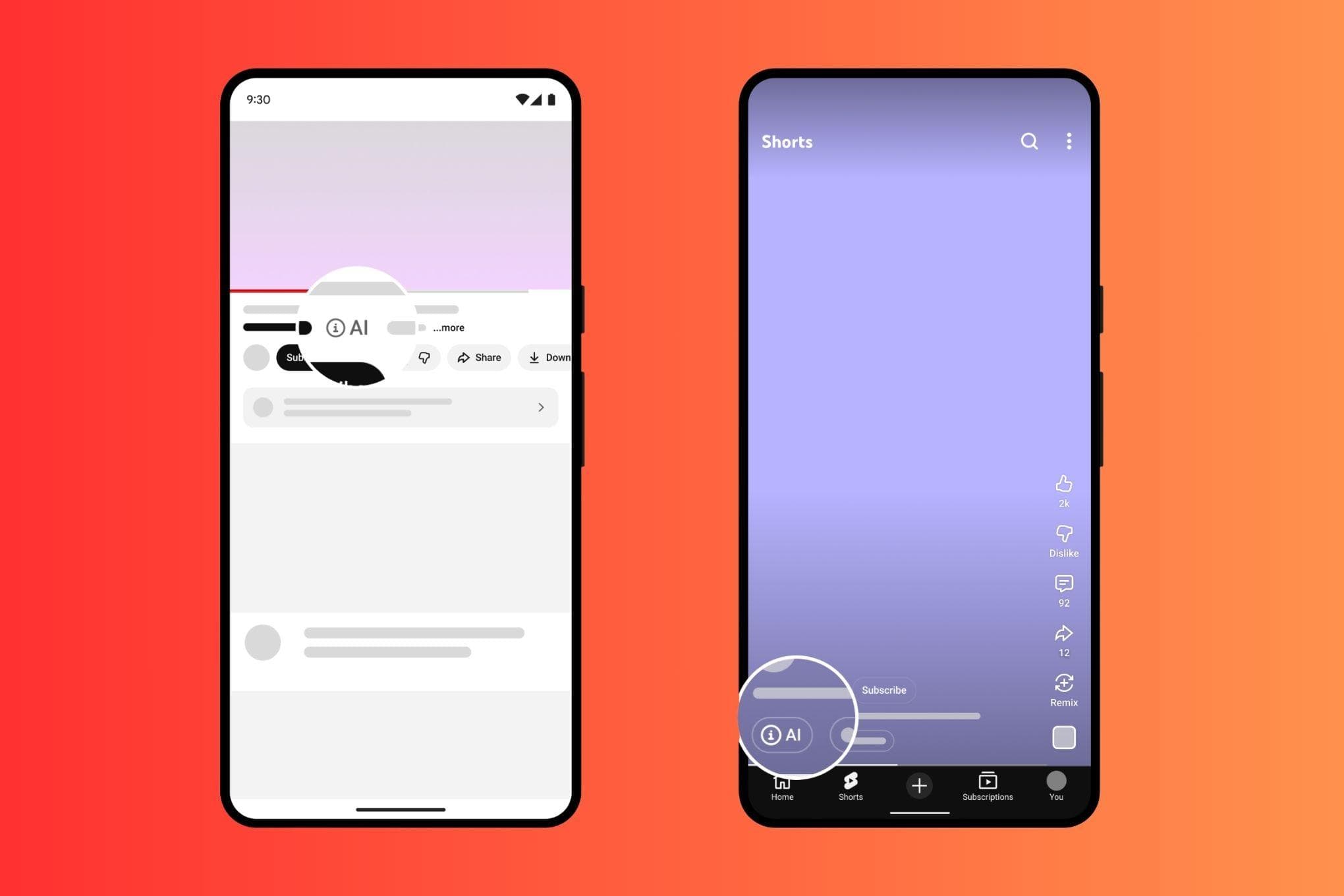
These changes apply to both Shorts and long-form videos. In the past, AI labels were hidden in the video descriptions, where most viewers didn’t even look. Now, they’ll be displayed directly on the video player, making them hard to miss while you’re watching.
What’s Actually Changing
There are two main updates to highlight. First, YouTube is moving the AI disclosure labels. Instead of being buried in the description section below the video, the labels will now show up on the player itself, much like age-restriction warnings or breaking news alerts.
Second, YouTube is introducing automatic detection. The platform will now identify videos that feature “significant photorealistic AI,” which refers to footage that looks like real people, places, or events. It will apply labels to these videos automatically, even if the creator didn’t disclose anything. This marks a big shift from a system based on trust.
This change follows Google’s broader AI verification efforts announced at its I/O developer conference in May 2026. It suggests a coordinated push across Google’s products to enhance transparency around AI-generated content.
Why This Matters Now
Think of it like nutrition labels on food packages. For years, ingredient lists were printed in tiny font on the back. YouTube’s previous AI labels were just like that. By moving them to the front, in clear, readable text, the platform aims to improve transparency.
The timing is spot on. AI video generation tools have advanced rapidly. Now, anyone can create a photorealistic video of someone saying something they never actually said, or fabricate footage of an event that never occurred. Without clear labeling, viewers struggle to tell what’s real and what’s not.
YouTube has required creators to disclose AI content since late 2023. However, enforcement has been hit or miss, and the labels were often overlooked. Automatic detection changes the game. It eliminates reliance on creators to self-report accurately.
How the Automatic Detection Works
YouTube hasn’t shared a detailed technical explanation, but the system seems to analyze video content for signs of AI generation, especially in photorealistic footage. This is similar to how platforms like Google Photos use machine learning to recognize objects in images. Here, though, the platform focuses on artifacts and patterns that hint at AI creation instead of real-world capture.
The automatic detection specifically targets photorealistic AI content. So, standard animation, motion graphics, or stylized AI art won’t necessarily trigger a label. The main concern is content that mimics real footage of actual events.
| YouTube AI Labeling: By The Numbers | |
|---|---|
| Policy requiring creator AI disclosure introduced | Late 2023 |
| Formats affected by new label placement | Shorts + long-form videos |
| New label location | On the video player (previously: description section) |
| Detection trigger | Significant photorealistic AI content |
| Parent company AI push | Google I/O, May 2026 |
What This Means for Everyday Viewers
If you’re a regular YouTube viewer, you’ll soon see small labels popping up on videos when you watch them. You won’t have to scroll down to read the description to find out if something was AI-generated. This matters a lot, especially for Shorts, where people often swipe through quickly without reading.
Keep in mind, this system won’t catch everything. Automatic detection has its limitations, and creators who want to deceive might find ways to bypass it. But for most videos using AI tools openly, you’re much more likely to know what you’re watching before forming an opinion.
People who follow current events on YouTube will probably notice this the most. A labeled video featuring a politician or public figure will now be clearly marked before you interpret it as real footage.
Community Reaction
“Finally. The old labels were basically useless. I never once saw someone click ‘show more’ on a description just to check for AI disclosures.”
“The automatic detection is the part that actually matters. Self-reporting only works if bad actors care about following the rules.”
What To Watch
- Rollout timeline: YouTube hasn’t announced an exact date for when all users will see the new label placement. Keep an eye out for gradual rollout notices in the coming weeks.
- Detection accuracy: Watch for false positives (labeling human-made content as AI) and false negatives (missing actual AI content) once the system is fully live.
- Creator response: Some creators who use AI tools legitimately might push back if labels affect their watch time or ad revenue. YouTube’s response to that pressure will influence how strictly the policy is enforced.
- Industry follow-through: With Google expanding AI verification across its products, similar demands might land on competitors like TikTok and Instagram Reels in the near future.
Sources: The Verge: YouTube is putting AI labels where you’ll actually see them | TechCrunch: YouTube will now automatically label AI videos

Maya Torres
Maya Torres is the Consumer Tech Editor at Explosion.com with 7 years covering product launches for major technology publications. She has reviewed over 300 devices across smartphones, laptops, wearables, and smart home products. Maya specializes in translating spec sheets into real-world buying advice and attends CES, MWC, and Apple keynotes as press. Her reviews focus on helping readers decide what to buy, not just what specs look good on paper.