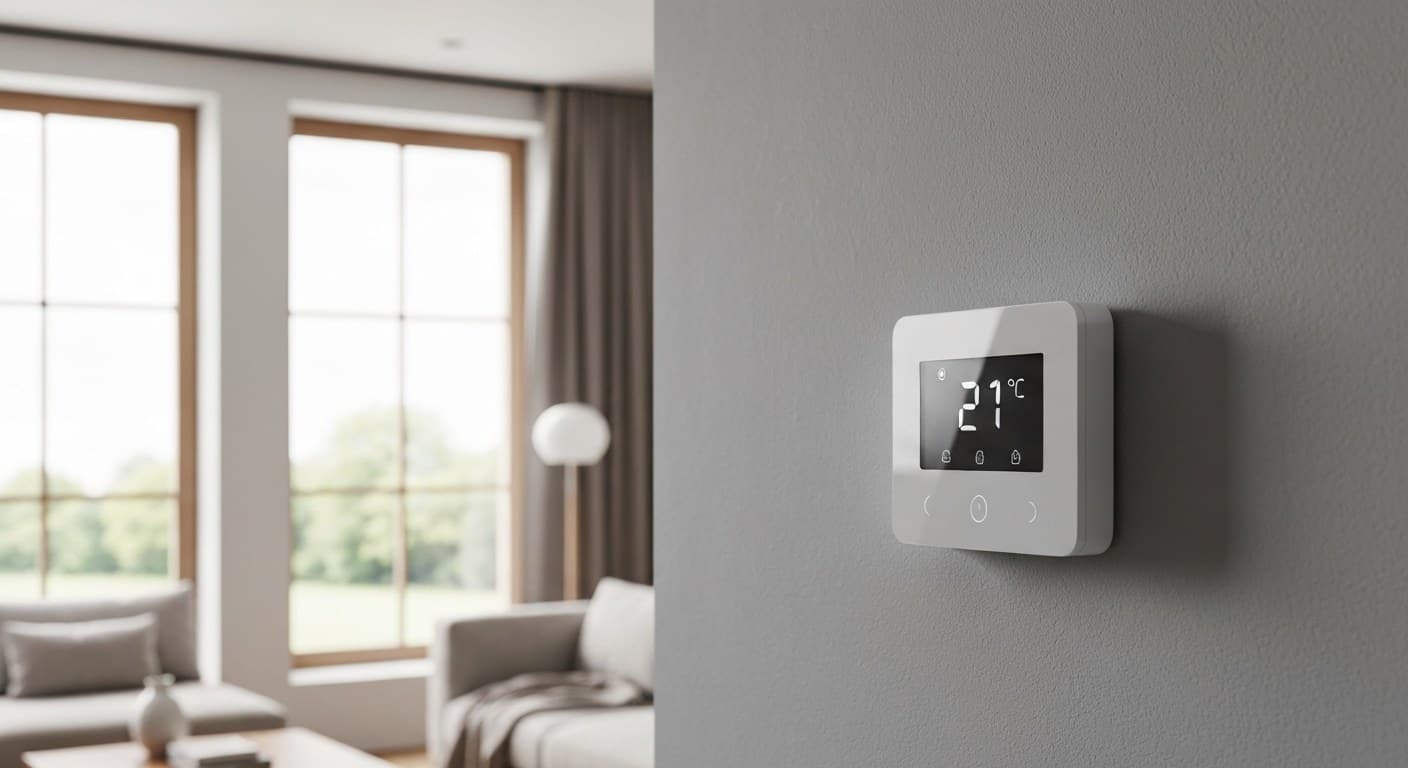
The position of a thermostat is a factor in the performance of a home climate control system. Devices are often prone to frequent starting and stopping when they are in locations where temperatures do not match the rest of the house – these repetitive cycles are the cause of high energy consumption, inconsistent temperatures plus mechanical wear. Accuracy is higher when a thermostat is in a central location, which allows the system to function according to its design. Consistent measurements are a requirement for heating and air conditioning units to remain efficient but also to maintain a comfortable indoor temperature.
Central Placement & Temperature Accuracy
Living areas that are central and have steady air circulation are the best locations for a thermostat. Devices installed in isolated rooms or corners often detect temperatures that are different from the rest of the home – this causes the system to activate or deactivate at inappropriate times. Energy is wasted and comfort levels become uneven.
Central placement is helpful because the thermostat receives a balanced reading of indoor conditions – this reduces the chance that some areas are too cold or too hot while other rooms are uncomfortable. In homes with cooling systems, like air conditioner Edmonton, proper placement is vital because cooling cycles rely on accurate temperature data.
Avoiding Heat Sources & External Influence
Appliances that produce heat or areas with direct sunlight can cause a thermostat to provide incorrect data. Items like lamps, televisions and kitchen equipment or sunlight from windows, make the air around the thermostat warmer than the rest of the house – this leads to cooling cycles that are not required, which increases energy use and costs.
Drafts or locations near exterior doors are also problematic for thermostats – these spots can cause a system to run for a longer time than is necessary. If external temperature changes affect the readings, the system is less efficient. A thermostat is most effective when it responds to the average indoor temperature instead of isolated changes.
Airflow & Room Representation
Air movement is not the same in every part of a home – Rooms with low airflow are often warmer or cooler than the rest of the house, which can interfere with thermostat readings. Hallways or enclosed spaces often lack steady circulation and do not represent the actual conditions of the living space – these locations lead to inefficient system behavior.
Well-ventilated areas are better for thermostats because they provide accurate data about the environment – this leads to smoother operation and fewer cycles. In modern homes with efficient air conditioning systems, small changes to the location of the thermostat are able to improve performance and lower energy waste over time.
Multi-Level Homes & Zoning Considerations
Temperature differences between floors are a challenge for thermostat accuracy in multi level homes. Warm air rises – upper levels are frequently warmer than lower levels. If a thermostat is on an upper floor, the system may provide too much cooling to the lower floors. If it is on a lower floor, the upper levels may become too warm – this imbalance is a cause of inefficient operation.
Zoning systems or specific thermostat locations are solutions that improve performance in these homes. Many buildings benefit from a central location on the main floor where the temperature is stable. In areas like Edmonton where air conditioning is common, it is important to manage these vertical temperature differences to lower energy waste and maintain comfort.
Conclusion
Strategic thermostat placement is an effective method to lower energy waste. Homeowners are able to ensure accurate temperature readings – placing the device in a central spot away from heat and drafts – this results in fewer cycles and better efficiency.
Awareness of airflow and temperature differences between floors makes thermostat placement a primary factor in managing energy use. A thermostat in a good location allows heating and cooling systems to work as they are designed – this supports lower costs and helps the equipment last longer.

Nick Guli
Nick Guli is the founder and editor-in-chief of Explosion.com, which he launched in February 2012. With over a decade of experience in digital publishing, Nick oversees editorial direction across entertainment, gaming, technology, and lifestyle content. He is an avid gamer and movie enthusiast who brings a critical eye to coverage of industry trends, game reviews, and entertainment news.