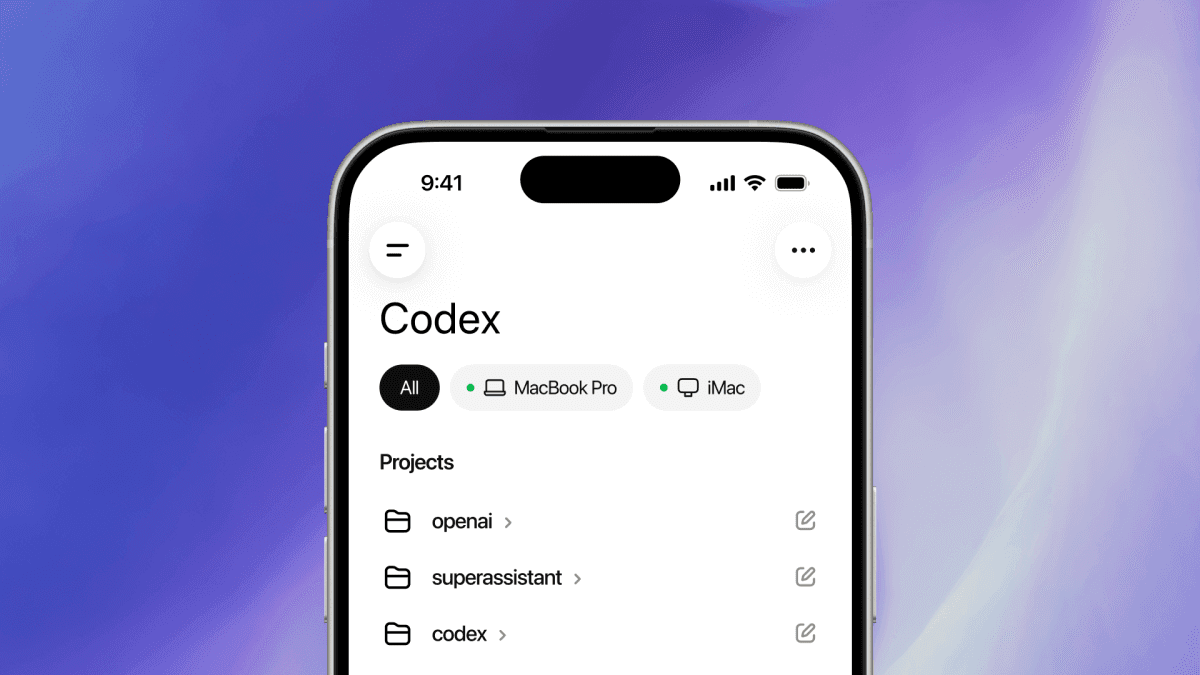
OpenAI is launching its Codex coding assistant for smartphones. This allows developers to oversee and manage their programming projects from anywhere, not just at their desks.
Codex is OpenAI’s AI-driven coding tool, acting like a smart co-pilot that can write, fix, and explain code. Until now, it focused mainly on desktop use. The new mobile version changes things by putting project management and code oversight right in your pocket.
What Is Codex, Exactly?
Codex is OpenAI’s dedicated coding product, distinct from the more general ChatGPT interface that many are familiar with. While ChatGPT can assist with coding, Codex is tailored specifically for software development workflows. It can write entire functions, debug issues, and tackle complex programming tasks more effectively than a general chat session.
This tool operates on OpenAI’s models and integrates seamlessly into professional developers’ workflows. It connects to code repositories—storage systems where developers keep project files—and handles longer, more complex tasks in the background.
What the Mobile Version Actually Does
As reported by TechCrunch, the mobile update aims to give users more flexibility in managing their workflows. The focus here is on “managing.” This isn’t about writing thousands of lines of code on a tiny touchscreen. Instead, it’s about staying connected to projects while away from the main machine.
According to Engadget, the integration allows you to monitor your coding projects on the go. You could start a lengthy coding task on your laptop, step out for lunch, and then check in on its progress, review what the AI has accomplished, or redirect it from your phone.
It’s a bit like checking on a contractor working at your home while you’re at the grocery store. You might not be swinging a hammer yourself, but you’re still in the loop and can give instructions.
Why This Matters for Developers
Modern software development rarely happens all at once. Developers often run long automated processes—like tests, builds, and code reviews—that can take anywhere from minutes to hours. Being stuck at a desk just to monitor these processes can drain productivity.
With mobile access, a developer can assign Codex a task before leaving the office and then check the results on the train home. If something goes wrong, they can catch it early rather than arriving the next morning to find hours of work went astray.
This also aligns with a larger trend. OpenAI has been steadily expanding Codex’s capabilities, including a recent update that brought Codex controls directly into the ChatGPT app for both iPhone and Android users.
| OpenAI — Company Snapshot | |
|---|---|
| CEO | Sam Altman |
| Founded | 2015 |
| Headquarters | San Francisco, CA |
| Sector | Artificial Intelligence |
| Key Products | ChatGPT, Codex, Sora, DALL-E |
Community Reactions
Reactions to the announcement have been mixed. Some developers are genuinely excited about the increased workflow flexibility. Others are skeptical about whether mobile is suitable for serious coding tasks.
“This is genuinely useful for monitoring long-running agents. Don’t need a full IDE on mobile, just visibility and control.”
“Cool in theory, but I’ll believe it when the mobile interface is actually usable. Code review on a phone screen sounds miserable.”
This skepticism is understandable. There’s a clear difference between checking on an AI-managed task and doing hands-on development work on a phone. OpenAI seems to be focusing on the former rather than the latter.
What This Means
If you’re not a developer, this update probably won’t change your daily routine. But if you experiment with AI coding tools, or if your job involves overseeing technical projects without writing code, mobile Codex access could save you valuable time.
For professional developers, managing AI-assisted coding tasks remotely fits naturally into their workflows. They often work across multiple devices, locations, and time chunks throughout the day.
More broadly, this move shows where AI coding tools are headed. They’re shifting from being desktop-only power tools to always-available assistants that fit into your daily routine, not just during the hours spent at a computer.
What To Watch
- Full feature rollout timing: OpenAI hasn’t shared a specific date for when all users will access the mobile Codex experience. Expect a staged rollout, likely starting with ChatGPT Plus and Pro subscribers.
- Deeper mobile editing features: Currently, the focus seems to be on monitoring and managing tasks. Whether OpenAI expands to include more hands-on mobile coding capabilities is something to keep an eye on in the coming months.
- Competitor response: GitHub Copilot, Google’s Gemini Code Assist, and other AI coding tools will likely respond with their own mobile offerings. This space is evolving quickly.

Daniel Park
Daniel Park covers AI, cloud infrastructure, and enterprise software for Explosion.com. A former software engineer who transitioned to technology journalism 5 years ago, Daniel brings technical depth to his reporting on artificial intelligence, startup funding rounds, and the companies building the future of computing. He breaks down complex AI developments and business strategies into clear, actionable insights for readers who want to understand how technology is reshaping industries.