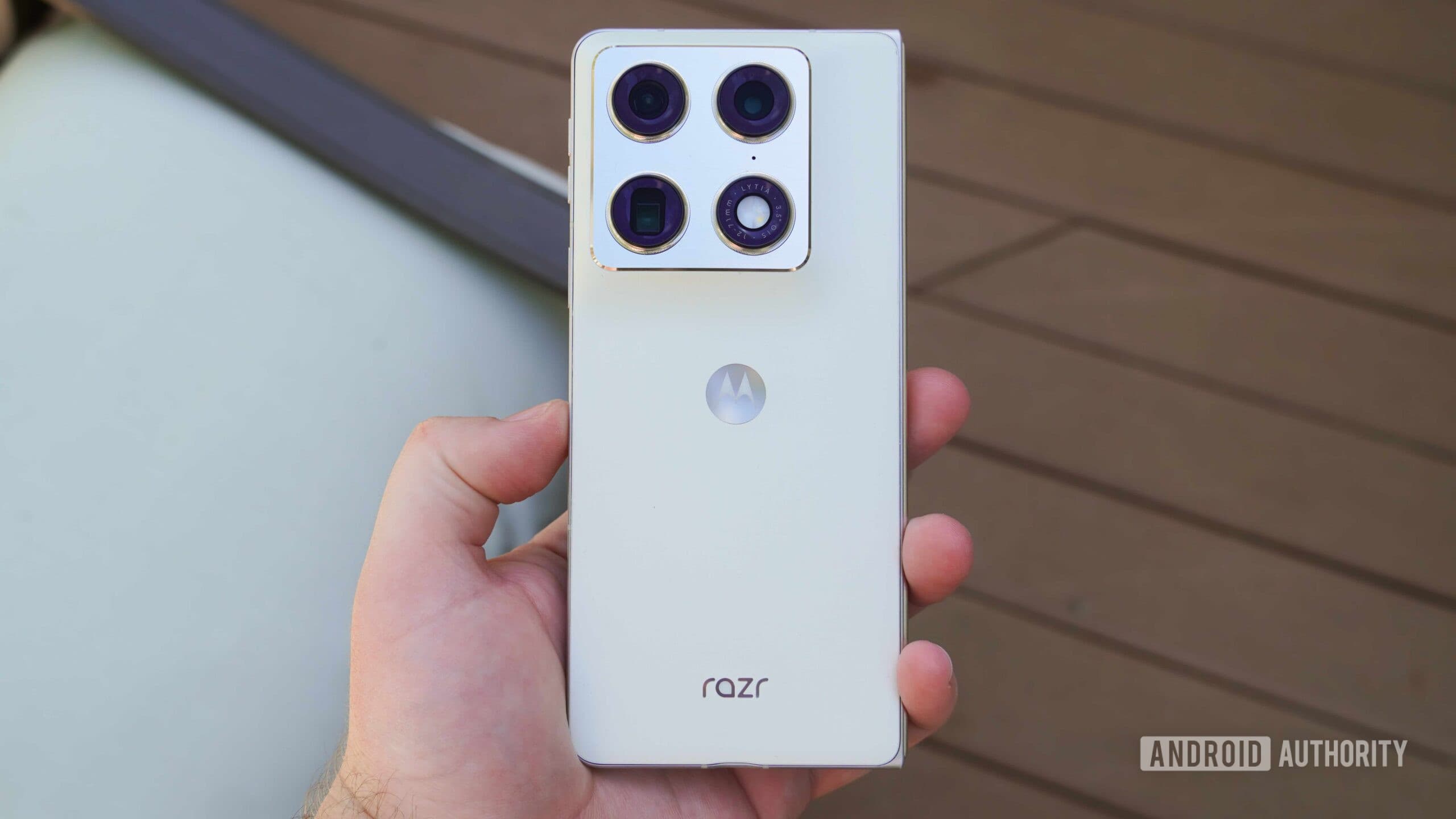
The Motorola Razr Fold excels in one area where other foldable phones struggle — its software. This edge makes it stand out in the crowded foldable market.
After a week of testing Motorola’s first book-style foldable (which opens like a book instead of flipping like a clamshell), both Android Authority and 9to5Google reached the same conclusion: the Razr Fold manages multitasking better than Samsung’s Galaxy Z Fold and Google’s Pixel Fold.
What Makes the Razr Fold Different
Most foldable phones feature a large inner screen that unfolds like a mini tablet. This design aims to provide extra screen space for running two apps side by side, known as split-screen. However, in practice, getting apps to work smoothly on that larger display has been tricky on competing models. Windows resize awkwardly, apps often snap into odd proportions, and the whole setup can feel more like a workaround than a true feature.
Motorola takes a different approach. The Razr Fold comes with a heavily customized version of Android that focuses on how apps interact on the inner display. Reviewers found that moving an app from one side of the screen to the other, resizing windows, and switching between open apps felt more intentional and polished compared to the Samsung Galaxy Z Fold 6 or Pixel 9 Pro Fold.
Imagine a desk where everything has its own place versus one where you’re always moving papers around. The Razr Fold’s software gives apps a designated spot and keeps them organized.
Hardware: Solid, Not Flashy
The Razr Fold doesn’t rely on specs alone to impress. It runs on Qualcomm’s Snapdragon 8 Elite chip, the same processor found in the Samsung Galaxy S25 series, known to be the fastest Android chip available. It’s paired with 12GB of RAM. The inner display measures 7.9 inches when open, while the 3.6-inch cover screen allows quick checks without unfolding the device.
The hinge — a crucial part of foldables due to wear concerns — feels secure and sturdy, with no noticeable flex or wobble after a week of use. The crease down the center of the screen is visible but doesn’t distract during regular use.
Battery life holds up to about a full day of mixed usage, which is decent but not groundbreaking for a device of this size.
| Spec | Detail |
|---|---|
| Inner Display | 7.9 inches |
| Cover Display | 3.6 inches |
| Processor | Snapdragon 8 Elite |
| RAM | 12GB |
| Form Factor | Book-style foldable |
| Motorola’s Previous Foldables | Flip-style only (Razr series) |
| Main Competitor | Samsung Galaxy Z Fold 6, Pixel 9 Pro Fold |
The Asterisk on “Best Foldable”
9to5Google referred to it as “the best foldable*” with an important asterisk. This note is significant. The Razr Fold is Motorola’s first venture into this form factor, and it shows in some aspects. The camera system struggles in low-light situations compared to Samsung’s offerings, and app compatibility — how well everyday apps adapt to a tablet-sized screen — still needs improvement across the Android ecosystem.
Samsung has had years to refine its foldable software experience. While Motorola is making a strong debut, Samsung isn’t resting on its laurels.
What This Means for Everyday Users
If you’ve been curious about foldable phones but found the multitasking experience on Samsung or Google devices frustrating, the Razr Fold deserves your attention. Its software-first approach means the larger screen actually fits into your daily routine instead of just being a novelty you open occasionally.
For those who frequently juggle emails with a browser or want to reference a document while drafting a reply, the Razr Fold’s windowed multitasking feels more like using a small laptop than any other phone-sized device on the market.
That said, if camera quality is your top priority or if you’re deeply integrated into the Samsung ecosystem with a Galaxy Watch and other devices, switching may come with trade-offs.
What People Are Saying
“Finally a foldable where multitasking doesn’t feel like I’m fighting the phone. Used it for an hour at a store, and the window management alone was impressive.”
— u/FoldableSkeptic, r/Android
“Motorola’s delivering the software experience Samsung should’ve had three years ago. Excited to see how the durability holds up long-term.”
— YouTube comment on Android Authority’s hands-on video
What To Watch
- Full reviews incoming: Both hands-on reports were based on about a week of use. Look for longer-term reviews covering camera performance, hinge durability, and battery degradation in the coming weeks.
- Pricing and availability: Neither publication shared final pricing during their hands-on reports. That announcement is expected soon and will play a major role in how the Razr Fold competes against the Galaxy Z Fold 6, which starts at $1,899.
- Samsung’s response: Samsung’s Galaxy Z Fold 7 is anticipated later in 2026. Motorola’s strong software performance could push Samsung to refine its multitasking experience in the next generation.
- App compatibility progress: Google is encouraging developers to optimize apps for larger screens. Pay attention to whether major apps like Instagram and TikTok update their tablet-mode layouts, as this would enhance the usefulness of any book-style foldable, including the Razr Fold.
Sources: Android Authority hands-on | 9to5Google first impressions

Daniel Park
Daniel Park covers AI, cloud infrastructure, and enterprise software for Explosion.com. A former software engineer who transitioned to technology journalism 5 years ago, Daniel brings technical depth to his reporting on artificial intelligence, startup funding rounds, and the companies building the future of computing. He breaks down complex AI developments and business strategies into clear, actionable insights for readers who want to understand how technology is reshaping industries.