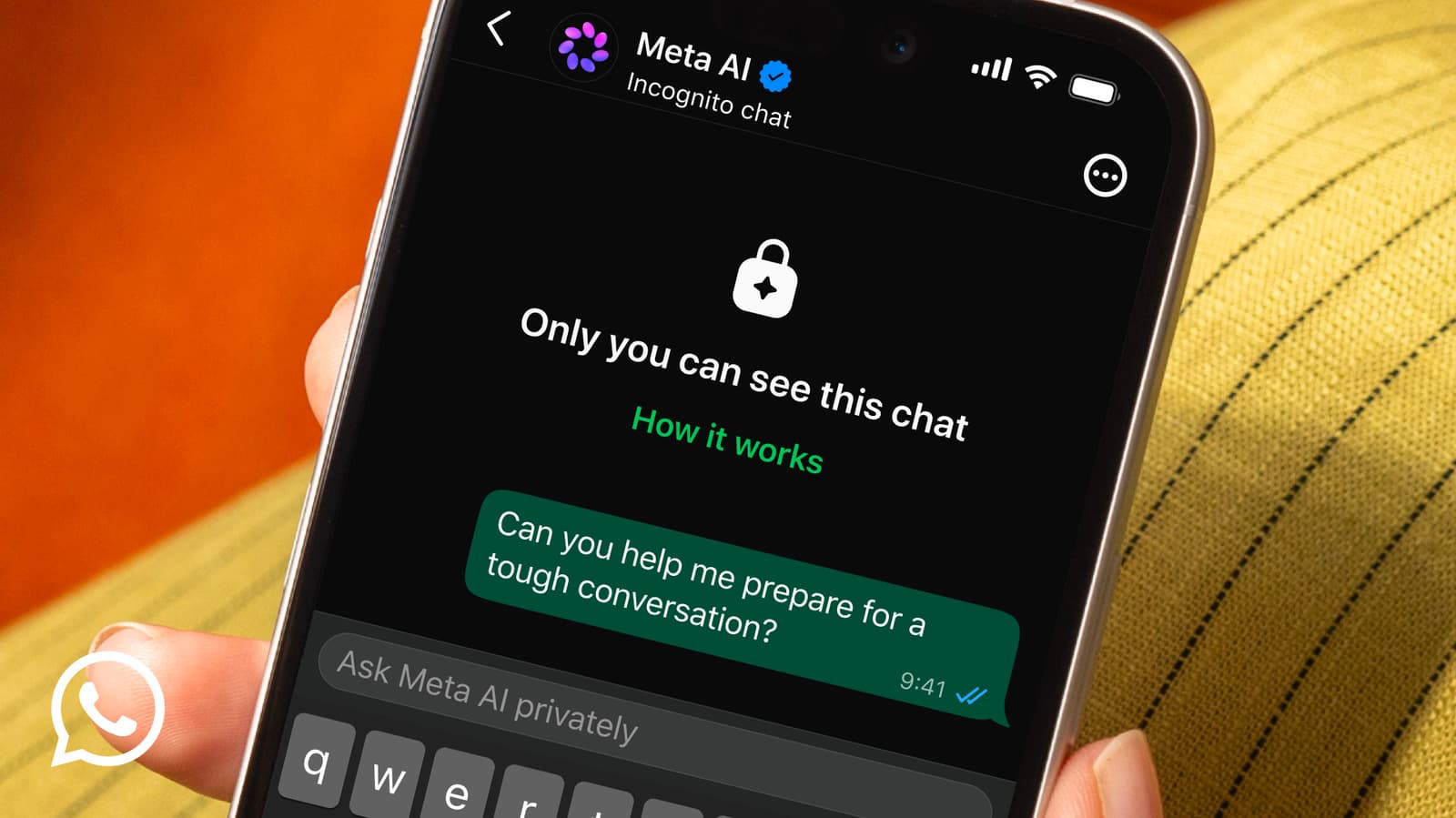
WhatsApp is introducing a new feature called Incognito Chat that allows you to communicate with Meta AI without anyone, including Meta, being able to see those conversations.
This feature was announced on May 13, 2026, and it represents a significant shift for a company that has built its business on user data collection. Messages sent through Incognito Chat aren’t stored on Meta’s servers, and they automatically vanish once you close the chat window. This works similarly to how a web browser’s private mode deletes your history when you close it.
How Incognito Chat Actually Works
When you start a chat with Meta AI on WhatsApp, you can choose to enter Incognito mode. In this mode, the conversation is end-to-end encrypted. This means only your device and the AI can decode the messages; no one else, including Meta, can access them, and nothing gets stored after you exit the chat.
This is a strong technical commitment. Usually, when you interact with an AI chatbot, the company logs your questions and responses to improve the model, monitor for misuse, or deliver personalized ads. Meta claims that none of this occurs in Incognito Chat.
WhatsApp already employs end-to-end encryption for regular messages between users, so applying that principle to AI conversations fits well with the app’s privacy-focused image. The challenge has been that AI systems typically process messages on a server, which raises the risk of someone potentially seeing them. While Meta hasn’t fully explained the technical setup preventing this, Wired reports that the company asserts even its employees cannot access these conversations.
Why This Is a Big Deal
People often ask AI chatbots sensitive questions they wouldn’t search for online. Topics like medical symptoms, relationship issues, and financial concerns are personal. That sensitivity is why privacy in AI chats is crucial, more so than in product searches.
Previously, using Meta AI on WhatsApp meant those private inquiries might be on Meta’s servers and subject to the company’s data policies. Incognito Chat makes it clear: this conversation is just between you and the AI.
This move also puts pressure on competitors. Google’s Gemini and OpenAI’s ChatGPT offer some privacy features, but a disappearing AI chat integrated into the world’s most popular messaging app sends a strong message.
| By The Numbers: Meta | |
|---|---|
| Stock (META) | $614.98 (+1.99%) |
| CEO | Mark Zuckerberg |
| Founded | 2004 |
| Headquarters | Menlo Park, CA |
| WhatsApp Users (global) | 3 billion+ |
The Skeptic’s Take
Not everyone is ready to trust Meta’s privacy claims. The company has faced numerous privacy controversies over the years, from the Cambridge Analytica scandal to FTC fines for data misuse. Just saying that a feature is private doesn’t guarantee that it actually is.
Security researchers will likely want to examine the technical setup before declaring this feature truly private. Meta hasn’t yet published details on how it will prevent server-side logging while still operating a functional AI model, which requires significant computing power.
There’s also the issue of the AI model itself. Even if Meta can’t access your Incognito Chat transcript, the model still has to process your message to reply. How that processing happens without leaving a trace deserves careful scrutiny.
Community Reactions
“I’ll believe it when independent researchers verify it. Meta saying your data is private and your data actually being private are two very different things.”
— u/privacy_hawk, Reddit r/privacy
“Honestly, if this works as described, it’s the push I needed to actually try Meta AI. I wasn’t going to let it see my real questions.”
— YouTube comment on The Verge’s WhatsApp coverage
What This Means for You
If you use WhatsApp and have avoided Meta AI due to concerns about logging, Incognito Chat removes that barrier. Now, you can ask personal or sensitive questions without those messages being linked to your Meta account or stored on Meta’s servers.
The downside is that since conversations disappear when you close the chat, you won’t be able to scroll back and refer to what the AI told you last week. For quick, one-off questions, that’s fine. However, for ongoing discussions where you need to revisit previous messages, you’d have to use the regular Meta AI chat.
For now, it’s a good idea to wait for independent verification of Meta’s privacy claims before considering Incognito Chat fully secure for your sensitive inquiries. But as a step toward private AI conversations on a platform that billions use daily, it’s a notable move.
What To Watch
- Rollout timeline: Meta hasn’t provided a specific date for when Incognito Chat will be available to all users. Expect staged rollouts starting in late May or June 2026 for select regions.
- Independent audits: Security experts and privacy advocates will likely seek to verify Meta’s no-logging claim. Their findings will weigh more than Meta’s assurances.
- Competitor response: If WhatsApp’s private AI chat gains popularity, anticipate that Google (Gemini in Messages) and Apple (Apple Intelligence) will introduce similar features.
- Regulatory attention: Privacy regulators in the EU, where WhatsApp has faced scrutiny before, may ask for details on the technical implementation before the feature launches there.
Sources: Engadget, Wired, TechCrunch

Ava Mitchell
Ava Mitchell is a digital culture journalist at Explosion.com covering social media platforms, streaming services, and the creator economy. With 4 years reporting on TikTok, Instagram, YouTube, and the apps that shape daily life, Ava specializes in explaining platform policy changes and their impact on everyday users. She previously managed social media strategy for a tech startup, giving her firsthand experience with the platforms she now covers.