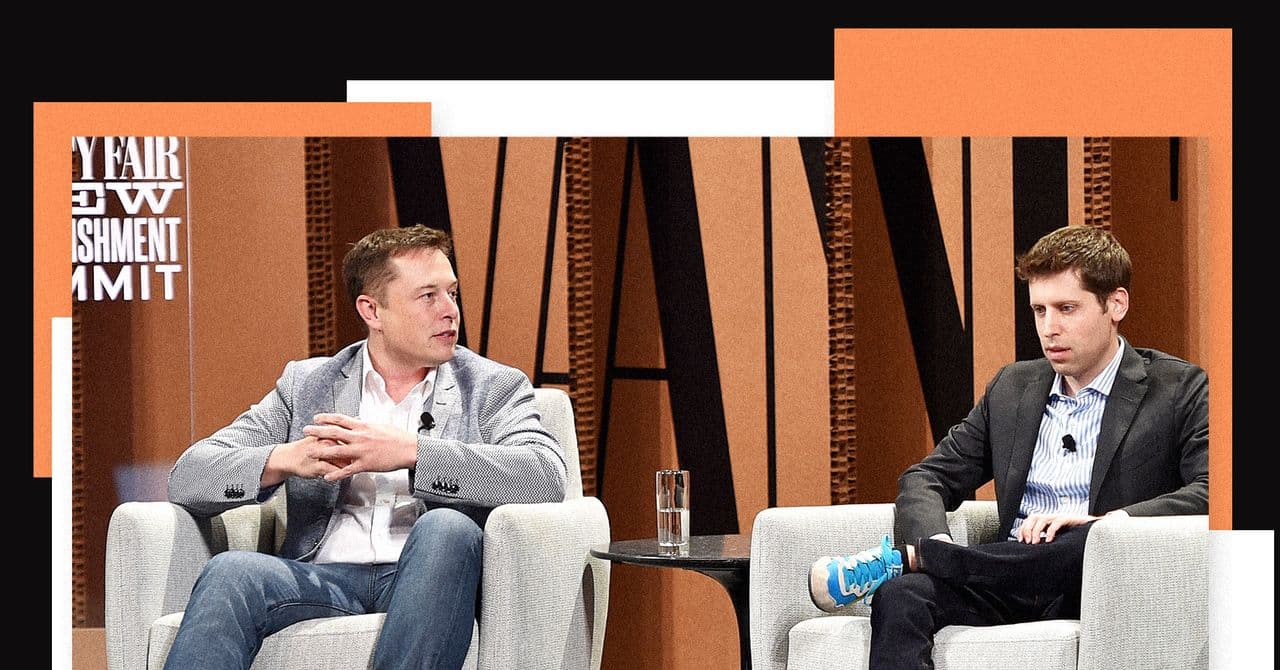
Court documents from the Musk v. Altman trial reveal that in 2017, Elon Musk considered bringing Sam Altman—now the head of OpenAI—on board to lead a competing AI lab at Tesla, according to messages reported by Wired.
This revelation adds an interesting twist to Musk’s legal conflict with OpenAI. Currently, Musk is suing OpenAI, claiming the company has strayed from its nonprofit mission. Yet, these newly revealed internal messages indicate that Musk was already planning to attract talent away from OpenAI—Altman included—while still being involved with the organization.
What The Messages Show
The messages, exchanged between Shivon Zilis (a Tesla executive and close associate of Musk) and other Tesla leaders, detail a 2017 initiative to establish an AI research lab within Tesla. The documents point out that Musk looked at two potential candidates to head this new venture: Altman, then president of Y Combinator (a well-known startup accelerator), and Demis Hassabis, the British AI researcher who later co-founded Google DeepMind.
Ultimately, neither Altman nor Hassabis took the lead on a Tesla AI lab. Altman became CEO of OpenAI in 2019, while Hassabis co-founded DeepMind, which Google later acquired. However, these messages suggest Musk was actively seeking to gather talent from the AI sector—specifically targeting individuals linked to the organization he helped establish.
The Bigger Story: How Musk Left OpenAI
The trial has also shed light on how Musk’s relationship with OpenAI deteriorated. Greg Brockman, one of OpenAI’s co-founders, provided a candid account of the split, which TechCrunch described as unusually frank for a dispute of this nature.
Musk co-founded OpenAI in 2015 with Altman, Brockman, and others, contributing initial funding and credibility. The organization aimed to develop artificial general intelligence (AGI—AI capable of performing any intellectual task a human can) safely and for the benefit of humanity. In 2018, Musk left the board, citing potential conflicts with Tesla’s AI goals.
In 2023, he launched xAI, his own AI company, and soon after filed a lawsuit against OpenAI and Altman. He claimed the nonprofit had transformed into a for-profit entity serving Microsoft and private investors instead of the public good.
| Founded | 2015 |
|---|---|
| CEO | Sam Altman |
| Headquarters | San Francisco, CA |
| Sector | Artificial Intelligence |
| Original Structure | Nonprofit |
| Current Structure | Capped-profit (converting to public benefit corporation) |
| Valuation (2025) | $300 billion |
Why This Matters: The Lawsuit in Context
Musk’s lawsuit hinges on the claim that he was misled. He alleges that OpenAI’s founders assured him of a truly nonprofit AI lab, only to pivot to something resembling a typical tech company focused on profit.
The 2017 recruitment messages complicate this narrative. If Musk was already trying to recruit talent associated with OpenAI while still on its board, it hints that his concerns were partly about control, not just about mission integrity.
It’s akin to learning that someone suing their business partner for “betraying the company’s values” was secretly courting rival investors all along.
What This Means
For regular users, this trial isn’t just about who wins; it reveals how the most influential AI company in the world was built. OpenAI’s products—ChatGPT, GPT-4, and the APIs powering many apps you likely use—emerged from a founding period that seems to have been a lot more chaotic and competitive than the “let’s save humanity” narrative its founders have shared publicly.
The outcome could also impact OpenAI’s transition to a for-profit structure. If the courts find merit in Musk’s claims that the nonprofit mission was abandoned improperly, it might force changes in how OpenAI is governed. This could even alter who shapes the AI tools used by millions daily.
Community Reactions
“So Musk wanted to use OpenAI’s talent to build an AI lab he controlled at Tesla, failed, left, and is now suing them for not staying a nonprofit. The audacity is genuinely impressive.”
— u/FounderDrama, Reddit r/technology
“What’s wild is that if Musk had succeeded in recruiting Altman to Tesla in 2017, ChatGPT probably never happens. Or it happens inside a car company. Strange timeline either way.”
— YouTube comment on Wired’s trial coverage video
What To Watch
- The trial continues: The Musk v. Altman case is still ongoing, and more internal documents are expected to be released. Each new set has changed how the public views what happened during OpenAI’s early years.
- OpenAI’s for-profit conversion: OpenAI is restructuring into a public benefit corporation (a for-profit company with a social mission outlined in its charter). The trial’s outcome could speed up, slow down, or complicate that transition.
- xAI vs. OpenAI in the market: Regardless of how the legal battle concludes, Musk’s AI company, xAI, is directly competing with OpenAI. Keep an eye out for announcements from both sides as the trial keeps their names in the headlines.
Sources: Wired — Elon Musk’s Last-Ditch Effort to Control OpenAI | TechCrunch — How Elon Musk Left OpenAI, According to Greg Brockman

Maya Torres
Maya Torres is the Consumer Tech Editor at Explosion.com with 7 years covering product launches for major technology publications. She has reviewed over 300 devices across smartphones, laptops, wearables, and smart home products. Maya specializes in translating spec sheets into real-world buying advice and attends CES, MWC, and Apple keynotes as press. Her reviews focus on helping readers decide what to buy, not just what specs look good on paper.