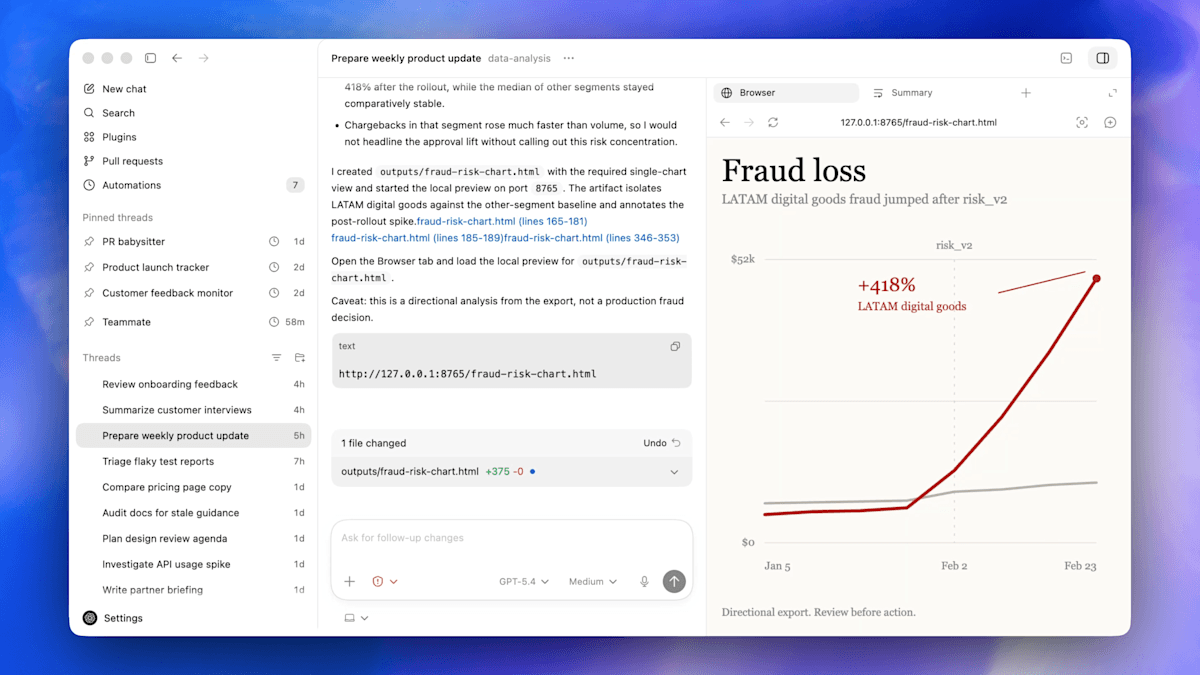
OpenAI has rolled out an update for its Codex coding tool, allowing multiple AI agents to operate simultaneously across various applications on your computer. The company describes this as just the “first phase” of a larger project, which aims to create a single desktop super app that combines ChatGPT, a built-in browser, and a code generator, all in one location.
What’s Actually Changing in Codex
Codex acts as OpenAI’s AI-driven coding assistant. Imagine it as a supercharged autocomplete for software developers — it understands what you’re building and generates code to assist you. With the latest update, Codex can now run several AI agents at once. These agents are small, task-focused programs that function independently across different applications on your desktop.
In simpler terms, instead of tackling one task at a time, Codex can now manage multiple tasks across various apps. For instance, a developer could have one agent creating test code, another searching through documentation, and a third monitoring for errors — all happening simultaneously in the background.
OpenAI confirmed to both CNET and Engadget that these updates mark the “first phase” of a broader initiative to create a more unified desktop experience.
The Super App Vision
The ultimate goal, which OpenAI confirmed following earlier reports from The Wall Street Journal, is to build a single desktop super app that integrates ChatGPT, a web browser, and Codex into one cohesive product. This approach is similar to what apps like WeChat do in China by combining messaging, payments, and services in one interface, but it’s focused on AI-powered productivity tools for PCs and Macs.
This move would put OpenAI in direct competition with Microsoft, which has been incorporating its own Copilot AI (built on OpenAI technology) throughout Windows and Office. It would also encroach on Google’s territory, as Chrome is the leading desktop browser and Google has been actively enhancing its tools with AI features.
Why OpenAI Is Moving This Direction
Currently, using OpenAI’s tools involves switching between ChatGPT on the web, Codex in a separate environment, and whatever browser you have open. Each transition creates friction. A unified app would allow the AI to maintain context across all three — so it remembers what you were reading in the browser while helping you write or fix code.
This persistent context gives OpenAI a significant competitive edge. Many AI tools today seem to forget what they were doing between tasks. A super app architecture could change that by keeping everything in one seamless session.
| Founded | 2015 |
|---|---|
| Headquarters | San Francisco, CA |
| CEO | Sam Altman |
| Sector | Artificial Intelligence |
| Key Products | ChatGPT, Codex, DALL-E, Sora |
| Publicly Traded | No |
What This Means
If you’re not a developer, the latest Codex update won’t really change how you use it daily. But the ambition for a super app is important for anyone who regularly uses ChatGPT. Here’s what might change:
- One login, one window: No more flipping between tabs and apps to use different OpenAI tools.
- AI that remembers: An integrated browser means the AI could read a webpage you’re viewing and help you act on it, whether that’s summarizing the content, drafting a response, or extracting data.
- More automation: With multi-agent support, the AI could handle longer, multi-step tasks without requiring constant supervision.
For everyday users, think of it this way: it’s like upgrading from a flip phone with separate apps to a smartphone where everything works seamlessly together. The individual components aren’t new; it’s the integration that enhances their usefulness.
Community Reactions
“The multi-agent thing is interesting, but the ‘super app’ framing feels like marketing. We’ll see if the execution is seamless or just another Electron app that eats RAM.”
“If this means I don’t have to copy-paste constantly between ChatGPT and my editor, I’m all in. That workflow is super annoying right now.”
What To Watch
- Super app launch timeline: OpenAI hasn’t announced a release date yet. They described the current Codex update as a “first phase,” indicating more staged rollouts are likely coming before a full launch.
- Microsoft’s response: Microsoft holds a significant stake in OpenAI and distributes its technology through Copilot. A standalone OpenAI desktop app would directly compete with Microsoft’s products — a tension to monitor as their relationship evolves.
- Developer reception: Multi-agent Codex support is rolling out now. How quickly developers adopt it and what they create will likely influence how fast OpenAI moves toward the full super app vision.

Daniel Park
Daniel Park covers AI, cloud infrastructure, and enterprise software for Explosion.com. A former software engineer who transitioned to technology journalism 5 years ago, Daniel brings technical depth to his reporting on artificial intelligence, startup funding rounds, and the companies building the future of computing. He breaks down complex AI developments and business strategies into clear, actionable insights for readers who want to understand how technology is reshaping industries.