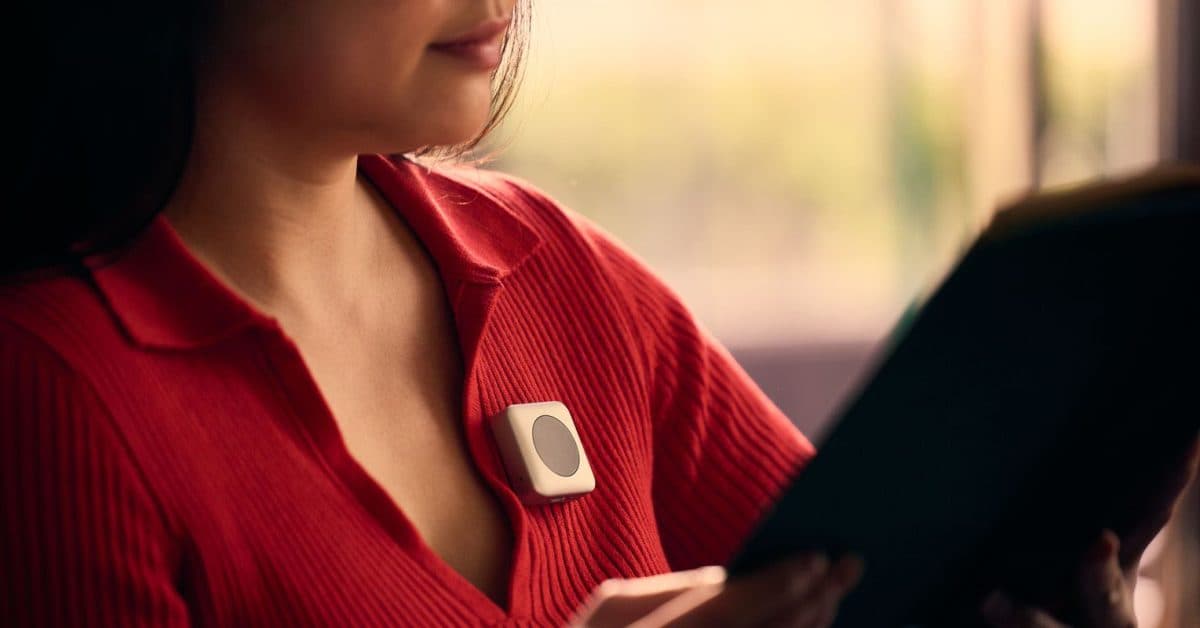
Two former engineers from Apple Vision Pro have developed a clip-on AI wearable that looks a lot like the discontinued iPod Shuffle. When asked about the device’s resemblance to the iPod Shuffle, they reportedly struggled to provide a clear answer. This new gadget, created by a startup founded by ex-Apple professionals, is designed to listen to your conversations only when you tap it. This feature aims to tackle the privacy issues that have affected other AI wearables.
What Is This Thing, Exactly?
This gadget is a compact, clip-on device — picture a square or rectangular piece that you can attach to your shirt or jacket. It acts as an AI assistant that you control with a button press. Unlike always-on voice assistants like Siri or Alexa, this device activates its microphone only when you tap it. So, it won’t be passively listening to your conversations when you’re not using it, which is an important privacy distinction.
The comparison to the iPod Shuffle isn’t simply coincidental. Apple’s tiny music player, which was retired in 2017, was known for its simplicity: no screen, just a clip and a few buttons. This new AI wearable embraces a similar philosophy—minimal interface, physical controls, and a design small enough to forget you’re even wearing it.
Why Privacy Is the Whole Pitch
The AI wearable market has faced its share of challenges. Humane’s AI Pin, launched in 2024 for $699, received widespread criticism for being slow, heating up, and not offering enough value to replace your phone. Similarly, the Rabbit R1 launched around the same time and faced skepticism. Both devices assumed users wanted a constantly connected AI companion but didn’t realize how much pushback there would be on devices that are always listening.
This new device’s tap-to-activate approach takes the opposite route. Instead of an AI that’s always on and ready, you get an AI that only engages when you decide to. It’s like having a friend who chats non-stop versus one who only speaks when you ask them something. According to 9to5Mac, the founders believe this strategy will help their product succeed where others have failed.
The Apple DNA Behind It
The founders have experience with Apple Vision Pro, Apple’s $3,499 spatial computing headset, which merges digital content with the real world. That’s quite different from a small clip-on button, which might explain why the team excels in hardware execution but struggles to explain their design choices. When asked why the device resembles an iPod Shuffle, they reportedly couldn’t provide a clear answer—either a charming honesty or a potential red flag for a product still finding its identity.
However, Apple alumni bring significant credibility in hardware design. The Vision Pro, despite its market challenges, was an engineering marvel. Creating something that feels good to wear and hold is a skill that doesn’t easily transfer from software.
| By The Numbers: Apple (AAPL) | |
|---|---|
| Stock Price | $260.48 |
| CEO | Tim Cook |
| Founded | 1976 |
| Headquarters | Cupertino, CA |
| iPod Shuffle Discontinued | 2017 |
| Apple Vision Pro Launch Price | $3,499 |
What This Means
For everyday users, this device offers a more cautious, privacy-focused approach to AI hardware. If you’ve ever felt uneasy about a smart speaker in your kitchen that’s always waiting for a wake word, this tap-to-activate feature could be appealing. It provides AI assistance without that constant surveillance vibe.
The real question is whether the AI’s capabilities justify the hardware purchase. Tapping a button is only useful if the AI’s response, ability to act, and accuracy actually save you time or do something your phone can’t. So far, that’s still unproven.
It’s important to remember the past failures of AI wearables. Both Humane and Rabbit had compelling demos and credible founding teams, yet neither achieved mainstream adoption. This new device has to meet that same standard, and just looking like a nostalgic piece of Apple hardware won’t be enough.
What People Are Saying
“Okay the tap-to-activate privacy angle is actually smart. The AI Pin failed because nobody wanted a microphone on their chest all day. At least these guys are thinking about it differently.”
“It looks like an iPod Shuffle and they can’t explain why??? That’s either the most Apple thing ever or a huge red flag lmao”
What To Watch
- Pricing and availability: No release date or price has been confirmed yet. Keep an eye out for a formal product announcement, which might include preorder details.
- Which AI model powers it: The device’s effectiveness depends largely on what’s running behind the scenes. The team hasn’t clarified if it uses GPT-4, Claude, Gemini, or a proprietary model.
- Competition heating up: With Meta launching new AI products and Samsung’s next Unpacked event coming soon, the AI hardware landscape is getting crowded fast. A slow rollout could cost this team its window.
- Apple’s own moves: Apple has remained quiet on dedicated AI hardware beyond improvements to Siri. If this startup’s device gains traction, it might encourage Apple to explore its own wearable AI options.

Ava Mitchell
Ava Mitchell is a digital culture journalist at Explosion.com covering social media platforms, streaming services, and the creator economy. With 4 years reporting on TikTok, Instagram, YouTube, and the apps that shape daily life, Ava specializes in explaining platform policy changes and their impact on everyday users. She previously managed social media strategy for a tech startup, giving her firsthand experience with the platforms she now covers.