
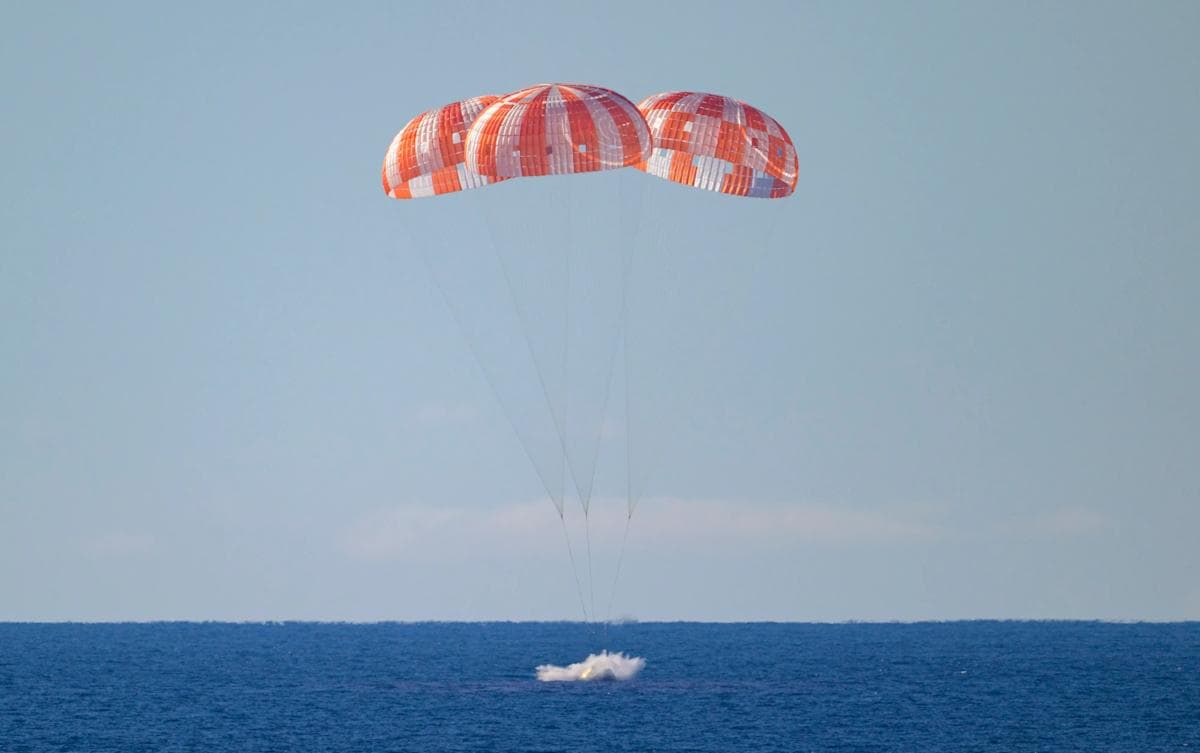
The four Artemis II astronauts have safely returned to Earth after a remarkable 10-day journey, setting a new record for the farthest any humans have traveled from our planet. This milestone hadn’t been achieved since the Apollo program wrapped up in 1972.
The Orion capsule carried commander Reid Wiseman, pilot Victor Glover, mission specialist Christina Koch, and Canadian Space Agency astronaut Jeremy Hansen on a trip around the Moon before splashing down. NASA is already calling this mission a turning point for deep space exploration.
What Artemis II Actually Did
Unlike the Apollo lunar landings, Artemis II was a crewed flyby. The astronauts traveled to the Moon, orbited it closely, and returned without landing. You could think of it as a test drive around the block before deciding to buy a car. The mission aimed to demonstrate that Orion and its life support systems can support astronauts in deep space.
The crew flew farther from Earth than any astronauts since Apollo 17 in December 1972. That record stood for over 50 years until Wiseman and his team broke it during this nine-to-ten-day flight.
How to Watch the Splashdown and Recovery
NASA streamed the entire splashdown and crew recovery live on NASA TV and the agency’s official YouTube channel. If you missed it, both platforms archive their streams, so you can catch the full footage on demand shortly after the event wrapped up.
The recovery operation typically stands out as one of the more visually striking parts of any crewed space mission. Navy vessels retrieve the floating capsule and assist the astronauts. Orion is set to land in the Pacific Ocean, where recovery ships are ready to reach the capsule within minutes of splashdown.
Where Does NASA Go From Here?
With Artemis II now completed, NASA is focusing on Artemis III — the mission that will land astronauts on the Moon’s surface for the first time since 1972, specifically near the lunar south pole. As Ars Technica highlighted in its post-mission coverage, quoting NASA leadership: “The work ahead is greater than the work behind us.”
This isn’t just modesty. Artemis III needs several systems that are still under development and testing. These include SpaceX’s Human Landing System, a modified Starship rocket that will carry astronauts from lunar orbit to the surface, along with new spacesuits made for moonwalks in permanently shadowed craters.
| Stat | Detail |
|---|---|
| Mission duration | ~10 days |
| Crew size | 4 astronauts |
| Record broken | Farthest humans from Earth since 1972 |
| Previous record holder | Apollo 17 (December 1972) |
| Years since record was last set | 50+ |
| Landing zone | Pacific Ocean |
| Next mission | Artemis III (lunar surface landing) |
What This Means for Everyday People
In practical terms, Artemis II clearly shows that humans returning to the Moon is no longer a question of whether — it’s about when. Each successful crewed mission reduces the risks for the next one. By proving that Orion can support a crew on a multi-day deep space journey, NASA and its partners have cleared a major technical hurdle on the road to the first Moon landing of the 21st century.
There’s also a significant milestone: Jeremy Hansen is the first Canadian to travel beyond low Earth orbit (the area about 1,200 miles above Earth’s surface where the International Space Station operates). Until now, every human who left that zone was either American or Soviet.
For the millions who watched the launch or streamed updates, the splashdown marks the end of a highly public chapter in space history. Many viewers had doubted they would witness this moment in their lifetimes after years of delays and budget disputes.
Community Reactions
“I cried at the launch and I’m crying again at splashdown. Never thought I’d actually see humans go back to the Moon in my lifetime.”
“Jeremy Hansen being Canadian is something I can’t stop thinking about. Canada’s been part of the ISS for decades but this is a whole different level.”
What To Watch
- Post-mission crew health checks: NASA will monitor the astronauts in the days and weeks ahead to see how their bodies respond to extended deep space radiation exposure. This data will directly inform Artemis III planning.
- Artemis III timeline updates: NASA is expected to provide a clearer estimate for the launch window after reviewing this mission. No firm date has been set yet, and the timeline relies heavily on SpaceX’s Starship development progress.
- Congressional budget decisions: Ars Technica noted that NASA’s deep space program faces ongoing funding pressure. How legislators respond to Artemis II’s success could influence how quickly Artemis III moves forward.
- Mission debrief coverage: NASA typically holds a post-mission press conference within days of splashdown — check NASA TV or the agency’s YouTube channel for that briefing.
Sources: Engadget | Ars Technica | The Verge

Daniel Park
Daniel Park covers AI, cloud infrastructure, and enterprise software for Explosion.com. A former software engineer who transitioned to technology journalism 5 years ago, Daniel brings technical depth to his reporting on artificial intelligence, startup funding rounds, and the companies building the future of computing. He breaks down complex AI developments and business strategies into clear, actionable insights for readers who want to understand how technology is reshaping industries.