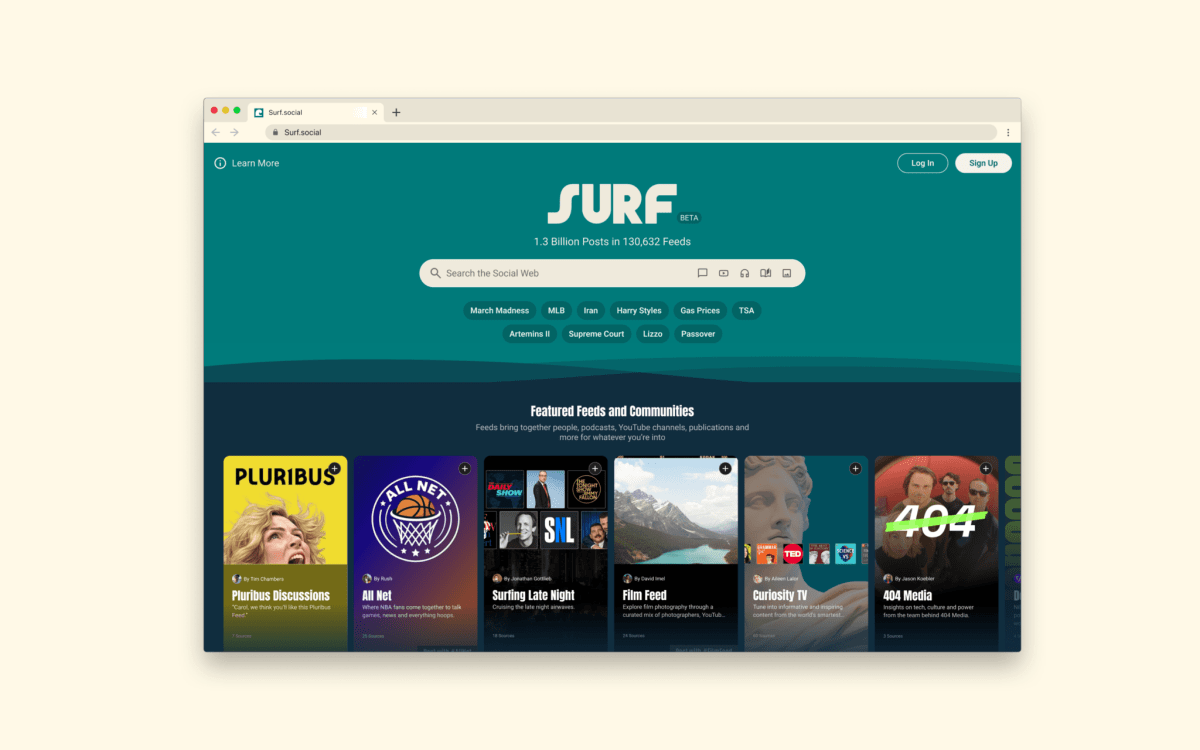
Flipboard has introduced a new feature called Surf. This tool allows publishers, creators, and everyday users to create customizable social websites that gather content from Bluesky, Mastodon, Threads, YouTube, podcasts, blogs, and RSS feeds into one shareable destination.
What Is Flipboard Surf?
Surf acts like a personal homepage for the internet that matters to you. Instead of switching between multiple apps to keep up with your favorite creators, journalists, and communities, Surf brings everything together into one feed you can easily share like a webpage.
RSS feeds play a key role in how Surf integrates all this content. This means even traditional blogs and news sites that haven’t joined any social platform can still appear alongside your Bluesky and Threads accounts.
The feature connects to the Fediverse, a network of independently operated social platforms that communicate using a shared protocol. This is similar to how different email services can exchange messages. Both Bluesky and Mastodon are part of this ecosystem, and Surf aims to make the open web more accessible.
Who Is This For?
Flipboard is targeting two main groups with Surf.
Publishers and Journalists
News organizations and independent writers can leverage Surf to establish a social presence that’s not confined to a single platform. A media outlet could create a Surf page that consolidates its reporters’ Mastodon accounts, its YouTube channel, podcast feed, and blog, all in one place for readers to bookmark and follow.
Everyday Creators and Readers
Regular users can craft a feed around a specific interest, like amateur astronomy or indie game development, by incorporating accounts and sources from across the open web. This page can then be shared publicly, acting almost like a curated magazine anyone can explore.
Why Now?
The timing aligns with a broader shift in how people view social media. Since Twitter’s rocky transition to X, many users and publishers have been exploring alternatives like Bluesky and Mastodon. The challenge is that these platforms are fragmented. Following someone on Mastodon doesn’t automatically give you access to their Bluesky posts, and neither connects to their YouTube channel or newsletter.
For the past couple of years, Flipboard has been quietly positioning itself as a bridge across these platforms. Surf is the most consumer-friendly version of that strategy so far, transforming what started as backend infrastructure into something regular people can use and share.
| Detail | Info |
|---|---|
| Supported platforms | Bluesky, Mastodon, Threads, YouTube, podcasts, blogs, RSS |
| Feature name | Surf |
| Output format | Shareable social website / public feed |
| Protocol backbone | Fediverse / ActivityPub + RSS |
| Launch date | April 2026 |
What This Means
If you’ve been frustrated by juggling separate accounts on multiple platforms just to reach your audience, or if checking several apps to keep up with your favorites feels overwhelming, Surf is here to help.
For readers, this means you could follow a single Surf page maintained by a science journalist, getting their Mastodon posts, podcast episodes, and blog updates all in one spot, without needing accounts on each individual platform.
For creators and publishers, it eases the pressure of choosing one social platform to focus on. You can publish wherever you like and let a Surf page serve as your central hub that ties it all together.
The bigger picture reveals a gradual but real shift toward what some call an “open social web.” Here, your content and audience aren’t trapped within one company’s walls. Surf likely won’t replace your Instagram or TikTok, but it could add a genuinely useful layer to the more open corners of the internet.
Community Reactions
“This is basically what Google Reader should have evolved into. RSS never died; people just stopped building good interfaces for it.”
“Flipboard is doing what Twitter/X, Meta, and everyone else refuses to do: letting different platforms actually communicate. It’s wild that this is still rare.”
What To Watch
- Adoption by publishers: Whether major news outlets and independent creators actually build Surf pages will determine if this gains traction or remains a niche tool. Expect announcements from media partners soon.
- Threads integration depth: Meta’s Threads has had a mixed relationship with the Fediverse. How well Surf pulls in Threads content will be interesting to monitor as that integration develops.
- Competing moves: Other aggregators and RSS-related apps will likely respond. Keep an eye on whether platforms like Feedly or new Fediverse clients announce similar cross-platform features in the coming months.
Sources: CNET: Flipboard Launches Surf | TechCrunch: Flipboard’s Social Websites