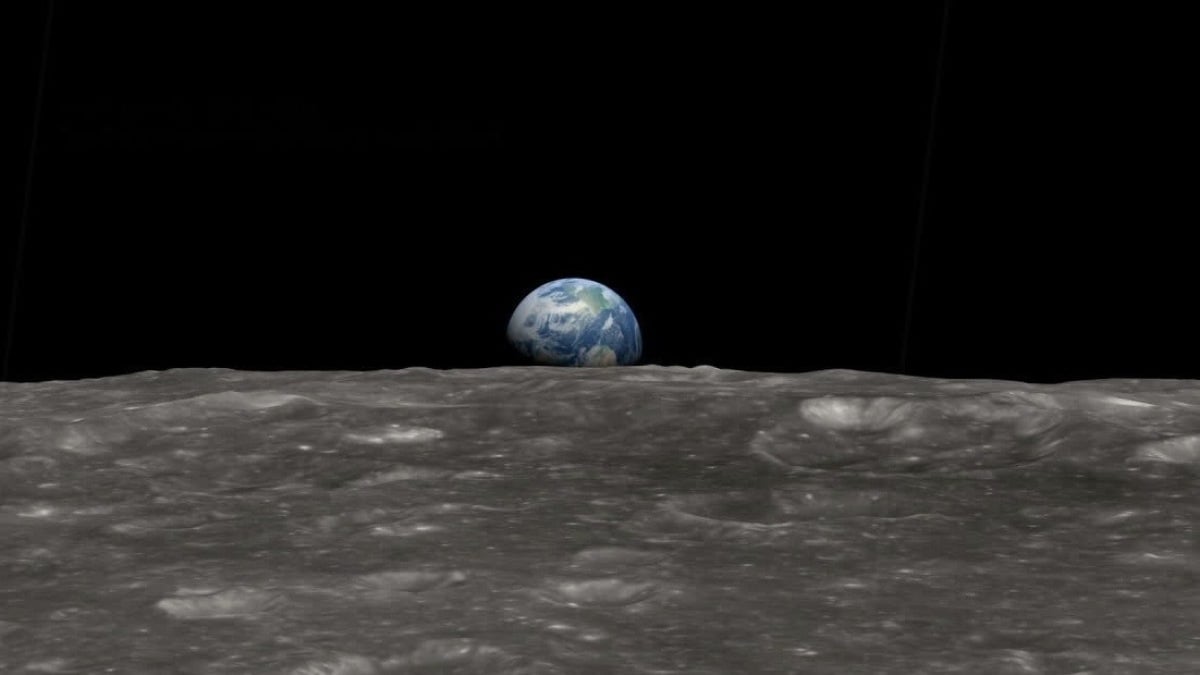
NASA’s Artemis II crew made history on April 6 with a lunar flyby. They swung their Orion spacecraft around the far side of the moon, marking the closest human approach to the lunar surface in over 50 years.
What Just Happened
Launched on April 1, the Artemis II mission has been on its journey for nearly a week. The crew executed a free-return trajectory — similar to a slingshot effect. The moon’s gravity pulled the spacecraft around the far side and then sent it back toward Earth without using extra fuel. This technique mirrors what Apollo crews did back in the late 1960s and early 1970s.
The four astronauts on board — Commander Reid Wiseman, Pilot Victor Glover, Mission Specialist Christina Koch, and Canadian Space Agency astronaut Jeremy Hansen — crossed over to the far side of the moon during the flyby. They temporarily lost all contact with Earth. When a spacecraft goes behind the moon, radio signals can’t penetrate the lunar body, causing a communications blackout that mission controllers just have to wait out.
What the Crew Has Been Doing
The flyby wasn’t the only highlight for Orion this week. According to Wired, the crew has been sharing stunning photos of Earth from deep space. They’ve also been running tests on crucial systems needed for future lunar landing missions. In a very relatable moment, they even tried to fix a malfunctioning toilet aboard the spacecraft.
The Earth photos have caught a lot of attention. From about a quarter million miles away, the images show our planet as a small, vibrant sphere against the dark expanse of space, reminiscent of the iconic “Earthrise” photo taken by Apollo 8 astronauts in 1968.
Why This Mission Is Different From Apollo
Unlike Apollo, Artemis II isn’t a landing mission. The crew won’t step foot on the moon. This flight tests the Orion capsule and Space Launch System (SLS) rocket — the equipment NASA plans to use for Artemis III. That mission aims to land astronauts on the lunar surface for the first time since Apollo 17 in 1972.
The last humans traveled this far from Earth during Apollo 17, more than fifty years ago. Artemis II is bridging that gap and showing that the equipment works with people aboard before attempting an actual landing.
| Artemis II: By The Numbers | |
|---|---|
| Launch Date | April 1, 2025 |
| Lunar Flyby Date | April 6, 2025 |
| Mission Duration | ~10 days total |
| Crew Size | 4 astronauts |
| Last Human Lunar Flyby | Apollo 17, December 1972 |
| Distance from Earth at Flyby | ~238,855 miles (384,400 km) |
| Spacecraft | NASA Orion capsule |
| Rocket | Space Launch System (SLS) |
How to Watch
NASA streamed the flyby live, and you can find replay footage on NASA’s official YouTube channel. Engadget and Mashable also featured the livestream. If you missed the far-side pass, NASA’s coverage resumes as the crew re-establishes contact and starts the journey home.
What This Means
For many, this mission signals that human deep-space travel is back on track after years of low-Earth orbit missions aboard the International Space Station. If Artemis II runs smoothly, it sets the stage for Artemis III to attempt a moon landing. This mission aims for a crewed touchdown near the lunar south pole, a region thought to contain water ice that could support a long-term human presence.
This discovery goes beyond exploration. Water ice on the moon could be turned into rocket fuel, making future deep-space missions — like those to Mars — cheaper and more feasible. Artemis II essentially serves as a road test for the entire strategy.
What People Are Saying
“The Earth photos they’re sending back are absolutely surreal. Fifty years and we’re finally back out there. I’ve been refreshing NASA’s feed all morning.”
“Imagine being Jeremy Hansen — first Canadian to ever travel to the moon, and you’re also the guy who has to fix the space toilet. Legend.”
What To Watch
- Return to Earth: The crew is expected to splash down about 10 days after the April 1 launch, which means a return around April 10-11. Look out for live coverage of Orion’s re-entry and splashdown in the Pacific Ocean.
- Mission debrief: NASA will hold post-mission press conferences to evaluate the performance of Orion and SLS. Any issues flagged during the flight — including the toilet problem — could influence the timeline for Artemis III.
- Artemis III schedule: NASA is aiming for 2026 for the next mission, which would involve a lunar landing. How well Artemis II performs will be crucial in determining if that date holds.