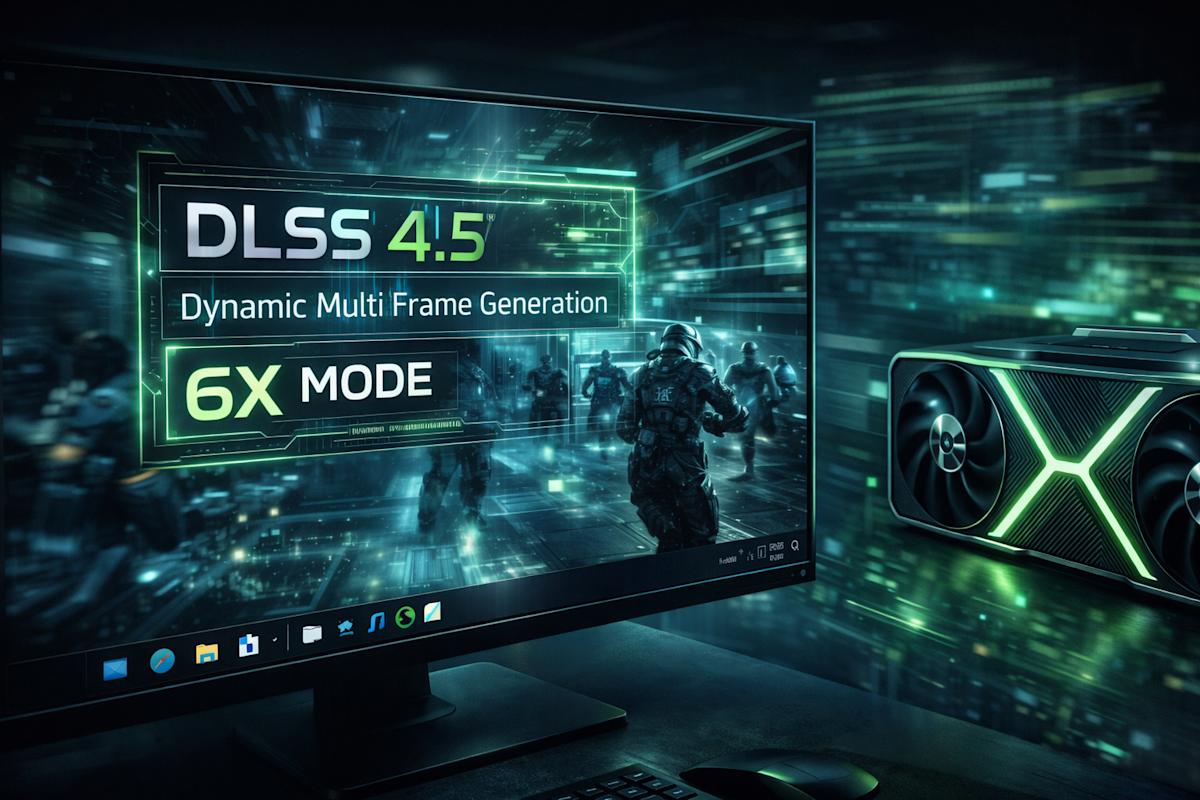
NVIDIA has rolled out its DLSS 4.5 update, bringing AI-powered frame generation tools to RTX 50 series graphics cards via the new Nvidia app beta. This update could change how smooth your games feel on compatible PC hardware.
| NVIDIA At A Glance | |
|---|---|
| Ticker | NVDA |
| Stock Price | $177.39 (+0.93%) |
| CEO | Jensen Huang |
| Headquarters | Santa Clara, CA |
| Founded | 1993 |
| Sector | Hardware |
What Is DLSS 4.5, Exactly?
DLSS, or Deep Learning Super Sampling, uses AI on dedicated chips in NVIDIA’s RTX graphics cards. This technology enhances both game performance and visuals beyond what the hardware could achieve on its own. Think of it as a smart assistant that fills in gaps, allowing your screen to update more frequently and look sharper.
DLSS 4.5 is the newest version, introduced in two stages. Earlier this year, NVIDIA launched the Super Resolution component, which enhances image quality for all RTX GPU owners. Today’s update adds frame generation features, specifically aimed at increasing frame rates on RTX 50 series cards.
Frame Generation: What It Does and Why It Matters
Frame rate indicates how many images your graphics card generates each second. A higher frame rate results in smoother motion. For example, 60 frames per second feels much better than 30, and competitive gamers often aim for 144 or more. However, achieving higher frame rates typically requires more powerful hardware, which can be costly.
Frame generation changes the game by letting AI create extra frames between those rendered by the GPU. It’s similar to a film restoration team adding frames to old footage, but this happens in real time while you’re gaming, at lightning speed.
The new DLSS 4.5 update includes Multi Frame Generation, which goes beyond previous versions by generating multiple AI frames for each rendered frame instead of just one. This means a larger potential increase in frame rates, though the actual gains will depend on the game and system setup.
Who Gets What
The full Multi Frame Generation feature is exclusive to RTX 50 series cards, launched earlier in 2025. These represent NVIDIA’s top-tier consumer hardware. Owners of older RTX cards — the 40 series, 30 series, and earlier — have already received Super Resolution improvements, but they won’t get the new frame generation capabilities.
This update comes through the Nvidia app beta, NVIDIA’s newer unified software platform gradually replacing the older GeForce Experience application. Users need to download or update the Nvidia app beta to access the new features.
What This Means For Everyday Users
If you own an RTX 50 series card, this update is definitely worth checking out. Games that support DLSS frame generation should show immediate benefits after you update the app. This could push frame rates high enough to work well with high-refresh-rate monitors — those rated at 144Hz, 240Hz, or higher, which display more frames per second for smoother motion.
If you have an older RTX card, today’s announcement isn’t as thrilling. You already enjoy enhanced image quality through Super Resolution, but the new frame rate-boosting feature remains exclusive to the latest hardware. This pattern is typical with DLSS updates: NVIDIA usually holds back the most advanced performance features for the current generation of cards.
For anyone thinking about upgrading their GPU, the expanding DLSS 4.5 features provide yet another reason to consider the RTX 50 series. Game developers have steadily increased support for DLSS over the years.
Games Need to Support It
One important detail: DLSS features only work in games specifically updated for them. This technology isn’t automatically available in every title you own. While the number of supported games has risen to hundreds, not every game will benefit right away.
Community Reaction
Feedback from PC gaming communities has been cautious. One commenter on a Verge discussion thread captured a common sentiment: “Sounds great on paper but I want to see real-world benchmarks before I get excited. MFG on the 4090 had latency issues early on.” Latency is a valid concern — generating frames with AI can sometimes introduce a slight delay between a player’s input and the on-screen action, which is crucial in fast-paced competitive games.
Others were more hopeful. A Reddit user in the r/nvidia community mentioned: “If they’ve actually improved the latency situation and artifact reduction since DLSS 3, this could be the thing that makes 240fps accessible on more demanding titles.”
What To Watch
- Benchmark coverage: Independent frame rate and latency tests from outlets like Digital Foundry and Hardware Unboxed will be key to understanding how much Multi Frame Generation enhances gaming. Expect these reviews to appear in the coming days as testers update their setups.
- Game adoption: Keep an eye out for announcements from game developers regarding DLSS 4.5 support updates. Titles that already support DLSS 3 frame generation are the most likely to adopt it early.
- Nvidia app beta rollout: The feature comes through a beta release, so the full stable version of the app with DLSS 4.5 support should follow soon. If you prefer stable software, you might want to wait.
- Competitor response: AMD’s FSR (FidelityFX Super Resolution) and Intel’s XeSS are the main alternatives. Any responses from AMD or Intel to DLSS 4.5’s frame generation claims will be interesting to track.