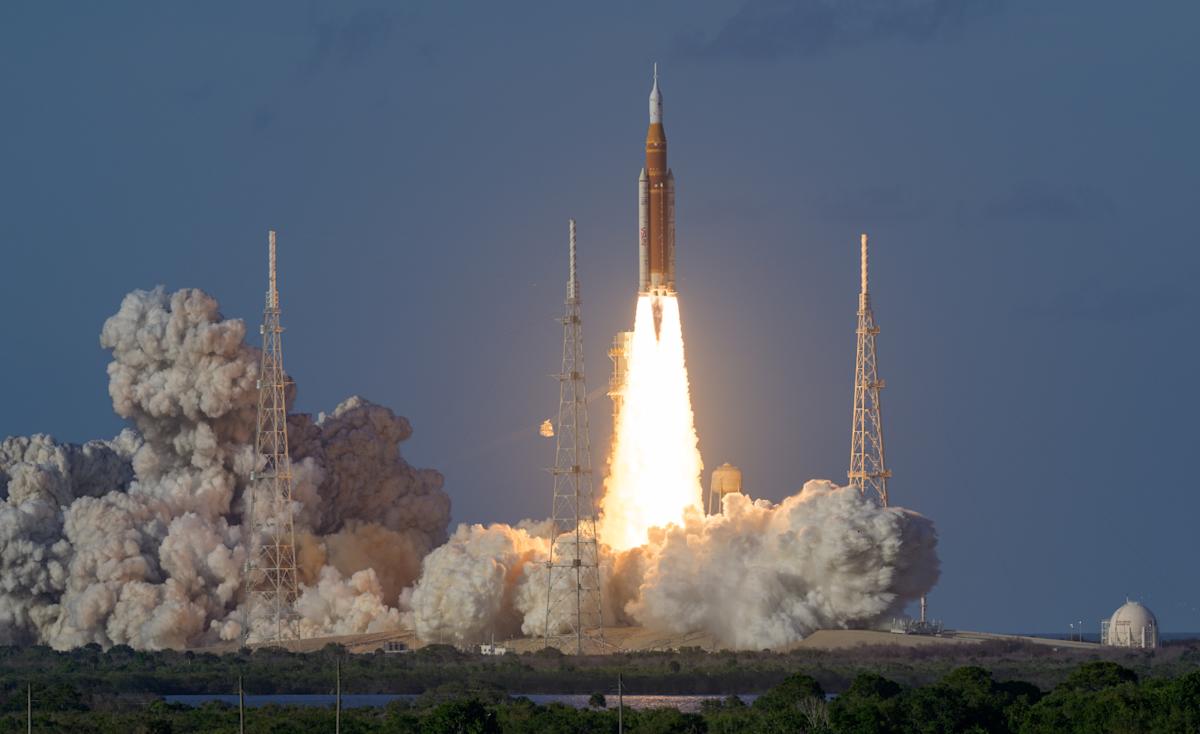
Four astronauts took off toward the Moon on Wednesday, April 1, at 6:35 PM Eastern time. This marks the first time humans have ventured beyond low-Earth orbit since the Apollo 17 mission in 1972 — a gap of over 50 years.
The Artemis II crew launched aboard NASA’s Orion capsule on the Space Launch System (SLS) rocket from Launch Complex 39B at Kennedy Space Center in Florida. Their mission lasts 10 days and follows a free-return trajectory, which means they’ll loop around the Moon using its gravity to send them back to Earth without landing. The crew will fly around the far side of the Moon before heading home.
Who’s On Board and Where Are They Going?
The crew consists of NASA astronauts Reid Wiseman (commander), Victor Glover (pilot), Christina Koch (mission specialist), and Canadian Space Agency astronaut Jeremy Hansen. Koch and Hansen will make history as the first woman and first Canadian, respectively, to reach the Moon’s vicinity.
This mission won’t land on the Moon. Instead, Orion will fly over the lunar surface, including the far side, which is always hidden from Earth. Think of it like a test drive around a neighborhood before moving in. This flight tests the hardware and crew systems ahead of Artemis III’s planned lunar landing.
The Make-or-Break Moment on Night One
The crew’s first night in space will be anything but restful. After just four hours of sleep, they’ll execute a critical engine burn. This is a precisely timed firing of Orion’s main engine that sets their course toward the Moon. If they miss that burn, the entire mission path shifts. NASA’s flight teams will keep a close eye on this moment, as it’s one of the most crucial points in the early hours of the mission.
This kind of interruption is normal in early mission timelines. But it highlights how demanding the Artemis II schedule is right from liftoff.
| Detail | Data |
|---|---|
| Launch date | April 1, 2026, 6:35 PM ET |
| Mission duration | ~10 days |
| Crew size | 4 astronauts |
| Last crewed mission beyond low-Earth orbit | Apollo 17, December 1972 |
| Years since humans left Earth orbit | 50+ |
| Launch site | Kennedy Space Center, Launch Complex 39B |
| Rocket | Space Launch System (SLS) |
| Capsule | Orion |
| Lunar landing? | No — free-return trajectory only |
Why This Mission Matters So Much
Artemis II represents a major test for NASA. The SLS and Orion combination previously flew without a crew on Artemis I in 2022. But now, with four astronauts on board, everything changes — life support systems, communications, crew interfaces, and emergency abort procedures will all undergo real-world testing for the first time.
A successful Artemis II mission sets the groundwork for Artemis III, which aims to land astronauts on the lunar surface, including the first woman to walk on the Moon. While Artemis III doesn’t have a confirmed launch date yet, Artemis II is the essential step that needs to happen first.
What This Means for Everyday People
If you weren’t around during the Apollo era, this is your generation’s Moon shot. Artemis II is the first crewed deep-space mission that many people on Earth will witness live. Beyond its historic significance, this mission has practical implications: the technology developed for Orion and SLS will support future space stations, planetary missions, and plans for Mars exploration.
Right now, though, four humans are racing away from Earth at thousands of miles per hour, heading toward a destination that’s visible to most of us on a clear night. That’s truly extraordinary.
What People Are Saying
“I actually cried watching the launch. I was born in 1975 — my whole life I’ve been waiting to see something like Apollo again. This is it.”
“The fact that they have to wake up after 4 hours to do an engine burn is wild. These people are absolute professionals. Godspeed Artemis II crew.”
What To Watch
- Night one engine burn: The early trans-lunar injection burn is crucial, as it sets the Moon-bound path right after launch.
- Lunar flyby: The crew will reach the Moon’s vicinity within a few days, with the far-side pass being the farthest humans have traveled from Earth since 1972.
- Splashdown: Orion is expected to return to Earth about 10 days after launch. A successful ocean recovery will clear the path for Artemis III planning.
- Artemis III timeline: If Artemis II goes smoothly, expect NASA to announce a target launch window for the first crewed lunar landing in over 50 years.
Sources: Engadget | Wired | Ars Technica