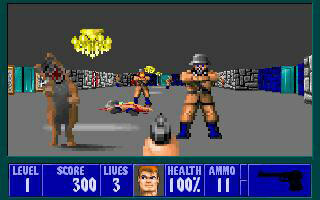
More than 30 years after its launch, Wolfenstein 3D — the 1992 first-person shooter that’s often credited with kicking off the FPS genre — is being played one-handed in 2026. This experience shows just how much gaming accessibility has changed, and how some things have stayed the same since the early days of PC gaming.
What Is Wolfenstein 3D, Exactly?
For those who weren’t gaming back in 1992, Wolfenstein 3D is a title from id Software where you step into the shoes of an Allied soldier fighting through Nazi-occupied castles. At the time, it was a technical marvel that essentially taught the gaming world what a first-person shooter (a genre where you see action through your character’s perspective) could be. Games like Doom, Halo, and Call of Duty all owe something to this classic.
However, as Ars Technica reports, playing it one-handed in 2026 is filled with “rough edges.” This is due to both the demands the game places on your hands and the minimal consideration given to accessibility during its design.
Why One-Handed Gaming Matters Now
Gaming accessibility — which focuses on creating games that people with physical disabilities can play — has gained serious traction in the industry over the last decade. Microsoft made a significant move with the Xbox Adaptive Controller in 2018, followed by Sony’s Access Controller in 2023. The goal is straightforward: more people should enjoy gaming, no matter how many hands they have or how their hands function.
Looking back at a 1992 game through this modern lens feels like trying to use a rotary phone app on your smartphone. The fundamental idea is there, but the design expectations are completely different. Wolfenstein 3D was created when the keyboard was the only input device that mattered, and one-handed play wasn’t on anyone’s mind.
The Actual Experience: Workable, But Awkward
The basic controls for Wolfenstein 3D are pretty simple by today’s standards: move, turn, shoot, and open doors. There’s no crouching, jumping, or vertical aiming. This simplicity should make one-handed play easier than it would be for a modern military shooter.
But in practice, the game’s keyboard-centric design leads to some awkward moments. Key bindings weren’t set up for one-handed configurations. While you can remap controls — changing which key performs which action — it involves navigating a 34-year-old interface that wasn’t meant for that kind of flexibility.
On the bright side, the game’s pace is forgiving. Wolfenstein 3D is actually slower than you might expect. Enemies signal their attacks, corridors are spacious, and the game doesn’t require the rapid simultaneous inputs that make modern shooters tough for one-handed players.
What This Means
This experiment highlights two important points for gamers and their families. First, older games can often be more accessible than newer ones. This isn’t because they were intentionally designed that way, but simply due to their simplicity. If you have a family member with limited hand mobility who wants to game, retro titles are definitely worth a look.
Second, the fact that we’re discussing one-handed play in a 1992 game in 2026 shows how far the conversation around accessibility has progressed. Just a decade ago, this wouldn’t have been a common topic in gaming. Now, it’s a perspective that reviewers and players regularly consider, and that awareness is gradually influencing how games are developed.
For parents of kids with disabilities or adults facing injuries that limit hand use, the takeaway is clear: don’t dismiss older or simpler games. Sometimes, an “outdated” design can actually create a more approachable gaming experience.
Community Reactions
“Genuinely surprised how playable Wolf3D is like this. The lack of vertical aiming actually helps a lot. Modern games would be a nightmare.”
“This is a cool experiment but also kind of sad that we’re praising a 1992 game for accidentally being accessible while new $70 titles still ship with zero remapping options.”
| Stat | Detail |
|---|---|
| Original release year | 1992 |
| Developer | id Software |
| Core input actions | ~6 (move, turn, shoot, open, run, map) |
| Vertical aiming required | No |
| Official accessibility options | None (1992 release) |
| Years since release | 34 |
What To Watch
- Accessibility in retro gaming: More players and journalists are looking back at classic titles through an accessibility lens. Expect more experiments as retro gaming communities expand.
- Control remapping standards: The gaming industry is moving toward universal remapping requirements. Keep an eye on platform-level policies from Microsoft, Sony, and Nintendo that could eventually make remapping support mandatory in all published games.
- Community mods: The modding community around classic id Software games is active. You might see one-handed control schemes or accessibility mods for Wolfenstein 3D and Doom arising from experiments like this.
Sources: Ars Technica