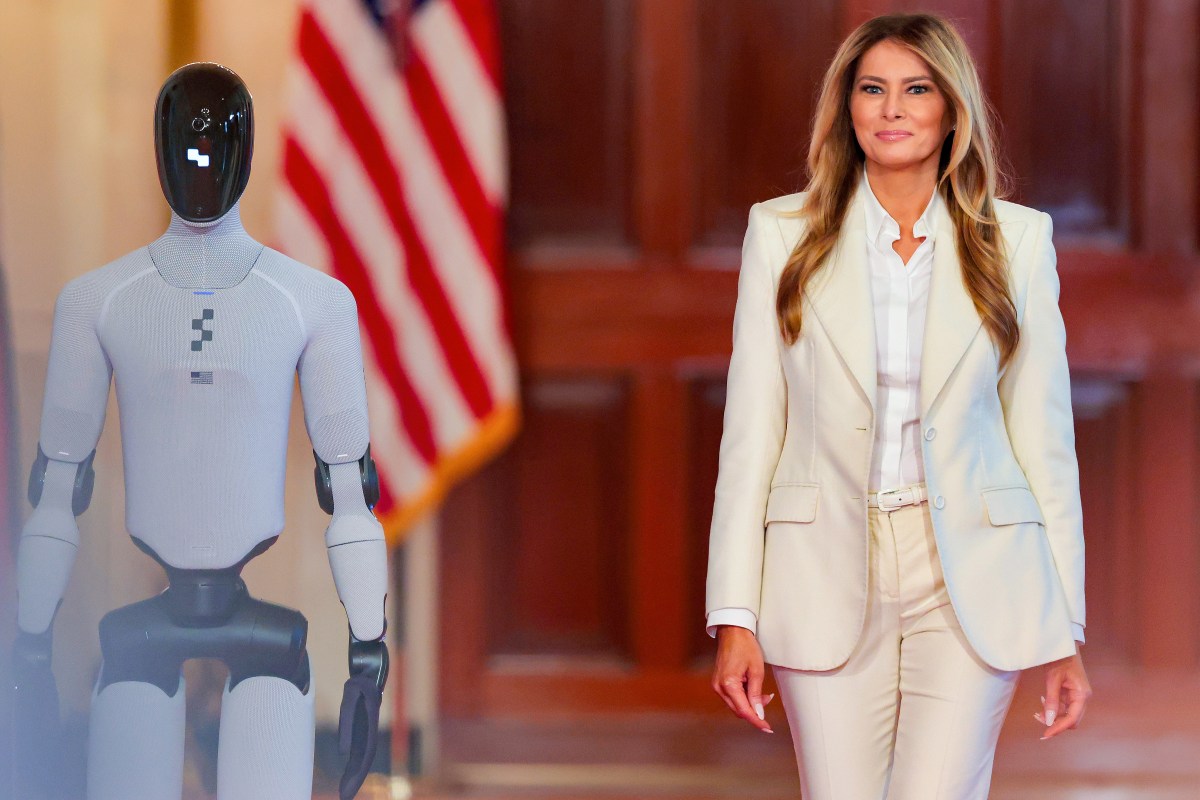
A humanoid robot, designed to mimic human appearance and movement, strolled alongside First Lady Melania Trump at a White House technology summit focused on children’s education. This event highlighted a growing effort to incorporate AI and robotics into American classrooms.
What Happened
The Children’s Technology and Educational Summit offered Melania Trump a prominent platform to share her vision for the future of education. Instead of standing next to a conventional speaker or policy maker, she was joined by a talking humanoid robot that interacted with attendees and showcased conversational AI, which allows machines to engage in natural dialogue.
The scene was striking: a robot that could speak and respond to questions positioned within one of the world’s most famous buildings. It stood as a symbol of the potential direction of American education.
CNET and TechCrunch reported that the First Lady envisions AI and robotics playing a significant role in how American children learn, even in home education. She sees this technology not as a substitute for human interaction, but as a means to personalize education and broaden access to learning opportunities.
The Push for AI in Education
This summit is part of a larger trend. The current administration aims to establish the United States as a leader in artificial intelligence, and integrating this ambition into schools is a natural progression.
Supporters of AI in education argue that a robot or AI tutor can provide something a single classroom teacher with 30 students can’t: individualized attention tailored to each child’s learning pace. Imagine having a private tutor available around the clock, one that adjusts its teaching based on a student’s understanding.
However, critics voice valid concerns. Issues surrounding data privacy—who owns the data collected about children—along with screen time and the critical social development that comes from human teachers, add to the discussion. TechCrunch’s description that Melania Trump “wants a robot to homeschool your child” encapsulated the skepticism some observers felt about the event.
What This Means
For parents, this summit could signal the start of increased federal attention and funding toward AI-powered educational tools. This might mean that your child’s school could eventually implement AI tutoring software, or that homeschooling families might gain access to funded robotics programs.
For everyday tech users, the event serves as a reminder of how quickly humanoid robots have transitioned from the realm of science fiction to real-world applications. The fact that a talking robot shared the stage at a formal White House summit without being treated as a novelty highlights how normalized this technology is becoming.
There are practical implications regardless of your viewpoint. If AI tutoring tools receive federal support, expect to see them more commonly used in public schools, after-school programs, and educational apps on devices your kids already use.
| Event | White House Children’s Technology and Educational Summit |
|---|---|
| Key figure | First Lady Melania Trump |
| Technology featured | Talking humanoid robot with conversational AI |
| Focus area | AI and robotics in K-12 and home education |
| Policy context | Part of broader White House AI leadership agenda |
Community Reactions
“I genuinely can’t tell if this is the coolest thing or the most unsettling thing I’ve seen this year. A robot at the White House talking to kids about learning. We are living in a simulation.”
“People are dunking on this but AI tutors are already being used in some schools, and they actually work well for kids who fall behind. The question is who controls the data.”
Further Reading
- Melania Trump Escorted by Talking Humanoid Robot at White House Tech Summit — CNET
- Melania Trump wants a robot to homeschool your child — TechCrunch
What To Watch
The summit likely marks the beginning of an extended policy discussion. Here are a few things to keep an eye on in the upcoming weeks and months:
- Federal funding announcements: Look out for any executive orders or budget proposals directing funds towards AI education programs or school robotics initiatives.
- Legislative response: With some lawmakers already calling for freezes on data center expansion, expect pushback from Congress members worried about AI’s influence on children’s lives.
- Industry partnerships: Companies developing humanoid robots and AI tutoring platforms will likely move quickly to align with this White House signal. Anticipate announcements from edtech firms in the coming weeks.
- Parent and educator reaction: Teachers unions and parent advocacy groups haven’t made major statements yet. Their responses will influence how aggressively any of this translates into school policy.