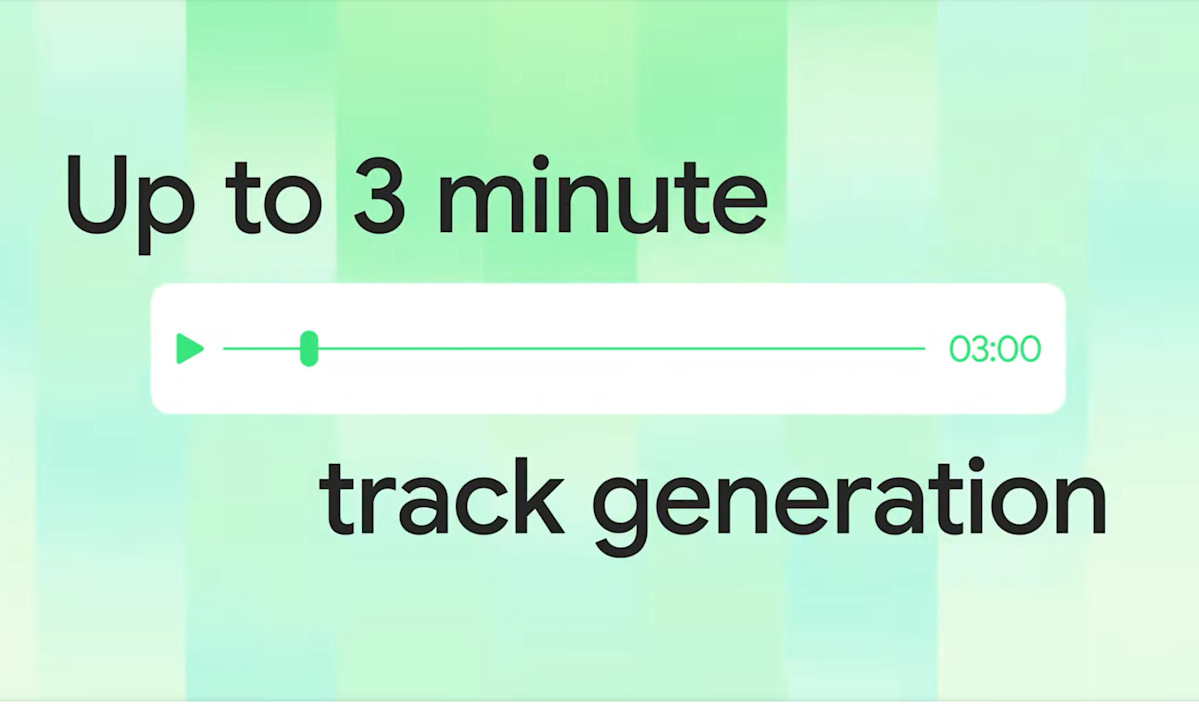
Google has just rolled out an upgrade to its AI music generator, Lyria 3 Pro. This new version can now create full three-minute songs from text prompts, a huge leap from the previous version, which only managed 30-second clips. The update also includes more customization options and wider access across Google’s products, including Gemini and enterprise tools.
| By The Numbers: Alphabet / Google | |
|---|---|
| Company | Alphabet / Google (GOOGL) |
| Stock Price | $274.85 (-2.18%) |
| Headquarters | Mountain View, CA |
| CEO | Sundar Pichai |
| Founded | 1998 |
| Previous max song length | 30 seconds |
| New max song length | 3 minutes |
| Length increase | 6x longer |
What Is Lyria 3 Pro?
Lyria is Google’s AI model created specifically for generating music. It’s similar to a text-to-image generator, but instead of images, it produces audio. You can type something like “upbeat lo-fi hip hop with a melancholy piano melody,” and the model crafts a song from scratch.
The original Lyria could only produce short clips of about 30 seconds. These were fine for background ambiance or brief social media videos, but not much else. Lyria 3 Pro changes that, creating tracks long enough to function as complete songs that have structure, verses, and development over time.
What’s New in This Version
In addition to the jump to three-minute tracks, Google is broadening where Lyria 3 Pro can be found. As reported by TechCrunch, the updated model will be available across Gemini (Google’s AI assistant), enterprise products, and various Google services. This indicates that Google views AI music generation as more than just a standalone experiment; they want it integrated into their larger ecosystem.
The update also brings more customization options, allowing users to have greater control over the style, instrumentation, and overall feel of the generated tracks. While Google hasn’t provided a complete list of parameters available, the trend is clear: more user control, longer output, and broader availability.
As highlighted by Engadget, the term “slop” in the AI realm refers to low-quality, generic AI-generated content that often floods platforms. The key question remains: will Lyria 3 Pro produce music that rises above that standard?
What This Means
For everyday users, the practical implications break down into a few categories.
Content Creators
If you create YouTube videos, TikToks, or podcasts, finding background music can be a constant challenge. Stock music can be expensive, and popular songs often lead to copyright claims. A tool that generates three minutes of royalty-free, custom-feeling music on demand within Google’s tools addresses a real need. Three minutes is also long enough to fit most short-form video formats without requiring loops.
Musicians and the Music Industry
This area gets a bit tricky. AI music generation primarily learns from existing human-made music, and the issue of whether artists were compensated or even consulted remains unresolved. The rise of tools like Lyria 3 Pro puts additional pressure on streaming platforms, sync licensing markets (where music is licensed for film, TV, and ads), and musicians who create background and production music for a living.
Businesses
With enterprise access, companies can use Lyria 3 Pro to create custom audio for ads, apps, or internal content without needing to hire composers. This could save businesses money and potentially impact revenue for music production professionals.
Community Reaction
“30 seconds was genuinely useless for anything real. 3 minutes still isn’t going to replace a composer but it’s at least in the range where I’d experiment with it for background stuff.”
— Reddit user, r/artificial
“Cool tech but someone’s gotta talk about the fact that every song this thing makes sounds vaguely like five other songs you’ve heard before. The structure is there. The soul isn’t.”
— YouTube comment, Google Lyria demo video
Reactions to the announcement have varied. Some see it as a practical tool that fills a genuine gap for creators. Others argue that three minutes of structurally coherent but emotionally lacking music doesn’t significantly shift the creative landscape.
What To Watch
- Gemini integration rollout: Google hasn’t provided a set date for when Lyria 3 Pro’s features will fully launch inside Gemini for regular users. Keep an eye out for announcements in the coming weeks as the rollout continues.
- Competitor response: Suno and Udio, two startups leading the AI music generation market, are likely to respond with their own updates. Both have been in a competitive feature race.
- Copyright legal developments: Ongoing lawsuits against AI music and image generators are still progressing through courts in the US and EU. Any ruling affecting training data policies could change what these tools are legally permitted to create.
- Creator monetization policies: YouTube and Spotify have yet to finalize clear guidelines for AI-generated music on their platforms. Expect more concrete rules as the quality and volume of output increase.