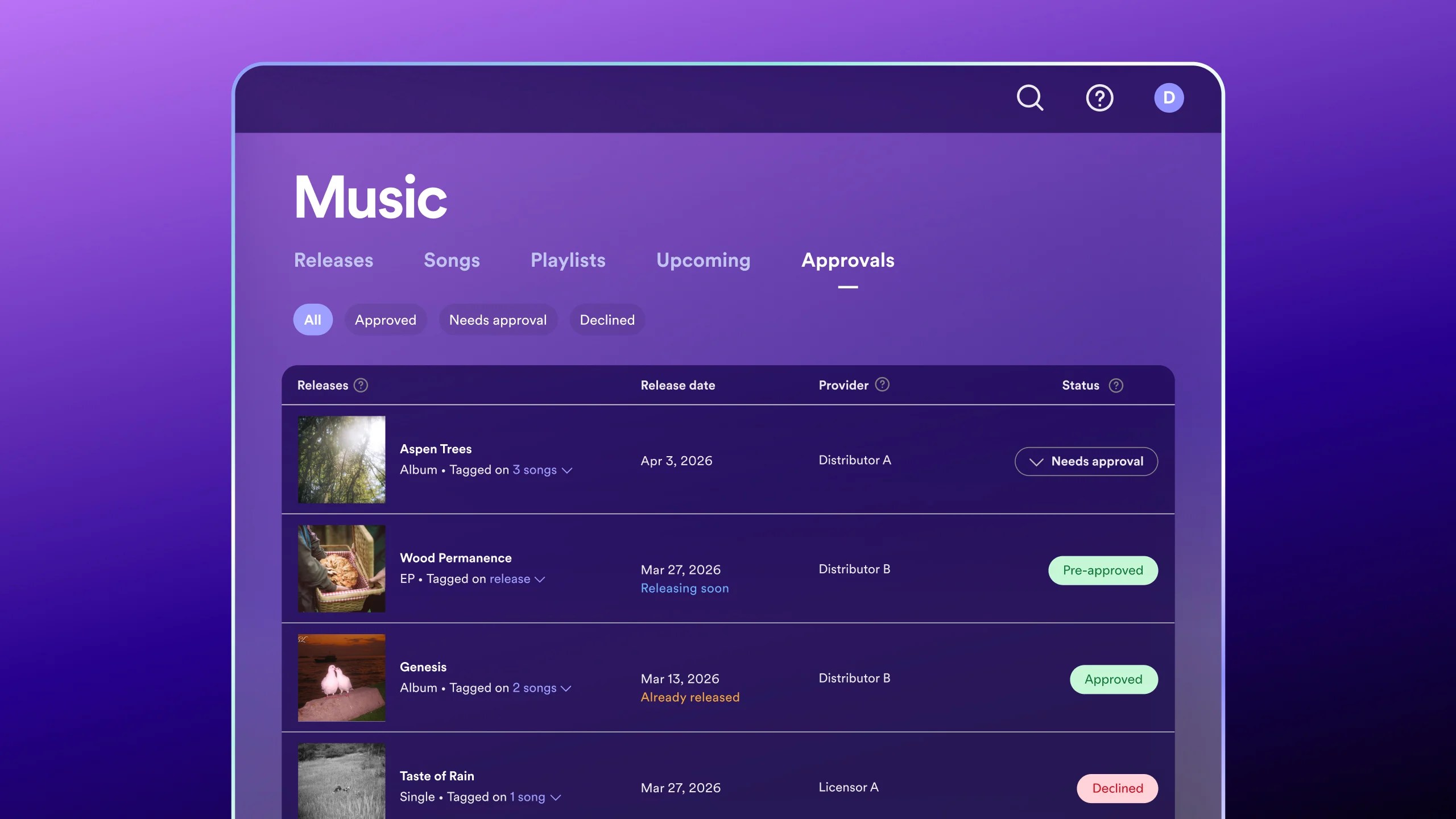
Spotify is currently beta-testing a feature called Artist Profile Protection. This tool allows musicians to review and approve new releases before they show up on their official profiles. It’s a direct reaction to the rising issue of AI-generated music that’s being wrongly attributed to real artists.
| Spotify — By The Numbers | |
|---|---|
| Ticker | SPOT — $479.19 (+1.26%) |
| Founded | 2006, Stockholm, Sweden |
| CEO | Daniel Ek |
| Sector | Music Streaming |
The Problem: AI Slop Is Landing on Real Artists’ Pages
Over the past few years, streaming platforms have seen a surge in mass-produced AI songs. Most listeners can easily scroll past them, but for the artists, it’s a bigger issue.
Spotify links songs to artist profiles through metadata. This data tells the platform who created a track, which album it belongs to, and when it was released. When this information goes awry—whether due to a mistake, a shared name, or outright fraud—songs can mistakenly appear on the wrong artist’s profile.
Sometimes it’s just a mix-up. For example, two artists with the same name could lead to confusion, or a typo from a distributor might show a country singer’s profile filled with hip-hop tracks they’ve never heard. However, bad actors are increasingly using AI tools to generate music and tag it with a well-known artist’s name, hoping to steal listeners or tarnish reputations.
Imagine someone printing fake books under a famous author’s name. The author didn’t write it, but their name is still attached to it.
How Artist Profile Protection Works
As reported by The Verge, this new feature adds a manual approval step for artists before any new release goes live on their profiles. Instead of tracks automatically appearing after a distributor uploads them, the artist or their team will have the chance to review what’s coming in and approve or reject it.
This concept is pretty straightforward. It’s like how someone might set their social media to approve tagged photos before they go public. In practice, it could really help artists who find unauthorized or AI-generated content on their profiles.
This feature is currently in beta testing with a limited group of artists. Spotify hasn’t yet shared a timeline for when it will become available to everyone on the platform.
Why This Is Happening Now
The timing of this development directly relates to how easy it’s become to generate music using AI. Many tools can create a decent song in just minutes, and many of them are free or very low-cost. For instance, Google’s Gemini recently added a feature that allows users to generate three-minute songs using its Lyria 3 Pro model.
This accessibility benefits hobbyists and creators. But it also means that producing and uploading fake music under a real artist’s name is easier than ever. Streaming platforms are grappling with a flood of content that their current automated systems are ill-equipped to handle.
Spotify isn’t the only service dealing with this issue. Every major streaming platform has seen the problem grow. As Engadget notes, the sheer volume of AI-generated content means some of it inevitably gets misattributed, even without intent to deceive.
What This Means
If you listen to Spotify, you might have stumbled upon this issue without even realizing it. If you click on a favorite artist and find a track that sounds nothing like their usual style, you could be facing a metadata error or an AI counterfeit.
For the artists, the consequences are more serious. Fake tracks can confuse fans, dilute an artist’s brand, and even spread music that the artist finds offensive or damaging under their name. There’s also a financial aspect: if streams go to fake tracks labeled under a real artist, the revenue may not reach the right people.
If Artist Profile Protection rolls out widely, it could provide artists with a crucial safeguard. While it won’t entirely eliminate AI-generated music on Spotify, it would prevent that music from appearing on an artist’s official page without their awareness.
For everyday listeners, the main benefit is straightforward: the artist profile you check should actually feature music the artist made or approved.
What To Watch
- Beta expansion: Spotify hasn’t revealed how many artists are currently in the test group or when it might open up Artist Profile Protection to more users. Keep an eye out for an official announcement.
- Distributor response: Most music reaches Spotify through distributors like DistroKid and TuneCore. How these services adapt their upload processes to accommodate this approval layer will impact the rollout’s success.
- Industry pressure: Other platforms like Apple Music and Amazon Music face similar challenges with AI fakes. If Spotify’s feature gets positive feedback, expect competitors to create similar tools.
- Regulatory backdrop: Lawmakers in the U.S. and EU are currently discussing rules regarding AI-generated content and attribution. Spotify’s move might be seen as the industry trying to self-regulate before external regulations come into play.