

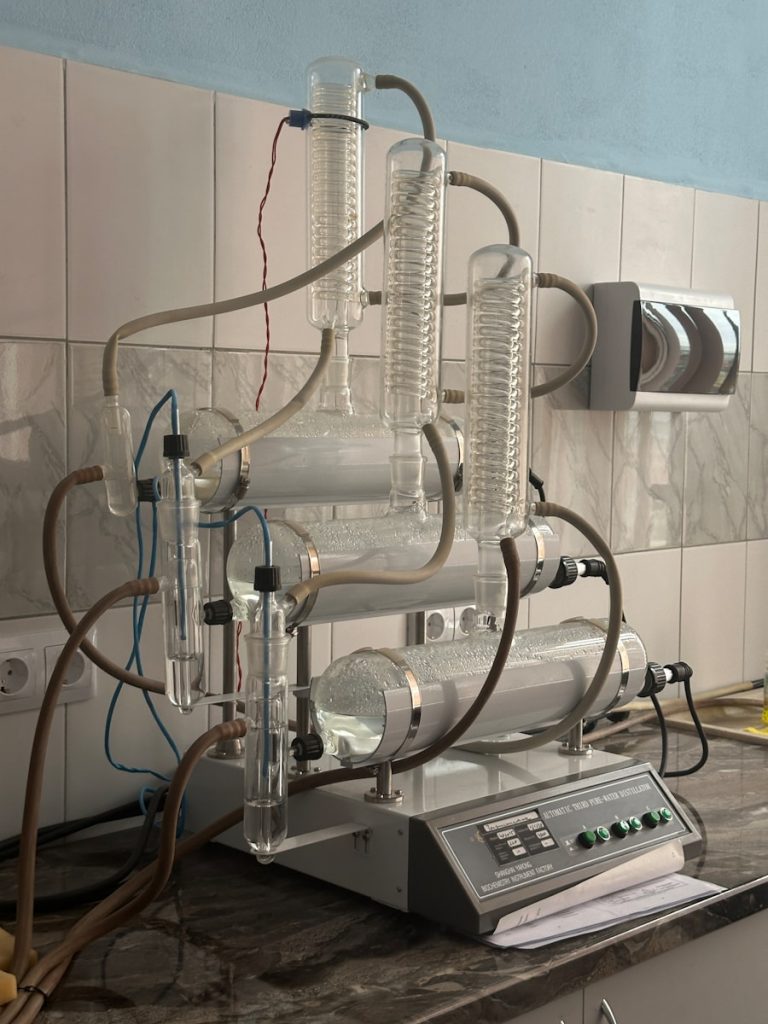

A gas chromatograph is one of the most powerful analytical tools used in many areas, such as environmental science and food safety. It is used for the separation and analysis of vaporized compounds without decomposition. It can give insight into the mixture with a comprehensive analysis of its contents.
Gas chromatography is a valuable method for chemical analysis; hence, understanding how it works matters. This technique has become essential in laboratories worldwide for accurate compound identification. Let’s explore the fundamental principles that make this method so effective.
The Basics of Gas Chromatography
Gas chromatography separates the components of a sample. During this method, a gas serves as the mobile phase and transports the sample through a stationary phase. The stationary phase is usually a liquid or polymer on a solid inert support. An inert gas (most often helium or nitrogen) is used as the mobile phase.
The injector vaporizes samples that are then introduced into the system. The carrier gas carries the vaporized sample to the column. Separation occurs because different components travel at different speeds through the column.
Parts of a Gas Chromatography System
A gas chromatography system has different components. The injector introduces the sample into the system. Separation occurs in the column. It resides in a temperature-controlled oven that can adjust the heat to help with the separation of different components.
The separated compounds are detected and quantified by the detector. For example, these could be flame ionization detectors or mass spectrometers. Every detector has its strengths and provides a useful tool for a specific type of analysis.
The Role of the Column
The column is one of the most important elements in the system, and it dramatically influences separation quality. There are two types of columns—packed or capillary—and each has its applications. Packed columns contain a stationary phase in the form of solid particles, and capillary columns are narrow tubes with a liquid stationary phase that is coated on the inside wall. For more complex mixtures, capillary columns, which are better for separation, are used.
Temperature management in the column oven is another key consideration. You can be more efficient in separating components by changing the temperature. Specific boiling points exist for different compounds, so we can take advantage of temperature gradients to separate them.
Detection and Analysis
Compounds travel through the separation and move to the detector. When the compound enters the detector, the properties of this compound will create a signal that eventually forms a chromatogram. The result is a graph with the peaks representing different substances.
It provides quantitative data with the measurement of peak area or height to determine the concentration. According to the National Institute of Standards and Technology, standardized methods and reference materials are essential for ensuring accuracy and reproducibility in gas chromatography measurements. In qualitative analysis, identification of compounds is performed based on retention times and detector response. Together, these analyses yield thorough information about the composition of the sample.
Applications of Gas Chromatography
This illustrates the high versatility of gas chromatography, which is used in many different industries. In environmental sciences, it aids in tracking air and water contaminants. It is part of food safety and helps detect contaminants and ensure quality. It aids quality control and drug development in the pharmaceutical industry.
Forensic science uses the same technique to analyze any substances related to crimes. This ability to separate and identify compounds makes it one of the most important tools in the field for detection in legal investigations.
Advantages and Limitations
Gas chromatography offers several advantages. It offers high-resolution separation to enable detailed analysis. It is a versatile technique that can work for various classes of compounds. Due to its sensitivity, trace amounts can be detected.
However, there are limitations. The compounds have to be volatile and thermally stable. The need for derivatization can complicate the analysis of non-volatile species. Additionally, we must consider the initial equipment cost, which requires a significant investment before implementation.
Conclusion
Gas chromatography, a dominant method in chemical analysis, provides solutions with accuracy and certainty. Its ability to separate and identify compounds makes it a staple in multiple fields. Knowing its parts and how it works can make analyses far more useful and allow us to gain insights as to how the different samples are composed. Gas chromatography is an analytical chemistry technique that is always developing with new technology but is always going to be relevant.

0 Comments