

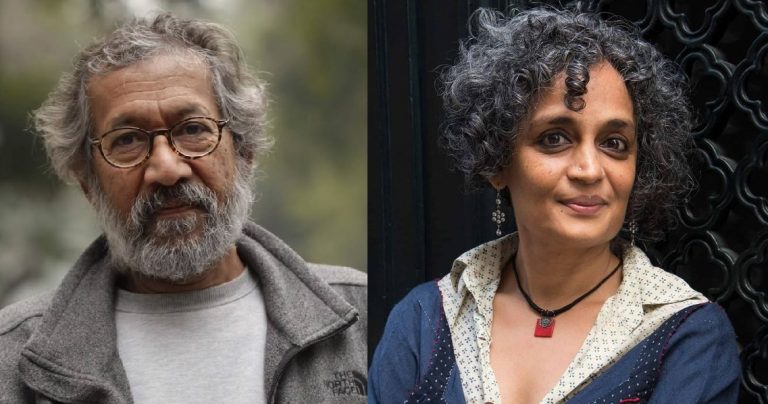

Arundhati Roy is a writer, but more than anything else, she stands for bravery, intelligence, and protest. Roy has left a lasting impact that goes beyond books with her sharp opinions, beautiful writing, and strong sense of what is right. She was an activist who told the truth and the voice of justice. Her name will always be linked with these things. Roy is still one of the most important writers and thinkers of our time, from her groundbreaking first book, The God of Small Things, to her brave writings that question power.
Arundhati was born in India and grew up in the beautiful state of Kerala. Her life has been anything but normal. Her childhood shaped her view of the world, making her care about the weak and doubtful of authority.Her own journey, from tough-around-the-edges school of architecture student to best-selling author, is equally inspiring and painfully human. Again without hesitation in expressing what she believes these days, she leverages her celebrity not just to entertain, but to challenge a generation to fight injustice and seek truth. This is the life of Arundhati Roy — her work, her life, and the unshakable beliefs that make her one of the most powerful voices of today.
Quick Bio
| Name: | Suzanna Arundhati Roy |
| Birthday: | November 24, 1961 |
| Age | 63 |
| Birth Location | Shillong, India |
| Ethnicity | Indian |
| Nationality | Indian |
| Religion | Christianity |
| Zodiac sign | Sagittarius |
| Occupation: | Writer, Essayist, Political Activist, Wife of Pradip Krishen |
| @arundhatiroyauthor |
Who Is Arundhati Roy?
Arundhati Roy is a celebrated Indian writer, essayist, and political activist who is best known for having written The God of Small Things, released in 1997 and having received the very esteemed Booker Prize. That book brought her global fame and made her a literary giant who could shape some tales into a common message. Roy’s writing is lyrical but true as she narrates love, caste, and loss in an extremely polarized world. Besides novels, she has written essays and speeches also that speak of social justice issues, the world, and lives of subaltern subjects in India.
Roy’s own public image evolved during her lifetime from that of celebrated novelist to that of unflinching public intellectual with no hesitation about courting controversy. She has also written some highly acclaimed books of nonfiction, including The Algebra of Infinite Justice and Field Notes on Democracy. Her essays tend to infuriate political regimes, universal capitalism, and militarism. Though her militancy has earned her admiration along with criticism, Roy stands firm in telling the truth. Her frankness about difficult topics has not only made her India’s best writer but also one of its most vocal voices globally. Arundhati Roy’s
Early Life
Arundhati Roy was born on November 24, 1961 in Shillong, India. She was inspired in her early life by the marriage of an unusually eclectic combination of religions and cultures. Her Syrian Christian mother, Kerala’s Mary Roy, was a strong women’s rights activist, and her tea planter Bengali father, Rajib Roy, was divorced when she was two years old. She was brought up by her mother for much of her early life in Kerala. This was her formative years exposing her to social injustice and resilience — experiences that found their way into her fiction and political activism later in life. Arundhati had money and social issues while growing up.
She went to Corpus Christi School, Kottayam, and then Lawrence School, Ooty. Her autonomous mother was instrumental in instilling Arundhati with a tendency to challenge authority and stand her ground for what she believed was justice. Arundhati would spend the whole day reading and sit and watch the world pass by as a kid — things that would end up making her a writer. Despite that, she seemed destined for a life that would involve art and activism, privilege and poverty, and silence and voice.
Career Beginnings
Before she became a literary icon, Arundhati tested out a few careers. She pursued studies in architecture at the School of Planning and Architecture in Delhi but found her calling elsewhere than in buildings and blueprints. She was poor as a student and kept simple, sometimes even selling used bottles which contained nothing to make ends meet. But it was worth the experience — it sensitized her to inequality and made her learn to find beauty even in the commonest things. It was also during these years that she wrote, which would become a life-changing habit. Her early success came in film when she co-wrote the script of the semi-autobiographical campus film In Which Annie Gives It Those Ones (1988), which received the National Film Award for Best Screenplay.
She co-wrote another film, Electric Moon, and acted in Massey Sahib. These films gave her creative confidence but also helped to reveal her discomfort with commercialism and mainstream narrative. It was only when she began writing novels that she knew her vocation — to tell the stories of the voiceless and reveal the unspoken truths of Indian life.
Who Is The Husband Of Arundhati Roy?
Arundhati Roy’s own life has been as unorthodox as her profession. She was briefly married in her youth to architect Gerard da Cunha, whom she had befriended in school. The collaboration was, however, brief, and the two later split since Roy became increasingly busy with her writing and painting activities. She then gained a partner in director Pradip Krishen, whom she collaborated with on several films, including In Which Annie Gives It Those Ones. Her problem was equality of respect and artistic compatibility, not conformity to traditional roles.
Though Roy does not write about her own life, her personal life is discovered to have painted the colors of shades in her world. Her awakening of liberty, love, and company define her art, most importantly her pursuit of human connection and liberty. She is divorced and entirely devoted to writing. Her independence of heart and mind is now a part of her — evidence that she believes that freedom is gained from the consciousness of people and not from permission.
Arundhati Roy’s Physical Appearance
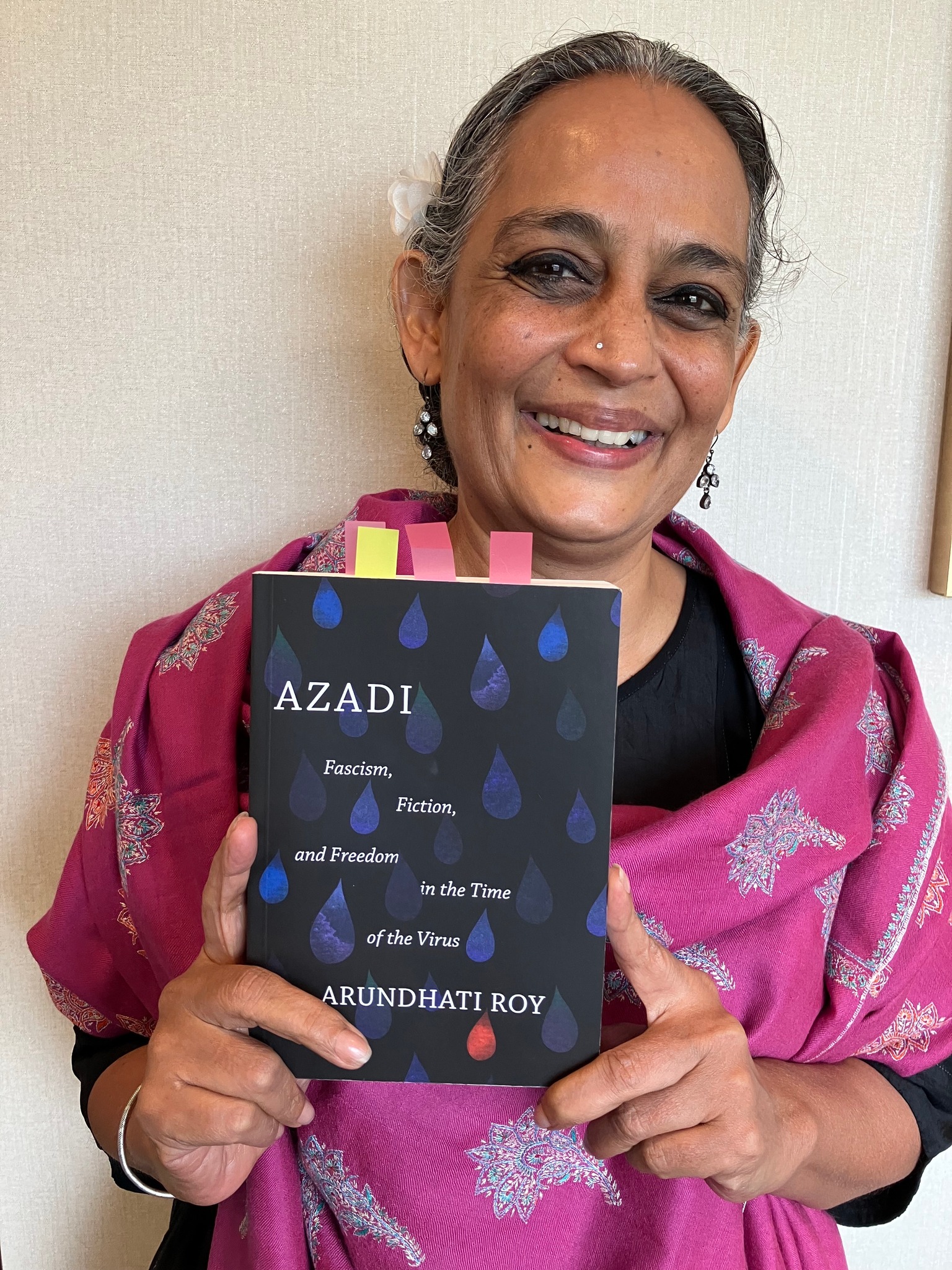
Physical appearance of Arundhati Roy is a true expression of her personality — strange, reflective, and just beautiful. She stands around 5 feet 4 inches, and she is most accurately described in terms of her curls, firm eyes, and silent, observant face. She possesses an unobtrusive self-assurance, a style that reaches simplicity and beauty. She wears loose cottons, homemade jewelry, and earth tones — a style which also suits her nature-based and no-frills personality. Whereas glamour is an essential tool for most public figures to make their presence felt, Roy never employed it.
Her very existence is interesting on merit and not appearance. Her plain yet elegant looks have become iconic today coupled with her non-ostentatious nature. Whether speaking at international seminars or strolling down Delhi roads, she embodies the same image about her self — a combination of humble conviction and defiance. Her innate self-assurance, coupled with her bright mind, places her in the league of one of those extremely rare individuals whose presence can be reassuring and daunting at the same time.
Net Worth
While the financial details of Arundhati Roy are not known, her net worth is approximately $5 million. She is reported to garner most of her income from her books, foreign publishing rights, and lecture fees. Her first book released millions of copies all over the world, and all her non-fiction books are best sellers and translated into other languages. Roy herself has always explained how she never gets comfortable with money and never considers money as an end but as a means. Her own life is simple and not extravagant. Roy’s real wealth is power and not money.
She has spent the majority of her time and energy working on causes near and dear to one’s heart — human rights, equity, and environmental justice. Rather than penning corporate endorsements or endorsement agreements, she leverages her celebrity to get attention and turn expectations on their head. This confluence of material success and ethical purpose is what has made her legacy so enduring. She is one of the few artists to demonstrate that integrity and power are not conflicting attributes and can blend without compromise.
Social Media
Arundhati Roy is never quite famous for pursuing online popularity, yet she has a reflective online presence on social networking platforms. On Instagram, she seldom shares posting glimpses into her work, opinion on concerns of the world, and snapshots into everyday existence. Her tweets are lyrical and reflective, like the tone of her speeches and writings. She does not use social media as a tool for self-glorification or as a platform for personal branding. She talks to fans and activists from all over the world through social media more like an extension of her writing.Her online presence is in keeping with her philosophy — measured, reflective, and thoughtful.
Roy uses her audience to teach people about environmental devastation, corruption, and social injustice. She will not engage in internet trends and celebrity topics but lets her mind do the talking. Without this controlled method, she has a loyal fan base who appreciate her honesty and sense of humor. With her presence in the virtual world, she still reaches out to a new generation with her voice and vision leading the way.
Future Prospects and Vision
Arundhati Roy continues to thrive as an artist and activist in the decades to follow. Her latest memoir, Mother Mary Comes to Me, will be the most private and genuine of all her works.It will show her relationship with her mother, her private life, and her life as a writer who is torn between fame and freedom. Everyone is very excited about the book because it will combine the emotional truth with the beautiful poetry that she is known for. Roy is a writer, but her writing is always linked to her work as an activist.
She protests against unfairness, works to improve the world, and fights against dictatorship. Her voice is strong and rebellious in a time when noise and division are common. She is committed to using words as tools of change in every essay, book, and speech she gives. Her own legacy, already titanic, will grow as she continues to inspire readers, thinkers, and social activists in future generations.

0 Comments