

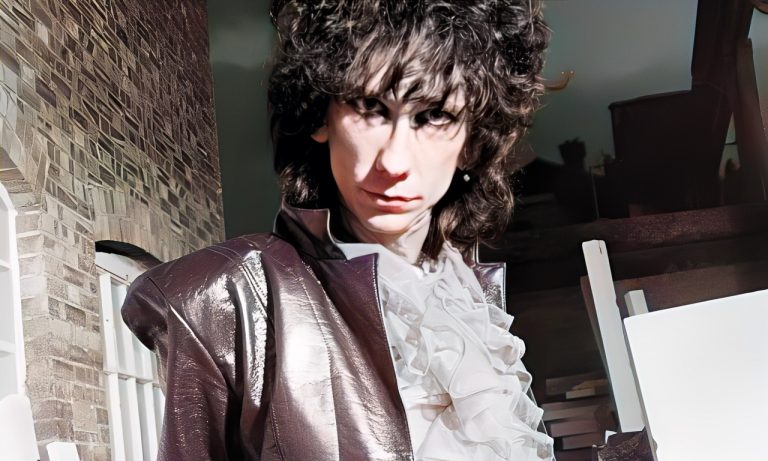

When people refer to the golden age of punk rock, there is one name that always surfaces into the debate and that is Stiv Bators. He was notorious for his reckless stage demeanor, rebellious voice, and unparalleled charm. Stiv was a figure most characteristic of punk. Both as the frontman for The Dead Boys and later The Lords of the New Church, he left a legacy of being a man who did not just play music—he lived it with every last fiber of his being. His existence was one of chaos, passion, and an unrelenting need to rock the music world.
Born Steven John Bator in Ohio, Stiv’s trajectory from small-town origins brought him from the fringes of New York’s punk underground to Europe, where his audience grew increasingly vast. His life was an extrapolation of the rebellion’s spirit, always testing the limits of what punk could be—gritty, unyielding, and dangerously alive. Even years after his death, his legacy is heard in the sounds of modern punk, goth, and alternative rock music, proving that his voice has not dissipated.
Quick Bio
| Name: | Steven John Bator |
| Birthday: | October 22, 1949 - June 4, 1990 |
| Age | 40 |
| Birth Location | Youngstown, Ohio, USA |
| Ethnicity | Caucasian |
| Nationality | American |
| Religion | Christianity |
| Zodiac sign | Cancer |
| Occupation: | Punk Rock Vocalist And Guitarist |
| N/A |
Who Was Stiv Bators?
Stiv Bators was a pioneering American punk rock singer best known as the lead vocalist for The Dead Boys, an Ohio-based band that was a definitive image of late 1970s punk. His thick, booming voice and unpredictable stage presence worked to set him apart from other frontmen of the period. Songs like Sonic Reducer were facto anthems for an entire generation of youth disenfranchised from popular culture. Stiv was never just about the music—he was punk’s opposite and abrasive personality, drawing often on shock value and crazed theatrics in order to make a lasting impression upon his performances.
Aside from The Dead Boys, Stiv explored working in The Lancasters and The Wanderers, as well as The Lords of the New Church. The latter bands toiled with darker, more melodic tones that merged punk with gothic and new wave influences. His ability to expand musically yet stick to his roots showed his artistic range. He did not feel content being trapped in a single box; rather, he went on to break boxes and consequently fans left him with a variety of music that still echoes today.
Early Life
Stiv was born on October 22, 1949, in Youngstown, Ohio, a steel city which would shape so much of his early worldview. He was raised in a Catholic household and went to Catholic school for twelve years, where discipline and rules were hard but his desire for independence found little room to express itself. His subsequent rebelliousness was the result of this stern upbringing, as he pushed against the controls that had molded his childhood.
He grew up in the nearby city of Girard, Ohio, where his Pennsylvania Dutch and Slovak heritage formed his early cultural background. Although not a lot is commonly known about his parents, there is one thing for sure: His restless nature began at an early age. He was fascinated by music, drawn by the raw energy of rock and roll, and when he was a teenager, he had already determined that small-town existence wasn’t for him. This necessity of escaping his environment drove him down a path that would eventually lead him to punk stardom.
Career Beginnings
Stiv’s early forays into music were discovered within the seedy underbelly of Cleveland, performing with bands like Rocket From the Tombs and Frankenstein. These efforts were raw, experimental, and frenetic, laying the groundwork for the anarchy that lay ahead. That was when he began to cultivate his stage presence, building the brash persona people would come to recognize him by. His speaking voice was raw but authoritative, perfect for the irate sound of punk rock.
Stiv co-founded The Dead Boys in 1976, and the group relocated to New York City shortly thereafter. They were a regular fixture at CBGB, the legendary club where so much of the American punk emerged. Their debut album, Young, Loud and Snotty, came out in 1977 and is nowadays considered a punk classic. Stiv’s stage conduct—stage-diving, floor-rolling, audience-provocation—earned him a reputation as one of the most uncontrolled performers of the time. But this lifestyle also came with its costs: struggle with record labels, internal conflict, and the exhaustion of perpetual touring eventually got to The Dead Boys, and they disbanded in 1979.
What Happened to Stiv Bators?
After The Dead Boys, Stiv did not disappear—he matured. He released a solo record, Disconnected, in 1980, one that was more power-pop-sounding but still had the raw edge of his punk roots. That he experimented meant he was not a one-trick pony. While the album itself didn’t catch on initially when it first saw release, it later became known as an important part of his catalog.
Soon, Stiv formed The Wanderers in London, followed by The Lords of the New Church with The Damned’s Brian James and Sham 69’s Dave Tregunna in 1981. The Lords merged gothic rock, new wave, and punk to produce hits like Dance With Me and Open Your Eyes. They were dark, theatrical, and trendy—a post-punk innovation. Tragically, however, tension and ill health began to catch up with Stiv in the late 1980s. His premature death in Paris at the hands of a taxi in 1990 cut short a life already legendry far too early.
Stiv Bators’s Physical Appearance
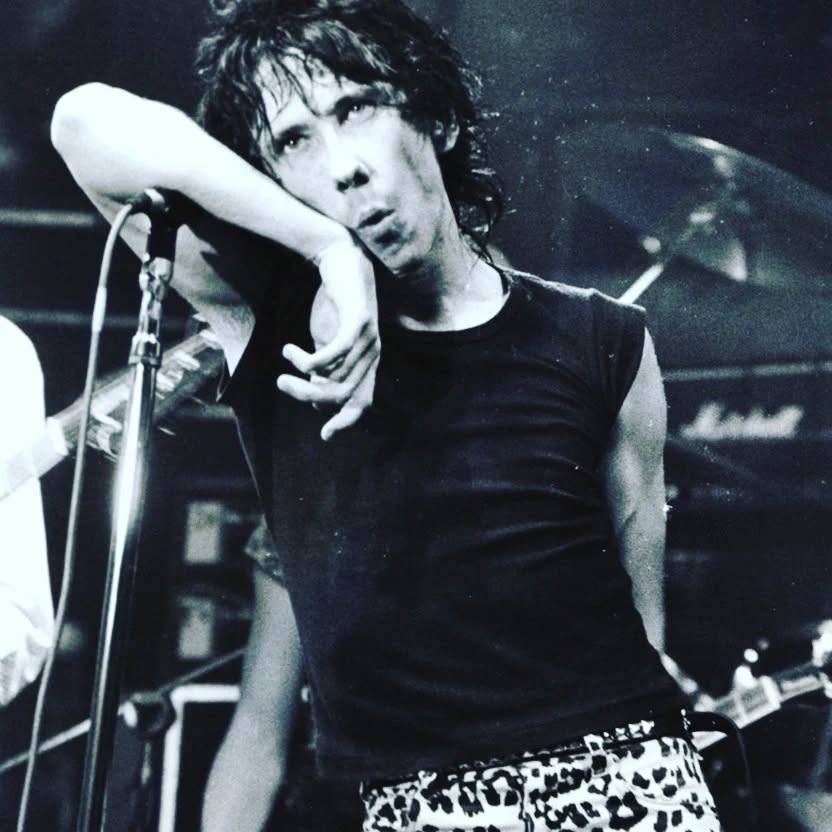
Stiv Bators was small in size, but his energy made him larger than life. He stood about 5 feet 8 inches tall and had a lean physique and was not the sort of frontman to overwhelm with brute physical force. His power came from charisma instead. He careened around on stage with abandon, crashing dramatically onto the floor, waving his microphone stand wildly, or diving into the crowd without restraint. Every movement designed to leave the audience in suspense.
He had stereotypically punk looks—matted black hair, leather jackets, tattered clothing, and a receding-shock look that was cool but exceedingly calculated. He sported a haunted expression in alignment with his eccentric lifestyle, and his sharp features only served to make him more photogenic. Above all else, though, it was his attitude and confidence that made him a legend. Stiv looked like he didn’t care about anything, and that was what made him desirable.
Net Worth
Unlike the fortunes amassed by rock stars today, Stiv Bators bequeathed no colossal fortune. Punk rock in the late 1970s and early 1980s was not a matter of becoming a millionaire—it was about making a mark. Stiv earned a living playing records for sale, touring, and penning tunes, but much of the money was spent the very minute it came in financing the touring lifestyle of the mad punk rocker. Financial stability was never his greatest concern; he was far more interested in living the music.
After his death, there was renewed interest in his work, creating reissues, tribute releases, and royalties that continue to keep his name in the spotlight. While no reputable sources document his net worth precisely, it’s safe to say that his true value can’t be itemized in dollars. Instead, it is the influence that he had on punk culture and the generations of musicians who followed him. His attitude and music are invaluable to fans and therefore a cultural icon.
Legacy
Stiv Bators’s legacy is one of revolution, change, and impact. Through The Dead Boys, he gave punk some of its most violent anthems, and through The Lords of the New Church, he directed the genre in darker, moodier venues. His practice of pushing the boundaries wherever he went kept his career novel and provocative. Today, his songs continue to influence punk bands and alternative musicians who capitalize on his energy and attitude.
A musician above all, Stiv became a symbol of what punk was all about—unbridled, unflinching, and unwilling to resist destruction. His premature death at 40 only helped his legend stand as part of rock renegades’ roll call who died hard and quick. Either because of his appalling showmanship on stage or for his ethereal voice, Stiv Bators is an actual icon whose presence continues to influence today.

0 Comments