

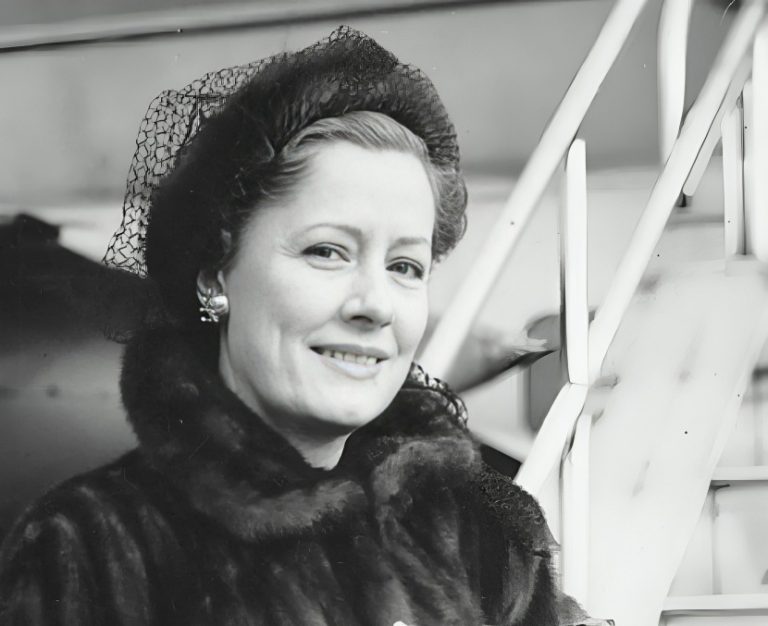

When the Golden Age of Hollywood is invoked, the names that come immediately to mind are Cary Grant, Katharine Hepburn, and Clark Gable. But Irene Dunne, with her own special mix of beauty, warmth, and range, became a star. However, another star—Irene Dunne—rose for her own special fusion of warmth, range, and elegance. As the “First Lady of Hollywood,” she epitomized iconic roles in screwball comedies, musicals, and dramas while retaining a decorum that distinguished her from the others.
She has demonstrated tenacity, skill, and quiet strength throughout her life. Dunne spent three decades in show business, earning five Academy Award nominations without ever winning the golden statue—a feat many critics even today refer to as one of the biggest snubs in cinema history. Outside of her screen career, she lived a life characterized by charity and dignity, a legacy that reached far beyond Hollywood backlots.
Quick Bio
| Name: | Irene Dunne |
| Birthday: | December 20, 1898 - September 4, 1990 |
| Age | 91 |
| Birth Location | Louisville, Kentucky, USA |
| Ethnicity | Caucasian |
| Nationality | American |
| Religion | Christianity |
| Zodiac sign | Sagittarius |
| Occupation: | Actress, Singer |
| N/A |
Who Was Irene Dunne?
Irene Dunne was an American actress and singer born on December 20, 1898, in Louisville, Kentucky. She became one of the biggest stars of her time, a phenomenal actress to whom any role was accessible. Whether it was dramatic tragedy, light comedy, or musical comedy, Dunne had a special talent for accepting any character without sacrificing her own unique poise.
Throughout her career, she appeared in over 40 films and received five Academy Award nominations for Best Actress. Though she never received one, her filmography has stood the test of time, motivating future generations of actors. Classic films, such as The Awful Truth (1937) and Love Affair (1939), are just a few examples, yet their legacy serves as a constant reminder of Hollywood’s golden era.
Early Life
Irene’s childhood was simple. She grew up with her father, Joseph Dunn, a steamship inspector, and her mother, Adelaide, a pianist and music teacher, who encouraged Irene’s passion for music. Irene’s world was shaken at the age of fourteen with the loss of her father due to a sudden illness. The shock had a long-lasting impact, and it was her mother who encouraged her to pursue music and performance.
After graduating from high school, Irene studied voice in Indianapolis before moving to Chicago to further her education. She originally dreamed of becoming an opera singer and went so far as to audition for the Metropolitan Opera. She didn’t make it, but Irene refused to let rejection dashed dreams get the best of her. Instead, she used her stage skills and voice training as a steppingstone to Broadway, which eventually opened the door to her subsequent Hollywood career.
Career Beginning
Dunne began making her early big moves on the Broadway musical stage in the 1920s. She appeared in stage productions such as The Clinging Vine and then went on tour with the road production of Show Boat. Her performance caught the attention of Hollywood scouts, who saw in her not only a singer but also an engaging actress with the ability to perform in films.
She made her on-screen debut in 1930 in the musical comedy Leathernecking. Even though the film itself did not create a sensation, there could be no denying Dunne’s inherent charm. She soon contracted with RKO Pictures, where she began to get roles that would bring out her acting prowess. Within a span of a few years, she graduated from minor musical roles to full-scale performances in major dramas.
Irene Dunne’s Distinguished Roles and Successes
Irene’s career truly gained momentum in the 1930s and 40s. Her first major success was the epic Western drama Cimarron (1931), which earned her the first of five Academy Award nominations. She next demonstrated her comedic skills in Theodora Goes Wild (1936) and The Awful Truth (1937), the latter co-starring Cary Grant in one of the greatest Hollywood screwball comedies.
She was not confined to comedy, though. Dunne also touched audiences with her sensitive work in Love Affair (1939) with Charles Boyer, and I Remember Mama (1948), where she appeared as a Norwegian immigrant mom in poignant sincerity. She proved throughout her own career that she could masterfully play any role, and thus was one of the most versatile and admired actresses of her generation.
Irene Dunne’s Physical Appearance
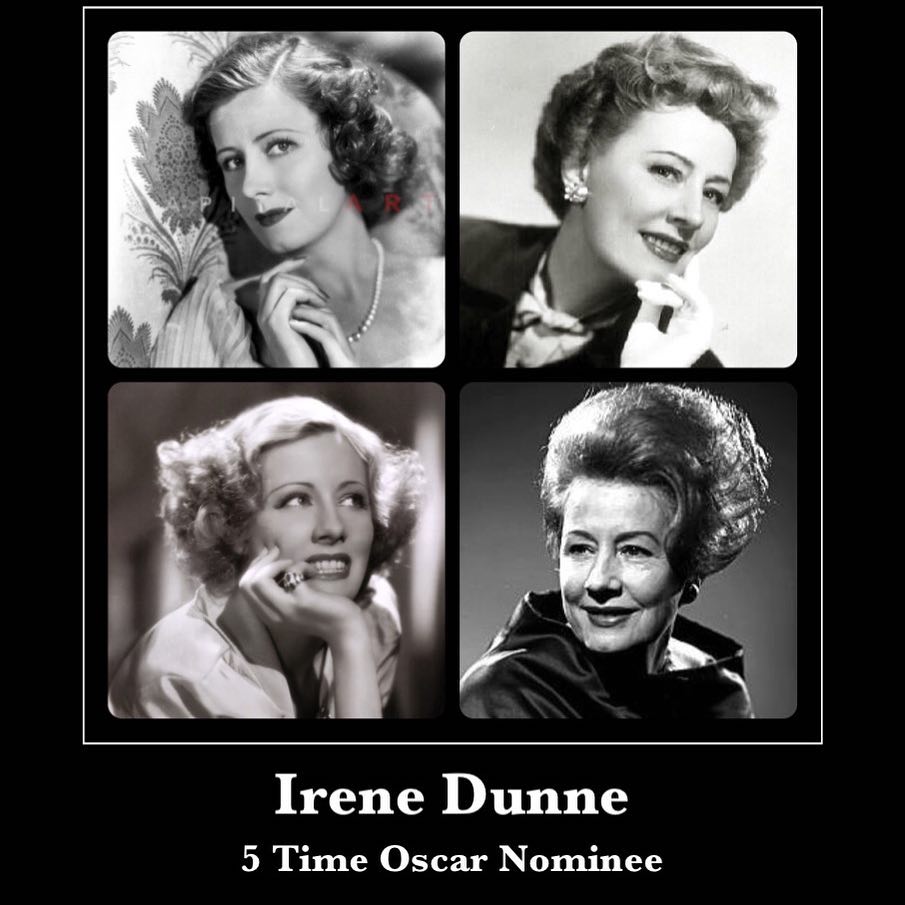
Standing at a height of approximately 5 feet 5 inches, Irene had that natural elegance. Her high cheekbones, charming smile, and refined demeanor made her an excellent actress for both romantic melodramas and sophisticated comedies. On film, she exhibited dignity and refinement, setting her apart from the majority of her classmates.
Her dress style also contributed to her public presence. She became a symbol of refinement for women in the 1930s and 1940s, frequently wearing fitted gowns and beautiful ensembles. Unlike more prominent Hollywood actors, Dunne’s beauty was modest, ageless, and accessible. She exuded a sense of sophistication that earned her admiration not only as an actress, but also as a fashion star.
Net Worth
Whereas figures from her era are difficult to verify definitively, Irene Dunne was financially successful both during and after her acting career. She was earning top salary for her work at the height of her career, and her wise financial management allowed her to live comfortably years after she retired from film work. Her net worth at death is placed in the several million dollars range.
In addition to being rich, Irene was an excellent philanthropist. She and her husband also invested in real estate and donated generously to hospitals, charities, and art. She created the Irene Dunne Guild, which donated millions of dollars to assist healthcare services in Los Angeles. Her legacy of finance wasn’t simply personal wealth, but making a good impact in society.
Legacy
Irene Dunne’s legacy continues to be heard in Hollywood and further afield. One of the most elusive of actresses to feel completely comfortable within comedy, musicals, and drama, she raised high the standard of versatility that so many stars continue to aspire to. Her pairings with Cary Grant, Charles Boyer, and other top leading men are still legendary, and her ability to blend comedy and pathos allows her work to stand the test of time.
But her greatest legacy might be her grace. She demonstrated that celebrity could be paired with humility and generosity. In how she used her philanthropy, in how she conducted herself in public, Dunne set an example for using celebrity wisely. Today, she’s not only remembered as a star—she’s a reminder of Hollywood in its heyday.

0 Comments