



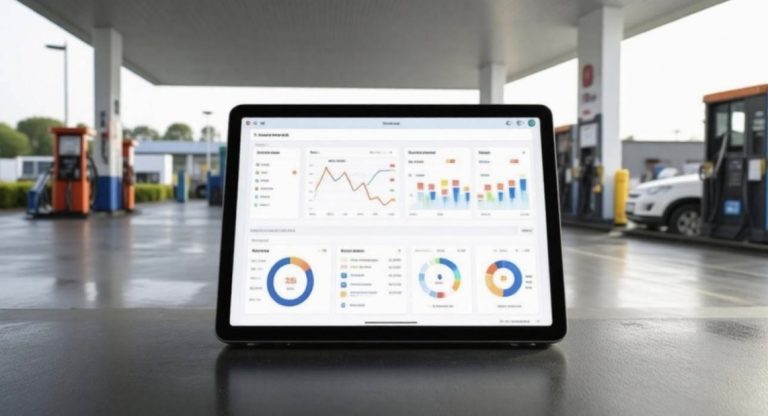


<p><span style="font-weight: 400;">The benefits of fuel management systems (FMS) include reduced fuel costs by optimizing consumption, improved driver behavior through monitoring and real-time feedback, enhanced operational efficiency with preventative maintenance scheduling, and a significant reduction in emissions, thereby promoting environmental responsibility. Implementing FMS also provides insights that facilitate improved route planning and overall fleet performance.</span></p>
<!-- WP QUADS Content Ad Plugin v. 3.0.1 -->
<div class="quads-location quads-ad135805 " id="quads-ad135805" style="float:none;text-align:center;padding:0px 0 0px 0;" data-lazydelay="3000">

</div>

<h2><span style="font-weight: 400;">How Fuel Management Systems Operate</span></h2>
<p><span style="font-weight: 400;">Fuel management systems (FMS) serve as a sophisticated toolkit, integrating various hardware and software components designed to monitor and optimize fuel usage in fleet operations. Their operation relies heavily on an intricate network of devices working together to gather and analyze real-time data. This networking allows fleet managers to have a comprehensive view of both consumption and inefficiencies, ultimately empowering them to make informed decisions.</span></p>
<h3><span style="font-weight: 400;">Key Components</span></h3>
<p><span style="font-weight: 400;">At the heart of any effective FMS are its key components: </span><b>fuel sensors</b><span style="font-weight: 400;">, </span><b>GPS tracking units</b><span style="font-weight: 400;">, and </span><b>telematics software</b><span style="font-weight: 400;">.</span></p>
<ul>
<li style="font-weight: 400;" aria-level="1"><b>Fuel sensors</b><span style="font-weight: 400;"> measure both the amount of fuel consumed and the fuel remaining in each vehicle&#8217;s tank, helping managers avoid situations where tanks run unexpectedly low, leading to operational disruptions.</span></li>
<li style="font-weight: 400;" aria-level="1"><b>GPS tracking units</b><span style="font-weight: 400;"> provide real-time location information for each vehicle, enabling route optimization and verifying driver behavior.</span></li>
<li style="font-weight: 400;" aria-level="1"><b>Telematics software</b><span style="font-weight: 400;"> compiles all this intricate data into accessible formats for review, equipping fleet managers with an analytical framework powerful enough to assess not just how much fuel is being used but also how efficiently it is being utilized.</span></li>
</ul>
<h3><span style="font-weight: 400;">Data Collection and Analysis</span></h3>
<p><span style="font-weight: 400;">Data collection plays a vital role in the functionality of an FMS. These systems capture detailed metrics on </span><b>fuel consumption</b><span style="font-weight: 400;">, </span><b>driving behavior</b><span style="font-weight: 400;">, and even </span><b>vehicle idle times</b><span style="font-weight: 400;">. Imagine your vehicles as diligent workers; they constantly report back on their performance metrics.</span></p>
<!-- WP QUADS Content Ad Plugin v. 3.0.1 -->
<div class="quads-location quads-ad135804 " id="quads-ad135804" style="float:none;text-align:center;padding:0px 0 0px 0;" data-lazydelay="3000">

</div>

<p><span style="font-weight: 400;">By analyzing this data, managers can pinpoint areas of inefficiency or waste within their operations. For example, a logistics company using an FMS to track fuel usage across their fleet could identify trends such as excessive idling times or inefficient travel routes—behaviors that inflate fuel costs without adding service value for customers.</span></p>
<p><span style="font-weight: 400;">However, while gathering ample amounts of data is crucial, what truly matters is the ability to interpret this information effectively. Employing analytical tools integrated within the telematics software allows managers to visualize patterns and correlations that contribute to costly inefficiencies, enabling targeted interventions that enhance operational performance and extend vehicle lifespans.</span></p>
<h2><span style="font-weight: 400;">Cost Savings Opportunities</span></h2>
<p><span style="font-weight: 400;">Fuel is often one of the largest expenses for fleet operators, so discovering avenues to reduce these costs is crucial. One powerful advantage of a fuel management system is its ability to transform data into actionable insights that drive significant savings across various operational fronts. By utilizing advanced technology, companies can identify inefficiencies, streamline operations, and more effectively allocate fuel resources.</span></p>
<h3><span style="font-weight: 400;">Monitoring Fuel Consumption</span></h3>
<p><span style="font-weight: 400;">Real-time fuel consumption monitoring serves as a gateway to understanding how fuel dollars are being spent. For instance, it can uncover unwanted driving behaviors such as excessive idling or aggressive acceleration. Recognizing these patterns allows fleet managers to address issues directly with drivers, leading to immediate improvements in fuel economy. A driver trained to anticipate stops rather than accelerating rapidly can maximize each gallon of fuel used.</span></p>
<!-- WP QUADS Content Ad Plugin v. 3.0.1 -->
<div class="quads-location quads-ad135804 " id="quads-ad135804" style="float:none;text-align:center;padding:0px 0 0px 0;" data-lazydelay="3000">

</div>

<h3><span style="font-weight: 400;">Optimizing Fuel Purchases</span></h3>
<p><span style="font-weight: 400;">Another cost-saving opportunity comes from data-driven decision-making facilitated by these systems. Fuel management units generate detailed reports and analytics that help managers make informed choices about their fleet operations. For example, if reports indicate frequent detours or unnecessary fuel expenditures on certain routes, adjustments can be made for more efficient routing.</span></p>
<p><span style="font-weight: 400;">By incorporating these strategies effectively, fleets gain the chance to not only minimize costs but also enhance their overall performance and sustainability measures in their operations. Next, we will explore strategies that further enhance operational capabilities.</span></p>
<h2><span style="font-weight: 400;">Boosting Operational Efficiency</span></h2>
<p><span style="font-weight: 400;">Let&#8217;s talk about how fuel management systems (FMS) can significantly boost operational efficiency in your fleet. By streamlining processes and creating actionable insights, these systems empower managers to make informed decisions that positively affect both the bottom line and day-to-day operations. Imagine having a tool that doesn’t just tell you where your fuel is being spent but also evaluates how efficiently your entire operation runs.</span></p>
<h3><span style="font-weight: 400;">Route Optimization</span></h3>
<p><span style="font-weight: 400;">One of the standout features of modern FMS is their ability to optimize routes. They harness GPS technology to track real-time vehicle locations and adjust paths based on traffic patterns, weather conditions, or road closures. For fleet managers, this means less time wasted in traffic and significant savings in fuel consumption. Studies have shown that effective route planning can reduce travel time by up to 25%. Think of it as tuning your engine; when you have the right map, every mile becomes more efficient.</span></p>
<!-- WP QUADS Content Ad Plugin v. 3.0.1 -->
<div class="quads-location quads-ad135804 " id="quads-ad135804" style="float:none;text-align:center;padding:0px 0 0px 0;" data-lazydelay="3000">

</div>

<h3><span style="font-weight: 400;">Preventative Maintenance</span></h3>
<p><span style="font-weight: 400;">Scheduled maintenance reminders built into FMS play a pivotal role in enhancing operational efficiency as well. With data-driven indicators based on usage patterns, these systems send out alerts for necessary service checks. Following regular maintenance routines—like oil changes, tire pressure monitoring, engine tune-ups, and brake inspections—contributes significantly toward prolonging the life of your vehicles.</span></p>
<p><span style="font-weight: 400;">If a vehicle breaks down unexpectedly, it disrupts schedules and incurs unexpected repair costs that can eat into profits. Regular maintenance serves as a first line of defense against such issues.</span></p>
<h3><span style="font-weight: 400;">The Ripple Effect</span></h3>
<p><span style="font-weight: 400;">When efficiency measures are in place through effective FMS, additional benefits materialize. Happier drivers generally lead to improved productivity. When drivers know they have reliable vehicles performing well thanks to good maintenance practices, they feel more confident on the road. Moreover, streamlined operations often result in better accountability throughout the fleet—leading to monetary savings and increased morale.</span></p>
<p><span style="font-weight: 400;">This focus on operational efficiency sets the stage for exploring vital improvements in another area that directly impacts overall success—security measures for your fleet.</span></p>
<!-- WP QUADS Content Ad Plugin v. 3.0.1 -->
<div class="quads-location quads-ad135804 " id="quads-ad135804" style="float:none;text-align:center;padding:0px 0 0px 0;" data-lazydelay="3000">

</div>

<h2><span style="font-weight: 400;">Enhancing Fleet Security</span></h2>
<p><span style="font-weight: 400;">Security is not just an optional feature; it&#8217;s a core aspect of effective fleet management. A fuel management system (FMS) greatly enhances security by incorporating technologies that track vehicles and monitor driver behavior. One of its primary tools is </span><b>real-time tracking</b><span style="font-weight: 400;">, which allows managers to know exactly where their vehicles are at any given moment. This visibility reduces the risk of theft or misplacement of high-value goods in transit. Imagine the relief of being able to locate a vehicle with the tap of a finger—this capability can save both time and money in stressful situations.</span></p>
<h3><span style="font-weight: 400;">Real-time Tracking</span></h3>
<p><span style="font-weight: 400;">By employing advanced telematics, FMS provides real-time updates on vehicle locations, offering insights into efficiency and security. If a vehicle is diverted from its intended route due to unforeseen circumstances, fleet managers receive an instant notification. This timely communication can facilitate immediate actions such as informing law enforcement if necessary, ensuring the load is protected right away.</span></p>
<h3><span style="font-weight: 400;">Operational Benefits</span></h3>
<p><span style="font-weight: 400;">Maintaining an efficient fleet goes hand-in-hand with ensuring all components work cohesively together. Security measures implemented through an FMS reduce liability risks and improve accountability among drivers and logistics teams. Data suggests that approximately </span><b>70% of fleet managers have reported improved security measures post-implementation</b><span style="font-weight: 400;">. By investing in such technologies today, businesses lay the groundwork for smarter, safer operations tomorrow.</span></p>
<p><span style="font-weight: 400;">By understanding these enhancements to fleet security through modern FMS solutions, you not only safeguard your resources but also forge a pathway towards sustainable business practices that pay dividends over time.</span></p>
<!-- WP QUADS Content Ad Plugin v. 3.0.1 -->
<div class="quads-location quads-ad135804 " id="quads-ad135804" style="float:none;text-align:center;padding:0px 0 0px 0;" data-lazydelay="3000">

</div>

<h2><span style="font-weight: 400;">Environmental and Compliance Benefits</span></h2>
<p><span style="font-weight: 400;">In today&#8217;s world, the pressure to adhere to environmental standards while managing operational costs is heavier than ever. Companies are recognizing that their fleets can be both efficient </span><i><span style="font-weight: 400;">and</span></i><span style="font-weight: 400;"> eco-friendly. With FMS, organizations have access to technologies that help minimize their </span><b>environmental footprint</b><span style="font-weight: 400;"> through improved fuel management. One of the most immediate benefits of implementing these systems is the ability to reduce vehicle emissions effectively.</span></p>
<h3><span style="font-weight: 400;">Reducing Emissions</span></h3>
<p><span style="font-weight: 400;">By focusing on optimizing fuel usage, Fuel Management Systems significantly lower emissions produced by vehicles. This means that not only does your fleet consume less fuel, but it also emits fewer greenhouse gases into the atmosphere, contributing to a cleaner environment. According to recent statistics, companies employing FMS are witnessing up to a 20% reduction in CO2 emissions.</span></p>
<h2><span style="font-weight: 400;">Selecting the Right Fuel Management System</span></h2>
<p><span style="font-weight: 400;">When it comes to selecting a Fuel Management System (FMS), it often feels like navigating a maze of options. However, by starting with a clear understanding of your specific needs and goals, the task becomes much easier.</span></p>
<p><span style="font-weight: 400;">To minimize potential pitfalls, it’s crucial to take an honest look at how your fleets currently operate and identify where inefficiencies exist. Are there recurring issues with supply chain management? What are your fuel expenses over time? This foundational knowledge is key to finding an FMS that meets both current demands and future growth.</span></p>
<!-- WP QUADS Content Ad Plugin v. 3.0.1 -->
<div class="quads-location quads-ad135804 " id="quads-ad135804" style="float:none;text-align:center;padding:0px 0 0px 0;" data-lazydelay="3000">

</div>

<h3><span style="font-weight: 400;">Key Features to Look For</span></h3>
<p><span style="font-weight: 400;">As you explore various systems, be on the lookout for features that align closely with your needs. Comprehensive tracking should be at the top of your list; this means monitoring fuel consumption while gaining insights into driver behavior, idling time, and maintenance schedules.</span></p>
<p><span style="font-weight: 400;">Additionally, customizable reporting will allow you to analyze data in a way that benefits your operation, offering insights that can drive actionable decision-making. A user-friendly interface cannot be overstated either; if the software is difficult to navigate, your team may struggle to maximize its capabilities.</span></p>
<p><span style="font-weight: 400;">Make sure you check for integration capabilities too. An effective FMS should sync seamlessly with existing fleet management systems and </span><a href="https://www.sunocofleetcards.com/"><span style="font-weight: 400;">fuel card programs</span></a><span style="font-weight: 400;">. This ensures you&#8217;re not left juggling separate platforms that do not communicate effectively.</span></p>

<div class="essb_links essb_counter_modern_right essb_displayed_bottom essb_share essb_template_default4-retina essb_1018221688 print-no" id="essb_displayed_bottom_1018221688" data-essb-postid="158287" data-essb-position="bottom" data-essb-button-style="button" data-essb-template="default4-retina" data-essb-counter-pos="right" data-essb-url="https://www.explosion.com/158287/benefits-of-fuel-management-systems-boost-efficiency-and-reduce-costs/" data-essb-fullurl="https://www.explosion.com/158287/benefits-of-fuel-management-systems-boost-efficiency-and-reduce-costs/" data-essb-instance="1018221688"><ul class="essb_links_list"><li class="essb_item essb_link_facebook nolightbox essb_link_svg_icon"> <a href="https://www.facebook.com/sharer/sharer.php?u=https%3A%2F%2Fwww.explosion.com%2F158287%2Fbenefits-of-fuel-management-systems-boost-efficiency-and-reduce-costs%2F&t=Benefits+of+Fuel+Management+Systems%3A+Boost+Efficiency+and+Reduce+Costs" title="Share on Share" onclick="essb.window(&#39;https://www.facebook.com/sharer/sharer.php?u=https%3A%2F%2Fwww.explosion.com%2F158287%2Fbenefits-of-fuel-management-systems-boost-efficiency-and-reduce-costs%2F&t=Benefits+of+Fuel+Management+Systems%3A+Boost+Efficiency+and+Reduce+Costs&#39;,&#39;facebook&#39;,&#39;1018221688&#39;); return false;" target="_blank" rel="nofollow" class="nolightbox essb-s-bg-facebook essb-s-c-light essb-s-ch-light essb-s-bgh-dark essb-s-bg-network" ><span class="essb_icon essb_icon_facebook"><svg class="essb-svg-icon essb-svg-icon-facebook" aria-hidden="true" role="img" focusable="false" xmlns="http://www.w3.org/2000/svg" width="16" height="16" viewBox="0 0 16 16"><path d="M16 8.049c0-4.446-3.582-8.05-8-8.05C3.58 0-.002 3.603-.002 8.05c0 4.017 2.926 7.347 6.75 7.951v-5.625h-2.03V8.05H6.75V6.275c0-2.017 1.195-3.131 3.022-3.131.876 0 1.791.157 1.791.157v1.98h-1.009c-.993 0-1.303.621-1.303 1.258v1.51h2.218l-.354 2.326H9.25V16c3.824-.604 6.75-3.934 6.75-7.951"></path></svg></span><span class="essb_network_name">Share</span></a></li><li class="essb_item essb_link_twitter nolightbox essb_link_twitter_x essb_link_svg_icon"> <a href="https://x.com/intent/post?text=Benefits%20of%20Fuel%20Management%20Systems%3A%20Boost%20Efficiency%20and%20Reduce%20Costs&;url=https%3A%2F%2Fwww.explosion.com%2F158287%2Fbenefits-of-fuel-management-systems-boost-efficiency-and-reduce-costs%2F" title="Share on Tweet" onclick="essb.window(&#39;https://x.com/intent/post?text=Benefits%20of%20Fuel%20Management%20Systems%3A%20Boost%20Efficiency%20and%20Reduce%20Costs&;url=https%3A%2F%2Fwww.explosion.com%2F158287%2Fbenefits-of-fuel-management-systems-boost-efficiency-and-reduce-costs%2F&#39;,&#39;twitter&#39;,&#39;1018221688&#39;); return false;" target="_blank" rel="nofollow" class="nolightbox essb-s-bg-twitter essb-s-c-light essb-s-ch-light essb-s-bgh-dark essb-s-bg-network" ><span class="essb_icon essb_icon_twitter_x"><svg class="essb-svg-icon essb-svg-icon-twitter_x" aria-hidden="true" role="img" focusable="false" viewBox="0 0 24 24"><path d="M18.244 2.25h3.308l-7.227 8.26 8.502 11.24H16.17l-5.214-6.817L4.99 21.75H1.68l7.73-8.835L1.254 2.25H8.08l4.713 6.231zm-1.161 17.52h1.833L7.084 4.126H5.117z"></path></svg></span><span class="essb_network_name">Tweet</span></a></li><li class="essb_item essb_link_pinterest nolightbox essb_link_svg_icon"> <a href="#" title="Share on Pin It" onclick="essb.pinterest_picker(&#39;1018221688&#39;); return false;" target="_blank" rel="nofollow" class="nolightbox essb-s-bg-pinterest essb-s-c-light essb-s-ch-light essb-s-bgh-dark essb-s-bg-network" ><span class="essb_icon essb_icon_pinterest"><svg class="essb-svg-icon essb-svg-icon-pinterest" aria-hidden="true" role="img" focusable="false" width="32" height="32" viewBox="0 0 32 32" xmlns="http://www.w3.org/2000/svg"><path d="M10.625 12.25c0-1.375 0.313-2.5 1.063-3.438 0.688-0.938 1.563-1.438 2.563-1.438 0.813 0 1.438 0.25 1.875 0.813s0.688 1.25 0.688 2.063c0 0.5-0.125 1.125-0.313 1.813-0.188 0.75-0.375 1.625-0.688 2.563-0.313 1-0.563 1.75-0.688 2.313-0.25 1-0.063 1.875 0.563 2.625 0.625 0.688 1.438 1.063 2.438 1.063 1.75 0 3.188-1 4.313-2.938 1.125-2 1.688-4.375 1.688-7.188 0-2.125-0.688-3.875-2.063-5.25-1.375-1.313-3.313-2-5.813-2-2.813 0-5.063 0.875-6.75 2.688-1.75 1.75-2.625 3.875-2.625 6.375 0 1.5 0.438 2.75 1.25 3.75 0.313 0.313 0.375 0.688 0.313 1.063-0.125 0.313-0.25 0.813-0.375 1.5-0.063 0.25-0.188 0.438-0.375 0.5s-0.375 0.063-0.563 0c-1.313-0.563-2.25-1.438-2.938-2.75s-1-2.813-1-4.5c0-1.125 0.188-2.188 0.563-3.313s0.875-2.188 1.625-3.188c0.75-1.063 1.688-1.938 2.688-2.75 1.063-0.813 2.313-1.438 3.875-1.938 1.5-0.438 3.125-0.688 4.813-0.688 1.813 0 3.438 0.313 4.938 0.938 1.5 0.563 2.813 1.375 3.813 2.375 1.063 1.063 1.813 2.188 2.438 3.5 0.563 1.313 0.875 2.688 0.875 4.063 0 3.75-0.938 6.875-2.875 9.313-1.938 2.5-4.375 3.688-7.375 3.688-1 0-1.938-0.188-2.813-0.688-0.875-0.438-1.5-1-1.875-1.688-0.688 2.938-1.125 4.688-1.313 5.25-0.375 1.438-1.25 3.188-2.688 5.25h-1.313c-0.25-2.563-0.188-4.688 0.188-6.375l2.438-10.313c-0.375-0.813-0.563-1.813-0.563-3.063z"></path></svg></span><span class="essb_network_name">Pin It</span></a></li><li class="essb_item essb_link_mail nolightbox essb_link_svg_icon"> <a href="#" title="Share on Email" onclick="essb_open_mailform(&#39;1018221688&#39;); return false;" target="_blank" rel="nofollow" class="nolightbox essb-s-bg-mail essb-s-c-light essb-s-ch-light essb-s-bgh-dark essb-s-bg-network" ><span class="essb_icon essb_icon_mail"><svg class="essb-svg-icon essb-svg-icon-mail" aria-hidden="true" role="img" focusable="false" width="32" height="32" xmlns="http://www.w3.org/2000/svg" viewBox="0 0 60 60"><polygon points="60,50.234 60,9.944 39.482,30.536 " /><polygon points="0,9.941 0,50.234 20.519,30.535 " /><path d="M1.387,8.5l21.002,21.08c0.121,0.051,0.471,0.415,0.517,0.519l5.941,5.963c0.635,0.591,1.672,0.59,2.333-0.025l5.911-5.933c0.046-0.105,0.4-0.473,0.522-0.524L58.615,8.5H1.387z" /><path d="M38.07,31.954l-5.5,5.52c-0.73,0.68-1.657,1.019-2.58,1.019c-0.914,0-1.823-0.332-2.533-0.993l-5.526-5.546L1.569,51.5h56.862L38.07,31.954z" /></svg></span><span class="essb_network_name">Email</span></a></li></ul></div>



0 Comments