



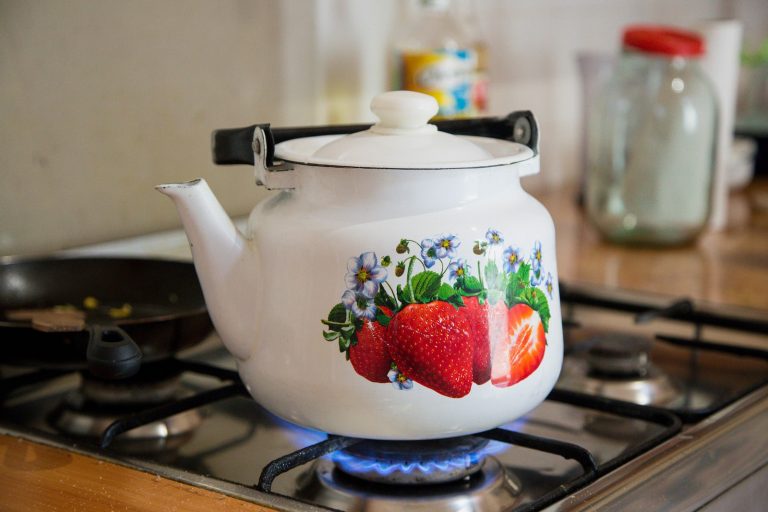


<p>Boiling water is a common task in everyday life, whether for cooking, making beverages, or cleaning. The time it takes for water to boil can vary due to several factors, such as the amount of water, starting temperature, and the heat source used. Knowing the approximate time needed to boil water can be helpful in planning and executing various tasks in the kitchen.</p>
<!-- WP QUADS Content Ad Plugin v. 3.0.1 -->
<div class="quads-location quads-ad135805 " id="quads-ad135805" style="float:none;text-align:center;padding:0px 0 0px 0;" data-lazydelay="3000">

</div>

<p>Typically, one liter of tap water can take about six minutes to boil on a gas burner and around eight minutes on an electric stove. However, this estimate might change depending on the volume of water and the specific settings of the heat source. The boiling point of water also depends on external factors such as altitude, as water boils quicker at high elevations due to decreased atmospheric pressure.</p>
<p>Understanding the different factors affecting the boiling time is crucial for efficient cooking and safe kitchen practices. In the following sections, we will discuss these factors in more detail and provide recommendations on how to optimize the process for a faster boiling time.</p>
<p>Let&#8217;s talk about how long does it take for water to boil.</p>
<!-- WP QUADS Content Ad Plugin v. 3.0.1 -->
<div class="quads-location quads-ad135804 " id="quads-ad135804" style="float:none;text-align:center;padding:0px 0 0px 0;" data-lazydelay="3000">

</div>

<h2>Understanding the Basics of Boiling Water</h2>
<h3>What Is Boiling Water</h3>
<p>Boiling water is the process of heating a liquid, in this case, cold water, to its boiling point, where it turns from a liquid into a gas. This transformation happens at specific temperatures, which for water is 100°C (212°F) at sea level under standard atmospheric pressure. The gas formed from boiling water is steam, which is used in various applications, ranging from cooking to power generation.</p>
<h3>Process of Heating Water to Boil</h3>
<p>To boil water, it requires heat, which can be supplied by different heat sources like electric or gas stoves, induction cookers, or even microwaves. The time it takes to bring cold water to a boil depends on several factors, such as the volume of water, the power output of the heat source, and the starting temperature of the water.</p>
<p>On gas or electric stoves, it usually takes between 10 and 15 minutes to bring 1 liter of water to a rolling boil, while induction cooktops, which are more efficient at transferring heat, can do so in as little as 2.5 minutes. It is essential to monitor the water while it&#8217;s boiling to ensure safety and prevent any spills or accidents.</p>
<p>As drinking water is heated, its temperature increases linearly until it reaches its boiling point. At this stage, the liquid begins to vaporize and turn into steam. During this phase transition, the water&#8217;s temperature remains constant at 100°C (212°F) under normal atmospheric pressure, as the heat energy is used to break the molecular bonds holding the liquid together.</p>
<!-- WP QUADS Content Ad Plugin v. 3.0.1 -->
<div class="quads-location quads-ad135804 " id="quads-ad135804" style="float:none;text-align:center;padding:0px 0 0px 0;" data-lazydelay="3000">

</div>

<p>In summary, boiling water is a fundamental process in which liquid water is heated to its boiling point, turning into steam. The amount of time it takes to boil water depends on factors like heat source power output, water volume, and initial temperature. Understanding this process is crucial, as boiling water is used in various daily activities and industrial applications.</p>
<h2>Factors Affecting Boiling Time</h2>
<h3>Importance of Temperature</h3>
<p>Temperature plays a significant role in determining the boiling time of water. The initial temperature of the water (cold, warm, or room temperature) will affect the time it takes to reach boiling point which is 212 degrees Fahrenheit. A higher initial temperature requires less time to heat up, while cold or room temperature water will take longer to reach boiling point. The heat source used to heat the water, such as a gas stove or an electric stove, can also influence the time it takes for water to boil, since some heat sources are more efficient than others.</p>
<h3>Role of Pressure</h3>
<p>Pressure is another important factor that influences boiling time. Water boils faster under low pressure, which occurs at higher altitudes or in areas with thin air. Conversely, water takes longer to boil under high pressure, as is the case at sea level or low elevations. This is due to the fact that higher atmospheric pressure means that water requires more energy to overcome the greater pressure and start boiling.</p>
<h3>Impact of Volume</h3>
<p>The volume of water being heated also affects the boiling time. Larger amounts of water will require more time to heat up than smaller volumes, due to the increased amount of energy needed to raise the temperature of the water. It is important to consider the size of the pot or container used for boiling, as a smaller pot will usually heat up faster than a larger one.</p>
<!-- WP QUADS Content Ad Plugin v. 3.0.1 -->
<div class="quads-location quads-ad135804 " id="quads-ad135804" style="float:none;text-align:center;padding:0px 0 0px 0;" data-lazydelay="3000">

</div>

<h3>Surface Area Consideration</h3>
<p>The surface area of the container in which water is boiled also plays a role in the boiling time. A container with a larger surface area will allow for quicker heat dispersion and increased evaporation, leading to a faster boiling time. Conversely, a container with a smaller surface area will take longer to heat up and reach boiling point, as there is less surface area for heat to disperse evenly.</p>
<h3>Effect of Altitude</h3>
<p>As mentioned earlier, altitude or elevation has a direct impact on boiling time. Due to the reduced air pressure at higher altitudes, water will reach boiling point at a lower temperature. This means that water will boil faster at higher altitudes compared to lower altitudes or sea level. However, it should be noted that boiling water at higher altitudes may not be as effective in cooking or killing bacteria as boiling water at sea level, since the lower boiling point may not provide enough heat to achieve the desired results.</p>
<h2>Common Tools for Boiling Water</h2>
<h3>Utilizing Stove</h3>
<p>The stove, whether a gas stove or an electric stove, is a popular and traditional method for boiling water. To begin, you will need a pot with a suitable lid and place it on the desired burner. Select the appropriate heat setting as per your recipe&#8217;s requirement and wait until the water reaches its boiling point. The boiling time for 1 liter of water takes approximately 8 to 10 minutes on a gas stove and a few extra minutes on an electric stove.</p>
<h3>Using Electric Kettle</h3>
<p>An electric kettle is a quick and efficient way to boil water. Fill the kettle with the required amount of water, ensuring you stay within the manufacturer&#8217;s recommended level. Secure the lid and switch it on. Typically, it takes about 2.5 minutes to bring 1 liter of water to a boil, making electric kettles significantly faster compared to stovetop methods. The wattage and design of electric kettles can impact their boiling speed, so consider these factors when investing in one.</p>
<!-- WP QUADS Content Ad Plugin v. 3.0.1 -->
<div class="quads-location quads-ad135804 " id="quads-ad135804" style="float:none;text-align:center;padding:0px 0 0px 0;" data-lazydelay="3000">

</div>

<h3>Microwave Heating</h3>
<p>Microwave ovens can also warm water; however, they may not be as energy-efficient as stovetops or electric kettles. To use this method, pour water into a microwave-safe container, leaving space for any expansion. Next, place the container inside the microwave and heat on high for a few minutes, being aware that boiling times can differ based on the microwave&#8217;s wattage. It is essential to monitor water closely when using this method to avoid the risk of overheating or superheating, resulting in explosions or burns.</p>
<h3>Advantages of Pressure Cooker</h3>
<p>A pressure cooker is another useful tool for boiling water in a more efficient manner. The appliance&#8217;s unique design contains steam and pressure, raising the boiling point and reducing cooking time for many recipes. Given the steam and pressure buildup, boiling water in a pressure cooker requires less energy and far less time than other methods. Additionally, pressure cookers can help tenderize or cook food quickly, making it the ideal tool for many households.</p>
<h2>Application of Boiled Water</h2>
<h3>Boiling Water for Cooking</h3>
<p>Boiling water is an essential process in various cooking methods such as preparing pasta or boiling vegetables. Adding salt to the boiling water can enhance the flavor of food, such as pasta. Boiling ensures that the internal temperature of the food reaches a point where it is safe to consume and that any harmful microorganisms are eliminated.</p>
<h3>Purification through Boiling</h3>
<p>Boiling water is an effective way to purify tap water and make it safe to drink. The process kills disease-causing pathogens like bacteria, viruses, parasites, and other contaminants present in the water. Boiling is recommended even if the tap water has been filtered, since some microorganisms can still remain in the filtered water.</p>
<!-- WP QUADS Content Ad Plugin v. 3.0.1 -->
<div class="quads-location quads-ad135804 " id="quads-ad135804" style="float:none;text-align:center;padding:0px 0 0px 0;" data-lazydelay="3000">

</div>

<p>Boil water advisories are issued by the authorities whenever there&#8217;s a concern over the quality of tap water. During such advisories, it&#8217;s recommended to boil the tap water for at least 1 minute (or 3 minutes at elevations above 6,500 feet) before consuming it as it helps in neutralizing the harmful microorganisms that may cause illness.</p>
<h3>Health Benefits of Boiled Water</h3>
<p>Boiled water offers various health benefits. Regularly consuming warm water can help improve blood circulation, aiding in digestion, and promoting overall well-being. Here are some benefits of boiling water:</p>
<ul>
<li><strong>Eliminates pathogens</strong>: Boiling water effectively kills bacteria, viruses, parasites, and other harmful microorganisms, reducing the risk of waterborne diseases.</li>
<li><strong>Improves digestion</strong>: Consuming warm water can enhance the digestive system and help break down food more efficiently.</li>
<li><strong>Aids in detoxification</strong>: Drinking boiled water helps flush out toxins and impurities from the body, promoting better kidney and liver function.</li>
</ul>
<h2>Various Containers and Their Impact</h2>
<h3>Boiling Water in Glass</h3>
<p>Boiling water in glass containers may take longer than other materials such as stainless steel or aluminum. Due to glass&#8217;s lower thermal conductivity, it takes more time to transfer heat to the water. However, glass containers are non-reactive and do not alter the taste of water. Moreover, they are also eco-friendly and can withstand high temperatures, making them a suitable option for boiling water.</p>
<h3>Pros and Cons of Stainless Steel</h3>
<p>Stainless steel containers are popular for boiling water, as they heat up quickly and evenly, reducing boiling time based on their material properties. They are known for their durability, rust resistance, and excellent heat transfer. However, stainless steel containers can be expensive and heavy. Additionally, they may impact the taste of water due to the presence of trace metals.</p>
<!-- WP QUADS Content Ad Plugin v. 3.0.1 -->
<div class="quads-location quads-ad135804 " id="quads-ad135804" style="float:none;text-align:center;padding:0px 0 0px 0;" data-lazydelay="3000">

</div>

<h3>Boiling Water in Plastic</h3>
<p>Choosing the appropriate container materials for boiling water is essential. Boiling water in plastic containers is generally not recommended. The heat from boiling water can cause certain plastics to release harmful chemicals or even melt. If you need to boil water in plastic, make sure the container is made of heat-resistant food-grade plastic. However, it&#8217;s worth noting that heat transfer in plastic containers is often slower compared to glass, stainless steel, or aluminum.</p>
<p>It is important to choose the appropriate container based on the material&#8217;s properties and your needs. While glass, stainless steel, and plastic are common choices, copper and aluminum containers also offer excellent heat conductivity and faster boiling times. However, copper may react with water and alter its taste, while aluminum can potentially leach into water. Always prioritize safety, efficiency, and quality when selecting a container for boiling water.</p>
<h2>Scientific Facts and Myths about Boiling Water</h2>
<h3>Boiling at Higher Altitude</h3>
<p>At higher altitudes, atmospheric pressure is lower, causing water to boil at temperatures lower than 100 degrees Celsius. This can alter cooking times and recipes, especially for those hiking or camping in high-altitude locations. The boiling point drops roughly 1 degree Celsius for every 285 meters (or 942 feet) in altitude gained.</p>
<h3>Effect of Salinity on Boiling Point</h3>
<p>Salinity levels in the drinking water also have an impact on the boiling temperature. Water with a higher concentration of dissolved salts, which increases its boiling point, requiring more time to reach boiling temperatures. This is important to consider when cooking with salt or using water from sources with a different salinity level.</p>
<!-- WP QUADS Content Ad Plugin v. 3.0.1 -->
<div class="quads-location quads-ad135804 " id="quads-ad135804" style="float:none;text-align:center;padding:0px 0 0px 0;" data-lazydelay="3000">

</div>

<h3>Myth about Hot Water Boiling Faster</h3>
<p>There is a common misconception that hot water boils faster than cold water. While it is true that hot water will reach boiling temperatures more quickly, it doesn&#8217;t necessarily &#8220;boil faster.&#8221; The time needed to boil water mainly depends on its initial temperature, the volume of water, and the heat source.</p>
<h3>Heat Conductivity and Boiling Time</h3>
<p>Heat conductivity plays a crucial role in determining water boiling time. Different materials have different heat conductivity properties, affecting how quickly water reaches boiling temperatures. For example, copper pots and pans have a higher heat conductivity compared to stainless steel ones, resulting in slightly quicker boiling times. Adding a lid to the pot also helps retain heat, accelerating the boiling process.</p>
<p>In conclusion, multiple factors, such as altitude, salinity levels, initial water temperature, and heat conductivity, influence water boiling time. Understanding these variables can help improve cooking practices and adapt recipes accordingly.</p>
<p>Hopefully, now you have a better understanding of how long does it take for water to boil.</p>
<!-- WP QUADS Content Ad Plugin v. 3.0.1 -->
<div class="quads-location quads-ad135804 " id="quads-ad135804" style="float:none;text-align:center;padding:0px 0 0px 0;" data-lazydelay="3000">

</div>

</p>
<div class="essb_links essb_counter_modern_right essb_displayed_bottom essb_share essb_template_default4-retina essb_739223540 print-no" id="essb_displayed_bottom_739223540" data-essb-postid="144910" data-essb-position="bottom" data-essb-button-style="button" data-essb-template="default4-retina" data-essb-counter-pos="right" data-essb-url="https://www.explosion.com/144910/how-long-does-it-take-for-water-to-boil/" data-essb-fullurl="https://www.explosion.com/144910/how-long-does-it-take-for-water-to-boil/" data-essb-instance="739223540"><ul class="essb_links_list"><li class="essb_item essb_link_facebook nolightbox essb_link_svg_icon"> <a href="https://www.facebook.com/sharer/sharer.php?u=https%3A%2F%2Fwww.explosion.com%2F144910%2Fhow-long-does-it-take-for-water-to-boil%2F&t=Boiling+Water%3A+The+Countdown+to+Culinary+Perfection" title="Share on Share" onclick="essb.window(&#39;https://www.facebook.com/sharer/sharer.php?u=https%3A%2F%2Fwww.explosion.com%2F144910%2Fhow-long-does-it-take-for-water-to-boil%2F&t=Boiling+Water%3A+The+Countdown+to+Culinary+Perfection&#39;,&#39;facebook&#39;,&#39;739223540&#39;); return false;" target="_blank" rel="nofollow" class="nolightbox essb-s-bg-facebook essb-s-c-light essb-s-ch-light essb-s-bgh-dark essb-s-bg-network" ><span class="essb_icon essb_icon_facebook"><svg class="essb-svg-icon essb-svg-icon-facebook" aria-hidden="true" role="img" focusable="false" xmlns="http://www.w3.org/2000/svg" width="16" height="16" viewBox="0 0 16 16"><path d="M16 8.049c0-4.446-3.582-8.05-8-8.05C3.58 0-.002 3.603-.002 8.05c0 4.017 2.926 7.347 6.75 7.951v-5.625h-2.03V8.05H6.75V6.275c0-2.017 1.195-3.131 3.022-3.131.876 0 1.791.157 1.791.157v1.98h-1.009c-.993 0-1.303.621-1.303 1.258v1.51h2.218l-.354 2.326H9.25V16c3.824-.604 6.75-3.934 6.75-7.951"></path></svg></span><span class="essb_network_name">Share</span></a></li><li class="essb_item essb_link_twitter nolightbox essb_link_twitter_x essb_link_svg_icon"> <a href="https://x.com/intent/post?text=Boiling%20Water%3A%20The%20Countdown%20to%20Culinary%20Perfection&;url=https%3A%2F%2Fwww.explosion.com%2F144910%2Fhow-long-does-it-take-for-water-to-boil%2F" title="Share on Tweet" onclick="essb.window(&#39;https://x.com/intent/post?text=Boiling%20Water%3A%20The%20Countdown%20to%20Culinary%20Perfection&;url=https%3A%2F%2Fwww.explosion.com%2F144910%2Fhow-long-does-it-take-for-water-to-boil%2F&#39;,&#39;twitter&#39;,&#39;739223540&#39;); return false;" target="_blank" rel="nofollow" class="nolightbox essb-s-bg-twitter essb-s-c-light essb-s-ch-light essb-s-bgh-dark essb-s-bg-network" ><span class="essb_icon essb_icon_twitter_x"><svg class="essb-svg-icon essb-svg-icon-twitter_x" aria-hidden="true" role="img" focusable="false" viewBox="0 0 24 24"><path d="M18.244 2.25h3.308l-7.227 8.26 8.502 11.24H16.17l-5.214-6.817L4.99 21.75H1.68l7.73-8.835L1.254 2.25H8.08l4.713 6.231zm-1.161 17.52h1.833L7.084 4.126H5.117z"></path></svg></span><span class="essb_network_name">Tweet</span></a></li><li class="essb_item essb_link_pinterest nolightbox essb_link_svg_icon"> <a href="#" title="Share on Pin It" onclick="essb.pinterest_picker(&#39;739223540&#39;); return false;" target="_blank" rel="nofollow" class="nolightbox essb-s-bg-pinterest essb-s-c-light essb-s-ch-light essb-s-bgh-dark essb-s-bg-network" ><span class="essb_icon essb_icon_pinterest"><svg class="essb-svg-icon essb-svg-icon-pinterest" aria-hidden="true" role="img" focusable="false" width="32" height="32" viewBox="0 0 32 32" xmlns="http://www.w3.org/2000/svg"><path d="M10.625 12.25c0-1.375 0.313-2.5 1.063-3.438 0.688-0.938 1.563-1.438 2.563-1.438 0.813 0 1.438 0.25 1.875 0.813s0.688 1.25 0.688 2.063c0 0.5-0.125 1.125-0.313 1.813-0.188 0.75-0.375 1.625-0.688 2.563-0.313 1-0.563 1.75-0.688 2.313-0.25 1-0.063 1.875 0.563 2.625 0.625 0.688 1.438 1.063 2.438 1.063 1.75 0 3.188-1 4.313-2.938 1.125-2 1.688-4.375 1.688-7.188 0-2.125-0.688-3.875-2.063-5.25-1.375-1.313-3.313-2-5.813-2-2.813 0-5.063 0.875-6.75 2.688-1.75 1.75-2.625 3.875-2.625 6.375 0 1.5 0.438 2.75 1.25 3.75 0.313 0.313 0.375 0.688 0.313 1.063-0.125 0.313-0.25 0.813-0.375 1.5-0.063 0.25-0.188 0.438-0.375 0.5s-0.375 0.063-0.563 0c-1.313-0.563-2.25-1.438-2.938-2.75s-1-2.813-1-4.5c0-1.125 0.188-2.188 0.563-3.313s0.875-2.188 1.625-3.188c0.75-1.063 1.688-1.938 2.688-2.75 1.063-0.813 2.313-1.438 3.875-1.938 1.5-0.438 3.125-0.688 4.813-0.688 1.813 0 3.438 0.313 4.938 0.938 1.5 0.563 2.813 1.375 3.813 2.375 1.063 1.063 1.813 2.188 2.438 3.5 0.563 1.313 0.875 2.688 0.875 4.063 0 3.75-0.938 6.875-2.875 9.313-1.938 2.5-4.375 3.688-7.375 3.688-1 0-1.938-0.188-2.813-0.688-0.875-0.438-1.5-1-1.875-1.688-0.688 2.938-1.125 4.688-1.313 5.25-0.375 1.438-1.25 3.188-2.688 5.25h-1.313c-0.25-2.563-0.188-4.688 0.188-6.375l2.438-10.313c-0.375-0.813-0.563-1.813-0.563-3.063z"></path></svg></span><span class="essb_network_name">Pin It</span></a></li><li class="essb_item essb_link_mail nolightbox essb_link_svg_icon"> <a href="#" title="Share on Email" onclick="essb_open_mailform(&#39;739223540&#39;); return false;" target="_blank" rel="nofollow" class="nolightbox essb-s-bg-mail essb-s-c-light essb-s-ch-light essb-s-bgh-dark essb-s-bg-network" ><span class="essb_icon essb_icon_mail"><svg class="essb-svg-icon essb-svg-icon-mail" aria-hidden="true" role="img" focusable="false" width="32" height="32" xmlns="http://www.w3.org/2000/svg" viewBox="0 0 60 60"><polygon points="60,50.234 60,9.944 39.482,30.536 " /><polygon points="0,9.941 0,50.234 20.519,30.535 " /><path d="M1.387,8.5l21.002,21.08c0.121,0.051,0.471,0.415,0.517,0.519l5.941,5.963c0.635,0.591,1.672,0.59,2.333-0.025l5.911-5.933c0.046-0.105,0.4-0.473,0.522-0.524L58.615,8.5H1.387z" /><path d="M38.07,31.954l-5.5,5.52c-0.73,0.68-1.657,1.019-2.58,1.019c-0.914,0-1.823-0.332-2.533-0.993l-5.526-5.546L1.569,51.5h56.862L38.07,31.954z" /></svg></span><span class="essb_network_name">Email</span></a></li></ul></div>



0 Comments